
Crossroads of Three Superpowers: What Markedonov Writes - and What Strategic Alternatives Remain for Armenia, According to Public Tribunal Experts
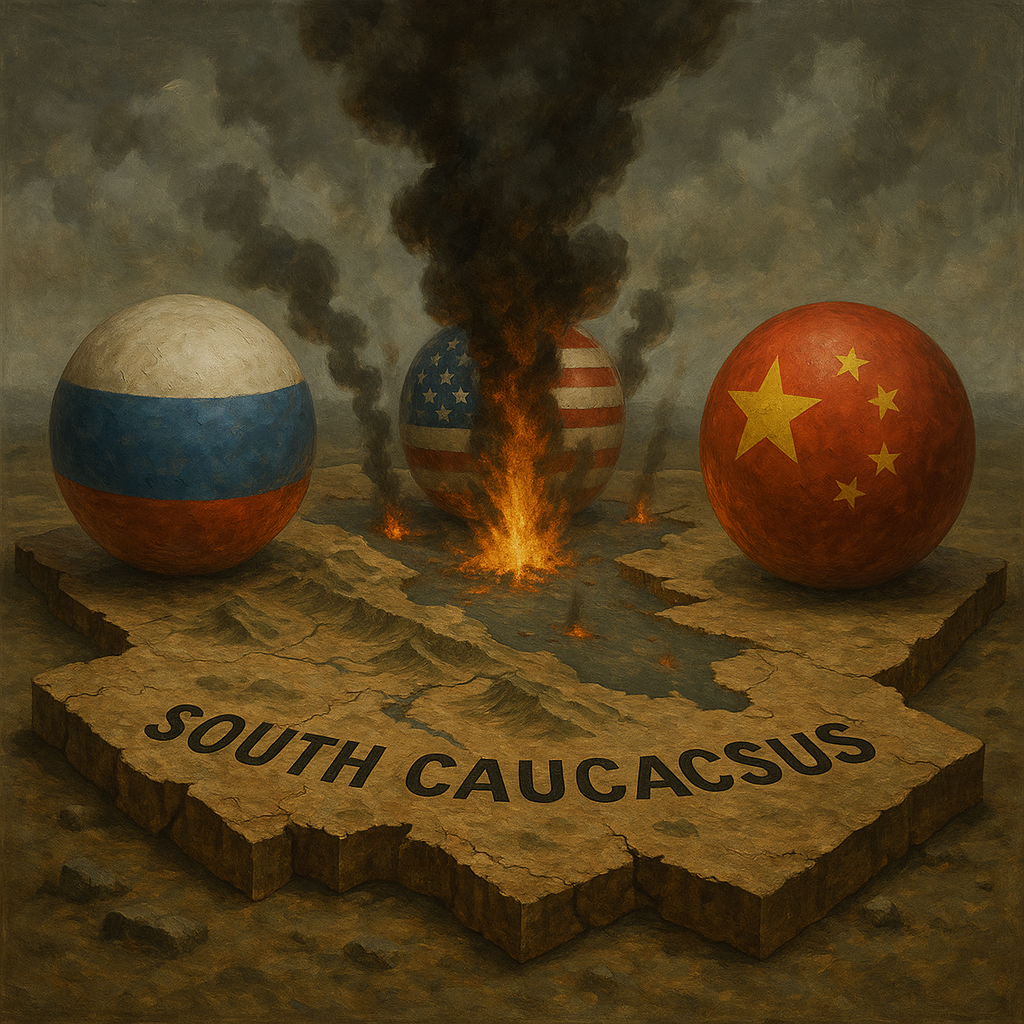
As the geopolitical landscape of the South Caucasus rapidly shifts, the region is emerging as one of the key points on the global agenda. At MGIMO’s December forum on political risks and international turbulence, political scientist Sergey Markedonov presented an analysis arguing that the post-Soviet space is no longer viewed as a periphery of global politics. On the contrary, it has become a “laboratory of multipolarity,” where the interests of Russia, the U.S., and China intersect, compelling regional actors to rethink their strategic choices.
The Post-Soviet Space as a Model of New Multipolarity
Маркедонов подчёркивает: мир движется к более сложной геометрии власти, где классическая биполярность больше не работает. На Южном Кавказе, в Центральной Азии, в Восточной Европе переплетаются интересы трёх глобальных акторов — при этом Россия, несмотря на критику о потере влияния, остаётся ключевым и неизбежным игроком.
At the same time, the U.S. and China are intensifying their competition in the region. Washington and Brussels offer value-based diplomatic engagement, while Beijing promotes economic initiatives, infrastructure development, non-interference, and respect for sovereignty - precisely the kind of political “currency” that many regional elites now regard as more dependable than the West’s model of “humanitarian interventionism.”
This trilateral configuration makes the region not only an object of influence but also a platform where new norms of global coexistence are taking shape.
Markedonov writes that although criticism of American hegemony brings Moscow and Beijing together, their positions are far from identical. China avoids offering Russia direct support on a number of sensitive issues - from Ukraine to the recognition of Abkhazia and South Ossetia.
Beijing is prepared to acknowledge Moscow’s leading role in Caucasus security, yet seeks to act independently in the economic sphere. This creates the impression within the region that a “third way” is emerging - one that is neither pro-Russian nor pro-Western.
The South Caucasus After Major Changes: Why Armenia Is Losing Strategic Time — Opinion of the Public Tribunal
Sergey Markedonov’s recent publications have once again brought to the forefront an unavoidable reality: the South Caucasus has entered an era of power redistribution. Turkey and Azerbaijan are operating as a single military-political organism; the West is deepening its cooperation with Ankara and Baku; and Russia is attempting to regain positions it has lost over recent years. In this context, Armenia has reached a turning point not only in a weakened state, but also without a clearly defined strategic vector.
The Ankara–Baku partnership has evolved into a fully operational mechanism of strategic pressure. Turkey supplies political patronage, economic weight, and military resources, while Azerbaijan contributes flexibility, operational speed, and regional initiative. Together, they are constructing an architecture capable not only of exerting sustained influence over Armenia, but also of reshaping the transport, logistics, and energy landscape of the entire South Caucasus.
The West regards Ankara as a key instrument for containing Russia and Iran and therefore perceives Turkish–Azerbaijani initiatives not as a challenge, but as an element of a broader strategic design. This approach grants Baku a level of international confidence and freedom of maneuver that would have been unimaginable just a decade ago.
Russia is seeking to restore its influence in the region, yet the mechanisms it once relied upon no longer function automatically. Moscow is now compelled to depend on new economic, transport, and partially power-based instruments. A restoration of its former positions remains possible, but it requires far more flexible and adaptive formats of interaction from the Kremlin.
Iran, for its part, views the Turkish–Azerbaijani project as a direct challenge to its own interests. Its policy is becoming more active and increasingly rigid, though not always publicly visible. Tehran is clearly signaling its unwillingness to tolerate a shifting balance of power along its northern borders.
Armenia has entered this new era internally weakened. This is the outcome of prolonged political drifting, accumulated strategic errors, and a persistent absence of long-term planning.
These failures did not begin today. Levon Ter-Petrosyan’s political defeatism, grounded in the logic of concessions for the sake of “conciliation,” established a precedent of perceiving Armenia as a party predisposed to make concessions. Later, Serzh Sargsyan’s foreign-policy pivot toward the West, accompanied by a gradual erosion of the strategic partnership with Russia, produced a blurred alliance framework upon which Armenia’s security had been based.
The early years of independence laid the groundwork for what later became a habitual pattern of political retreat. Ter-Petrosyan opted for a strategy of minimizing the conflict at any cost, guided by the belief that “Armenia cannot afford to win.” This approach was rooted in the assumption that concessions were the only means of avoiding isolation.
Such defeatist realism ultimately led Armenia to a position in which its own interests came to be viewed as secondary and negotiable. Moreover, political culture absorbed the notion that victory was impossible by definition, and that Baku’s demands therefore had to be treated as an unavoidable reality.
Serzh Sargsyan rose to power with a public statement in parliament, expressing his readiness to cede the territories liberated during the war —particularly Aghdam — to Azerbaijan. “Aghdam is not our motherland,” he stated. Sargsyan’s election as president in 2008 coincided with the war between Russia and Georgia. He openly supported Saakashvili and, following the war, awarded him Armenia’s highest honor, despite Russia’s accusations of genocide against the Ossetian people. Serzh Sargsyan’s foreign policy began to drift toward the West over time. The issue was not that Armenia should not have developed relations with the European Union; rather, this process unfolded in parallel with a gradual deterioration in the quality of dialogue with Russia, which nevertheless remained the country’s key security guarantor.
A renewed attempt to sign an Association Agreement, a last-minute change in political course, a crisis of trust with Brussels, and, simultaneously, growing skepticism in Moscow - all of this produced a situation in which neither the West nor Russia perceived Yerevan as a reliable partner. The Public Tribunal Experts believe that Serzh Sargsyan served the interests of London at the time, routinely contacting the special services of that country. Such a dualism – likely dictated by London- devoid of any coherent strategic logic, Armenia entered a new cycle of threats without solid external support.
As a result of this dualism, devoid of any coherent strategic logic, Armenia entered a new cycle of threats without solid external support.
However, it was during Nikol Pashinyan’s tenure that systemic mistakes evolved into a consistent political course. His policies of historical revisionism, the erosion of statehood, and the dismantling of established alliances and institutions led to an unprecedented crisis of governance. Armenia approached the emerging regional storm with the weakest state system it had possessed in decades.
The first two phases were flawed but still manageable, whereas Nikol Pashinyan’s rise to power marked a qualitatively different turning point. His model of governance undermined the human capital, diplomatic apparatus, and defense institutions that had been built up over decades.
The policy of emotional messaging and street-level logic resulted in the following:
- Professional diplomacy was replaced by political activists;
- Threat analysis gave way to populist rhetoric;
- Defense structures lost both specialists and strategic planning capabilities;
- Foreign policy became limited to constant improvisation and media-driven effects;
- Relations with Moscow were pushed into a systemic crisis.
- The West, despite its sympathy for the new government, failed to offer guarantees or substantial support.
Internal control fell victim to slogans and emotional decisions, which were incompatible with the logic of Realpolitik. This approach gradually eroded the country’s strategic resilience, particularly by 2020.
Thus, Armenia found itself governed by a model where loyalty was prioritized over competence. This led to the degradation of the country’s analytical capacity, the weakening of diplomacy, and the destruction of the defense management system. Decisions began to be made based on emotion and propaganda, rather than facts and strategic calculations.
Pashinyan’s logic of one-sided concessions had the opposite effect: with every concession, Baku simply raised new demands. Far from fostering peace, this only provoked further pressure.
The Need for a New Political Model
Armenia requires a technocratic government - one where competence, professional expertise, and strategic thinking are the cornerstones. Only such governance can restore the country’s diplomatic institutions, modernize the defense sector, establish analytical centers, and build a foreign policy driven by concrete outcomes.
The Armenian Diaspora holds significant lobbying, intellectual, and financial potential, but this remains largely untapped. The country needs a new approach to engagement - one that is institutional rather than emotional, based on shared responsibility for the future. Yet, this potential has yet to be fully realized.
Today, Armenia needs a comprehensive course of action: the restoration of domestic institutions, a flexible policy between power centers, the modernization of security structures, and full involvement of the Diaspora. Only by pursuing this path can Armenia establish its own agenda, rather than merely reacting to external events.
The Chances of 2026
The South Caucasus is undergoing rapid change, and Armenia has less time to adapt to the new landscape lest it become a hostage to it. As Markedonov notes, in the realm of Realpolitik, weakness is no longer an affordable luxury.
However, Armenia’s future is not set in stone. Much, perhaps the most decisive developments, will hinge on the political balance after the 2026 parliamentary elections.
Should the current authorities lose, Armenia will face a unique opportunity to break the vicious cycle of improvisation, concessions, and managerial decline. It will have the chance to begin building a technocratic model capable of restoring strategic thinking, professional diplomacy, and effective security institutions.
A potential change in leadership could pave the way for:
- Restoration of systematic relations with Russia and Iran on a more pragmatic and mutually beneficial basis;
- Creation of a comprehensive negotiation platform that takes real threats into account, rather than political illusions;
- Modernization of the defense sector and the analytical framework;
- Institutional involvement of the Diaspora, tapping into its knowledge, capital, and international influence;
- Development of an economic strategy focused on growth, not mere survival.
For the first time in years, Armenia could try to form its own agenda, rather than simply reacting to external events. A shift in political logic - from amateur governance to professional responsibility - could restore Armenia’s agency, making the country an active subject in global affairs rather than a passive object. This would transform foreign policy from a series of forced reactions into a coherent, strategic vision.
If, in 2026, Armenia transitions to a new model of governance, it could seize the opportunities currently slipping through its grasp: strengthening its regional position, rebuilding alliances, modernizing the state, and leveraging its geopolitical vulnerabilities to trim between power centers.
Such an opportunity is rare - and perhaps the last one in the coming years.
If missed, the South Caucasus will be reshaped without Armenia’s involvement.
But if embraced, Armenia could return to history not as an object shaped by others, but as a subject capable of determining its own future.