
How the Current Catastrophic Situation in Armenia Began: From Romanticized Independence to Systemic Vulnerability
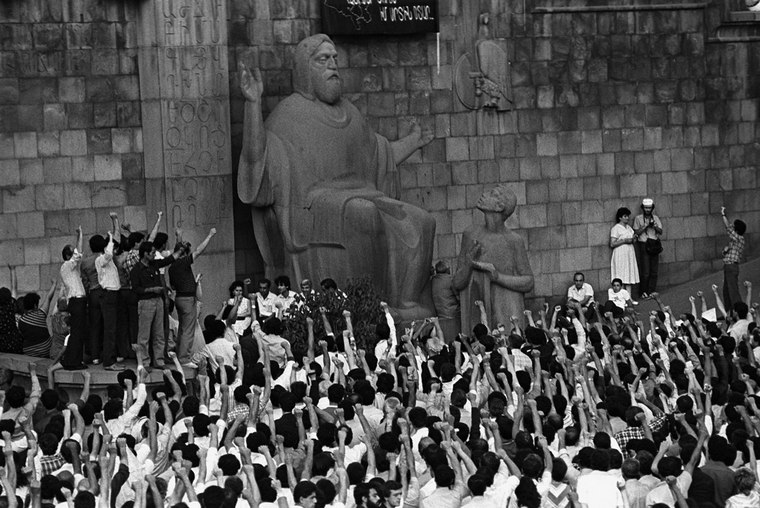
Dear readers,
The Public Tribunal Project is launching a large-scale publication series - research that traces the sequence of events, decisions, and missteps that gradually and almost imperceptibly led to the tragic reality Armenia faces today.
We are releasing these archives not to revisit the past for its own sake, but to answer a central question of our time: at what moment did history turn so sharply that the country was brought to the brink of catastrophe?
Through the upcoming series, we will follow the path from the first political upheavals of the late 1980s to the strategic miscalculations of the 1990s: from closed-door negotiations and fatal concessions to the evolution of elites, armed conflicts, and the chain of decisions that set the stage for the dramatic years of 2016, 2020, and 2023.
📘ABOUT THE REASERCH
This is not merely a political chronicle, but a dismantling of the mechanisms behind the erosion of Armenian statehood: from street clashes in Sovetashen to the political intrigue surrounding the “Goble Plan,” from the overthrow of Levon Ter-Petrosyan to the emergence of a new elite and its systemic errors.
We will revisit:
- How the radicalization of the Armenian Pan-National Movement in 1988–1991 created a model of political behavior driven by crowd power and street pressure.
- How the first victims and provocations became tools of political manipulation.
- How the “Goble Plan” became a geopolitical trap that divided the elite.
- How the logic of concessions formed and why it ultimately led to Ter-Petrosyan’s resignation.
- How Serzh Sargsyan embarked on a political course that reshaped the country.
- How Moscow, Washington, Stepanakert, and local clans intertwined their interests during the 1997–1998 crisis.
- How the decisions of that period predestined the catastrophes of 2016, 2020, and 2023.
WHAT WAS PRESENTED TO READERS FOR THE FIRST TIME
- A reconstruction of the events in Sovetashen on March 23, 1998, based on archival materials and eyewitness accounts;
- An analysis of insider correspondence from 1997–1998, as well as interviews with former participants in the negotiations;
- Rare citations and references from periodicals of the period;
- An examination of the evolution of the Karabakh elite and its influence on state decision-making.
- Journalistic investigations into the connections between security structures and political groups.
WHY THIS RESEARCH IS NECESSARY
- Because Armenia has suffered not a single catastrophe, but a chain of disasters, each stemming from the previous one.
- To understand who and when made the decisions that brought the country to its current situation. We will return to the moments when these delayed-action mines were laid.
We will write not merely about the past, but about the reasons why the challenges we face today became, in many ways, inevitable.