
EXECUTIONER IN A SUBWAY CAR: PASHINYAN, THE PEOPLE OF ARTSAKH, AND ALIYEV’S RHETORIC IN THE HEART OF ARMENIA

On March 22, 2026, during a pre-election campaign event, Armenia’s Prime Minister Nikol Pashinyan descended into the Yerevan subway, where he became involved in a heated verbal exchange with a passenger, Armine Mosiyan, reportedly the daughter of a commander killed in the First Karabakh War. The woman accused him of “handing over” Nagorno-Karabakh, prompting Pashinyan to lose his temper. He responded: “We spent billions earned by the citizens of Armenia so that you could stay there… You, ‘the runaway,’ don’t you dare say that I gave Karabakh away.” When Mosiyan asked him not to raise his voice, the Prime Minister replied, “I will speak to you in this manner,” wagging his finger at her in the presence of her child.
Reference:
Armine Mosiyan is the daughter of Meruzhan Mosiyan, a field commander of the 26th motorized rifle battalion of Martuni, who was killed in action during the Karabakh War in 1993. He was posthumously awarded the Order of the Combat Cross, First Degree.

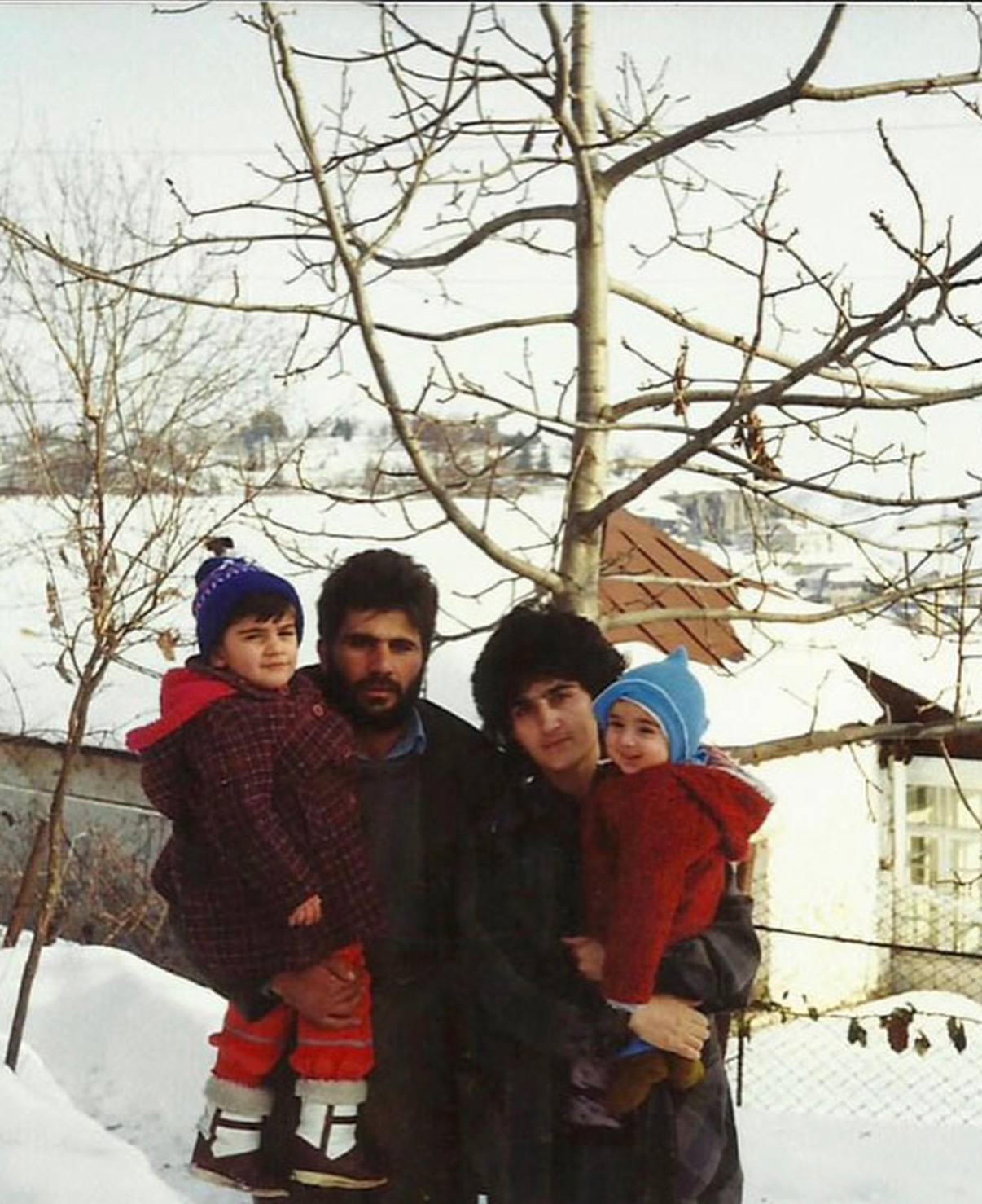
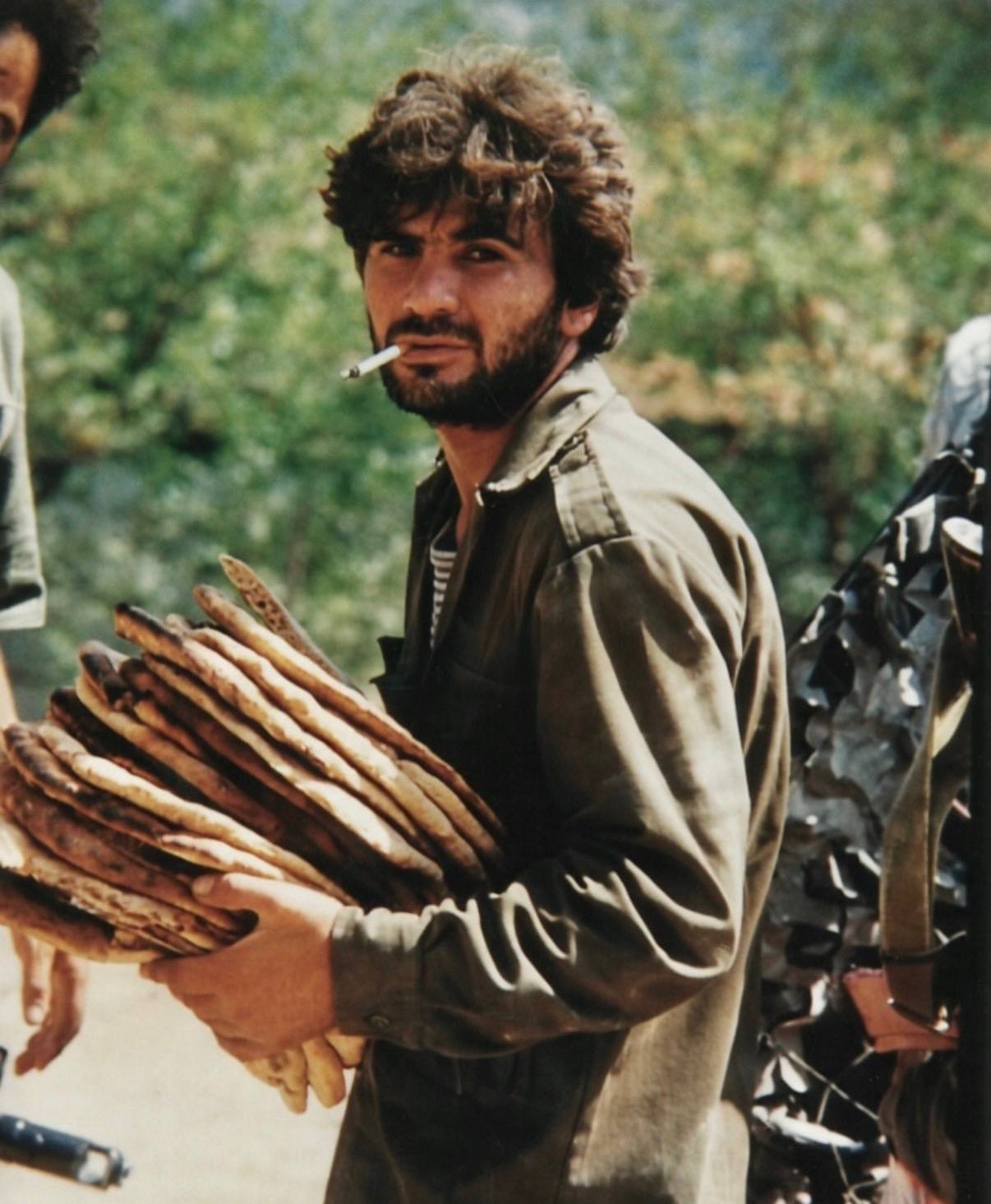
What took place in the Yerevan subway was not merely a scandalous episode - it was a revealing manifestation of state policy. The public, demonstrative, and unrestrained humiliation of a citizen - an Artsakh refugee - by Nikol Pashinyan has become a litmus test exposing the true nature of the authorities. In that moment, the mask of the “people’s prime minister” slipped, revealing a leader disconnected from his people, his history, and basic human dignity.
Subsequent developments only reinforced this impression. Initially, Pashinyan denied the incident outright, claiming he could not have said such things. As public outrage grew, he issued an apology - while simultaneously insisting he had been “misunderstood.” The sincerity of this apology is questionable: almost immediately afterward, bloggers, “analysts,” and social media accounts aligned with him launched a coordinated campaign of hostility against Armine Mosiyan.
Tatevik Hayrapetyan offered a sharp assessment of the incident on her Telegram channel, noting that Pashinyan’s rhetoric toward the people of Artsakh exceeds all acceptable norms and bears a striking resemblance to the language of enmity used by Azerbaijani President Ilham Aliyev. She drew a direct parallel between Aliyev’s statement in Stepanakert on November 8, 2020 — “Ungrateful people who ate Azerbaijan’s bread and drank its water made territorial claims against us in this square” — and Pashinyan’s words: “We spent billions earned by Armenia’s citizens so that you could stay there… You, ‘the runaway,’ don’t you dare say that I gave Karabakh away.”
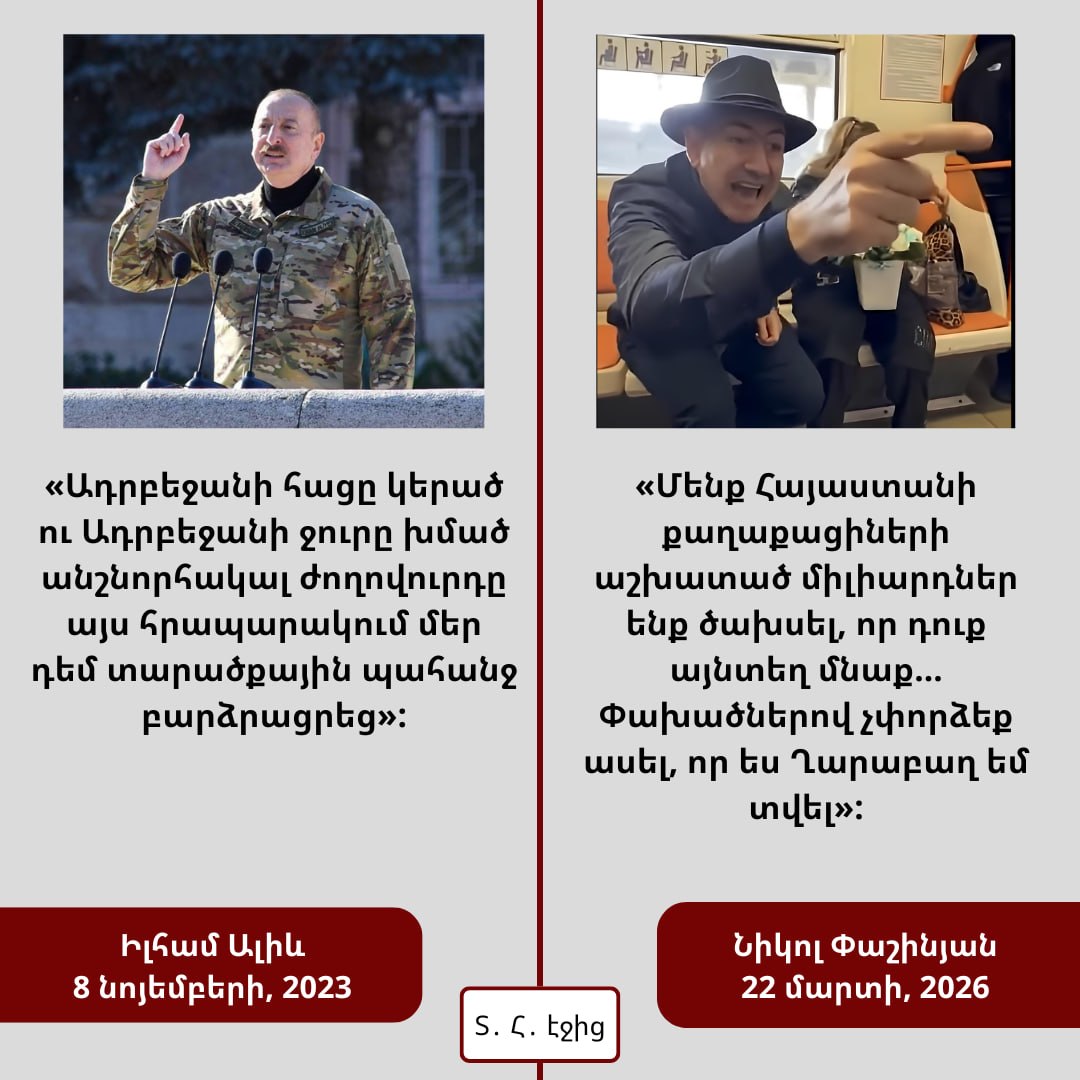
In this context, Pashinyan’s behavior cannot be dismissed as a mistake or an emotional outburst. It reflects a deeper attitude toward a segment of the nation — a harsh hostility toward everything associated with Artsakh. Humiliation, labeling, and the shifting of blame for national failure onto its victims have long become elements of his political approach.
Particularly alarming is the fact that Armenia’s leader publicly fuels resentment against the people of Artsakh, portraying them as burdens — people for whom “billions were spent,” yet who ultimately “ran away.”
Pashinyan’s rhetoric fosters intolerance and deliberately puts Artsakh Armenians against the rest of the population. Such positioning appears not accidental, but strategic: a calculated effort to divide society. Its consequences are already visible - mutual accusations replacing solidarity, hostility replacing unity.
Pashinyan’s claim that the people of Artsakh “ran away” is a blatant distortion of reality - an attempt to shift responsibility onto those who lost everything due to the betrayal of the Armenian authorities.
It was Pashinyan’s own policies - marked by provocations, miscalculations, and inaction - that led to the disastrous war of 2020 and the erosion of remaining security guarantees following the November 9 ceasefire agreement mediated by Russia.
September of 2022 was not a regular escalation, but a test of the state's independence. The authorities led by Pashinyan failed that test with shame. There was neither will, nor actions nor even imitation of efforts to defend sovereignty and the people. The front line was on fire, while those in Yerevan were idling. While the front lines burned, the leadership in Yerevan was passive.
That idling was not accidental; it functioned as an instrument of blackmail. The roar of enemy weapons along the front line was used to intimidate the population: “See what is happening? Resistance is futile. Reconcile and lower the bar on the Artsakh issue.” In this way, the bloodshed and fear of September were turned against the Armenian people themselves, used to break their will and force acceptance of what was being presented as the inevitability of betrayal.
Those calculations proved justified. By October of the same year, an act of capitulation had already taken place against the backdrop of a traumatized public consciousness. Artsakh was effectively recognized as part of Azerbaijan, without any fight for its right to exist. This was not a diplomatic maneuver, but the logical culmination of a deliberately pursued course toward capitulation. The September aggression by Azerbaijan served as the final, terrifying argument directed at Armenian society. The country was not being defended - it was being prepared for handover.
September 19, 2023. This date was engraved in the history of Armenia in bloody ink. On that day, having received not merely a signal but an effective indulgence from the Armenian leadership, Azerbaijan attacked the small, defenseless Artsakh with the full force of its military power. One hundred twenty thousand people against an armada is not a war, but an act of merciless massacre sanctioned by silent consent and by Pashinyan’s Prague statement recognizing Artsakh as part of Azerbaijan.
At the moment when Artsakh’s existence was at stake, Armenia, led by Nikol Pashinyan, made a demonstrative, cold gesture of denial. It not only failed to act - it turned its back on Artsakh. There was no order, no mobilization, no outburst of a national instinct for protection - only a chilling, conscious self-distancing. The guarantor state, in the person of its prime minister, publicly denied its duty to defend the Armenians of Artsakh. It was not a failure. It was a deliberate choice.
After all that, they are called “runaways.” After the authorities cut the ground from under people’s feet, deprived them of hope, and opened the doors to the aggressor, they dare to blame the victims for not remaining beneath the ruins of their sacrificed homeland. Such cynicism is immoral and anti-national. Authorities capable of this are crossing a red line. They are losing their moral right and their legitimacy. After all, legitimacy comes from trust and protection - not from betrayal and hypocritical reproaches directed at people they themselves drove into exile.
The Public Tribunal States:
Pashinyan’s systematic policy of discrediting, dividing, and labeling the people of Artsakh is an intentional strategy to conceal his own betrayal. He seeks to disunite the nation in order to avoid a fair judgment of history.
Pashinyan attempts to portray the loss of Artsakh as the result of the policies of former governments. It was no coincidence that immediately after the 44-day war of 2020, he declared in parliament: “I am responsible, but I am not guilty.” This is a lie. The Public Tribunal has published numerous materials asserting that the tragedy of Artsakh was the result of deliberate actions by the “velvet” prime minister.
Returning to his behavior in the subway, it was the conduct of a tyrant obsessed with retaining power, not that of a leader serving his country. Wagging his finger, shouting at a young woman in the presence of her son, followed by the spread of hostility and falsehoods through controlled media - these are the methods of a coercive authority.
Such a prime minister is a disgrace for the nation. He has trampled on the very idea of Armenian statehood, which must rest on solidarity, respect for the past, a willingness to sacrifice, and dignity.

The Public Tribunal has recognized Nikol Pashinyan as guilty:
- of high treason resulting in the loss of Artsakh;
- of inciting hatred and dividing the Armenian people;
- of the moral degradation of the authorities;
- and of the complete loss of legitimacy to govern the country.
If the sense of national dignity - defended for centuries through bloodshed - still lives in the hearts of the Armenian people, then only one conclusion remains. Pashinyan must go. He must be removed from power by all legal and constitutional means. His continued rule is a daily insult to our history, to the memory of those who fell for the country, to the suffering of Artsakh’s refugees, and to the future of new generations.
Armenia deserves better. Armenia deserves leaders who unite rather than divide, who protect rather than betray, who speak to the people in the language of truth and respect - not in bellicose propaganda and hysterical threats. It is time for historical justice. It is time to act.