
How the Current Catastrophic Situation in Armenia Began: From Romanticized Independence to Systemic Vulnerability – Part 3. The Era of Robert Kocharyan (1998-2008)
BETWEEN TWO TRAGEDIES: OCTOBER 27, 1999, AND MARCH 1, 2008 — ARMENIAN STATEHOOD UNDER THREAT
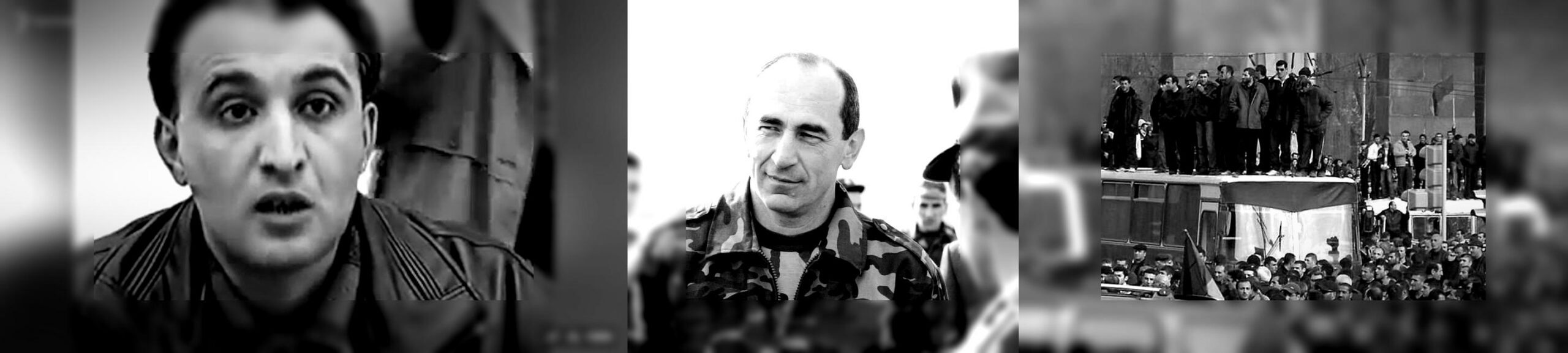
Both the beginning and the end of Robert Kocharyan’s presidency were marked by tragic events that shaped Armenia’s political environment for years to come. The armed attack on the Armenian Parliament on October 27, 1999, shocked the young republic. Nearly a decade later, on March 1, 2008, a deepened political crisis culminated in bloody clashes on the streets of Yerevan. These events were not merely isolated tragedies; they planted explosive charges beneath public institutions, fueled mutual distrust, and led to a profound societal divide.
However, before turning to the events of March 1, it is necessary to revisit certain aspects of the October 27 case. The 1999 tragedy was not a spontaneous eruption of violence. The assassination of Vazgen Sargsyan and Karen Demirchyan struck at the very core of the country’s political balance. The subsequent investigation - and the politicization of the “October 27 case” - triggered a prolonged period of instability and distrust that directly influenced Armenia’s subsequent political developments.
As noted in our previous article, the October 27 events represent one of the pivotal turning points in Armenia’s recent history —an act of violence that became not only a national tragedy but also the starting point of a complex set of political, media, and foreign policy processes. It is worth noting that official interpretations of the incident, along with loud accusations and numerous conspiracy theories, have almost entirely overshadowed a fundamentally important factor: the testimony of immediate witnesses to the tragedy and its aftermath, including accounts from relatives of members of Nairi Hunanyan’s group. Yet it is precisely this body of evidence and testimony that is essential for a more objective, comprehensive, and unbiased understanding of the October 27 events.
October 27, 1999: Evidence That Changes the Understanding of the Tragedy
Materials from Eduard Grigoryan’s letter, an interview with his father, and testimonies by Hayk Babukhanyan, editor-in-chief of the Iravunk newspaper, together form a body of candid, detail-rich evidence that runs counter to the dominant public narrative of an “ordered crime” and unnamed “political masterminds.”
A fuller picture emerges when the accounts of witnesses who were present in the National Assembly session hall at the time of the tragedy are taken into consideration.
One such witness is Hayk Babukhanyan, a person who not only observed the October 27 attack from inside the hall but was also involved in the negotiations between the armed group and the authorities. His testimony is of fundamental importance, as it reveals the dynamics of the first hours after the tragedy - before the events were overlaid with political interpretations and propaganda clichés.
According to Babukhanyan, the attack occurred suddenly, during a routine parliamentary question-and-answer session. A group of young men already known within the political environment burst into the session hall and almost immediately opened fire on Prime Minister Vazgen Sargsyan. Members of parliament threw themselves to the floor; gunfire continued, accompanied by shouting and political slogans. However, after the initial wave of gunshots, something unusual for a conventional terrorist attack occurred: the armed men allowed everyone to stand up and return to their seats.
This was followed by a second, more intense wave of gunfire, along with sounds resembling explosions. Only after that did the active phase of violence cease. It was then, Babukhanyan recalls, that Nairi Hunanyan, as the leader of the group, made a political statement. He explained his motives in detail and insisted that he had “saved the nation.” He claimed that he had no intention of harming any parliamentarian or minister and described his actions as political in nature.
This account closely aligns with the testimony of Eduard Grigoryan, who entered the session hall after the assassinations had already taken place. In the context of the legal assessment of the incident and the determination of responsibility, Grigoryan emphasizes the fundamental distinction between the direct perpetrators of the killings and other members of Nairi Hunanyan’s group who were not present in the hall at the moment of the crime. His actions —confirmed by testimonies from some of the victims — were aimed at preventing a renewed outbreak of gunfire and stabilizing the situation, not at participating in the crime itself. Nevertheless, the judicial system, by inertia, adopted a principle of collective responsibility, deliberately blurring individual roles. Eduard Grigoryan writes:
“The materials of the October 27 criminal case state that on October 27, 1999, Nairi and Karen Hunanyan and their uncle, Vram Gastyan, entered the National Assembly hall. As a result of gunshots fired by Nairi and Karen Hunanyan, Vazgen Sargsyan, Karen Demirchyan, and five other people were killed. Derenik Bejanyan and I entered the hall after the incident, that is, after the assassinations. Through our actions, we did everything possible to prevent a new outbreak of gunfire. During the investigation and in court, many victims testified that if we had not entered the hall, the consequences could have been far more tragic.”
This blurring of roles allowed investigators and the court to present a complex, multi-layered situation as a simplified scheme of a “group assassination,” implicating all those present in the hall regardless of their actual actions.
Babukhanyan’s testimony further supports this conclusion. He describes how, after the shooting ceased, discussions began about providing first aid to the wounded, how the need for negotiations gradually became evident, and how Hunanyan recognized him due to their shared political involvement during the Karabakh Movement of 1988–1989. Hunanyan again emphasized that he had no intention of harming anyone in the hall. Moreover, he urged the parliamentarians to appeal to the public for support, hoping for a public outcry and political legitimization of his actions.
At the same time, there was a real danger that security forces might storm the session hall. Realizing that the use of force would result in mass casualties, Hunanyan proposed sending negotiators to the security forces to warn them of the fatal consequences of such an assault. This episode is crucial: it does not reflect the behavior of a “deranged mercenary,” but rather that of a person convinced of his political mission and attempting to control the unfolding crisis.
Investigation as an Instrument, Not a Search for the Truth
In this context, the role of the investigative bodies appears crucial in many respects. According to Eduard Grigoryan and his father, from the very outset, the investigation was accompanied by systematic pressure, violence, and attempts to extract strictly predetermined testimonies containing specific names and a predefined political direction. They claim that a key role in this process was played by Military Prosecutor Gagik Jhangiryan — a figure closely connected to Vazgen Sargsyan’s family and appointed to lead the investigation. In their view, the investigation was not aimed at uncovering the truth or reconstructing the real sequence of events, but at advancing a version that placed responsibility on Robert Kocharyan.
Hayk Babukhanyan’s testimony adds another disturbing and significant element to this picture. According to him, during the second burst of gunfire, many people present had the impression that shots were coming from several directions simultaneously. Hunanyan claimed that there had been an exchange of fire: he pointed to bullet marks on the screen and seats and alleged that shots were fired from the journalists’ box. Notably, empty cartridges were later found in the journalists’ boxes, and some parliamentarians stated that they heard gunshots originating from different parts of the hall.
At Hunanyan’s insistence, an investigative team of criminal experts was allowed into the session hall to document the traces of gunfire. This fact does not fit the logic of an “ordered terrorist act,” in which perpetrators typically seek to eliminate evidence rather than record it. Instead, it suggests an intention to document the circumstances of the incident rather than erase its traces. Another important factor should also be noted: Robert Kocharyan, as president, did not order the storming of the National Assembly building. Such an order - issued amid chaos, gunfire, and shock - could easily have been justified by the “need to restore order,” while simultaneously eliminating evidence, killing everyone inside, and severing all possible leads to the real course of events. The absence of such a decision contradicts the version that the authorities sought to “remove traces” and conceal an allegedly “ordered” crime.
Nevertheless, this fact was later pushed out of both public debate and the judicial narrative shaped under Jhangiryan’s leadership.
It is important to emphasize that allegations about the fabrication of a convenient version of events do not come from Robert Kocharyan’s political allies. On the contrary, Eduard Grigoryan openly expresses his hatred toward the system that sentenced him to life imprisonment and placed personal responsibility for that sentence on the president. At the same time, he categorically rejects the claim of an “order from above,” calling it a tool of pressure, blackmail, and coercion used to extract the desired testimonies.
In one of his interviews with Aravot newspaper, Hayk Babukhanyan stated that he had never been a suspect in the October 27 case; he was first a witness and later a victim. According to him, mistakes can be found not only in the actions of Hunanyan’s group, but also in the actions of the state system and of Robert Kocharyan himself. In particular, he points to the transfer of the entire investigative process to Gagik Jhangiryan, which, in his view, turned the investigation into an instrument of pressure and threats rather than a search for the truth. Babukhanyan believes this was one of the reasons the October 27 case was never fully resolved, and he places responsibility on both individual members of the group and the heads of the investigative bodies. He also describes Robert Kocharyan’s statement on October 28, 1999, expressing his intention to resign, as a mistake and a sign of weakness.
Testimonies by Eduard Grigoryan’s parents add yet another dimension - the social consequences of the case. Dismissals, property confiscations, pressure on family members, and attempts at intimidation demonstrate that the repressive logic extended far beyond the criminal investigation. Justice was transformed into an instrument of collective punishment.
It was in this atmosphere that the myth of a “plot” was formed - convenient for political mobilization, but destructive for the state. A generation with no direct memory of the 1990s received a ready-made interpretation: the tragedy was presented as the result of “betrayal,” rather than of radicalization, systemic crisis, and the personal obsession of Nairi Hunanyan.
This leads to a paradoxical but revealing situation: those who suffered most from the authorities and the investigative machinery of that period deny the authorities’ complicity in the terrorist act. This circumstance undermines the conspiracy theories circulated in public discourse for decades and redirects attention to the role of investigative bodies and their leaders in shaping the official version of the tragedy.
The narrative constructed by Gagik Jhangiryan’s investigation and reinforced by the propaganda of Levon Ter-Petrosyan’s supporters deliberately influenced public opinion for years, becoming a tool of political mobilization and radicalization. It laid the groundwork for anti-government sentiment and street confrontations that ultimately culminated in the events of March 1, 2008, when post-election unrest led to deadly clashes in Yerevan.
Nairi Hunanyan: A Fanatic, Not A Mercenary
Interviews with Eduard Grigoryan’s father and testimonies from witnesses paint a similar picture of Nairi Hunanyan. He does not appear to be a "cold-hearted executor of someone else’s will." On the contrary, he was consumed by the belief that his actions were part of a personal mission, convinced that what he was doing would save the country. The label “higher-degree patriot” - though morally debatable - highlights his ideological motivations, rather than any personal gain.
This characterization is further supported by Hunanyan’s behavior after the gunfire: his calm demeanor, his emphasis on a political mission, his willingness to negotiate, his insistence on documenting the traces of the gunfire, and his call for an “unbiased investigation.”
One key detail, highlighted by Eduard Grigoryan’s father in an interview with Zhoghovurd newspaper, offers further insight into Hunanyan’s mindset. According to him, Hunanyan repeatedly stated that his primary motive was the belief that the current authorities had already made a decision to cede the Meghri corridor to Azerbaijan, and that the assassination of Vazgen Sargsyan was his final attempt to thwart this plan. From Hunanyan’s perspective, if the group had not stormed the parliament, Armenia would have effectively become a geopolitical enclave.
These statements are crucial not as justifications, but as a key to understanding the logic behind Hunanyan’s radicalization. He did not act as a mercenary or as someone carrying out an external order; instead, he was driven by the political climate of the late 1990s. During this time, the issue of Meghri was not an abstract theory, but a real and pressing topic in political circles, with frequent leaks and discussions surrounding it. In this context, the evidence provided by Grigoryan’s family directly connects to the patterns we analyzed in previous articles about the so-called Goble Plan — a proposal for a territorial swap discussed on international platforms, which was perceived by the Armenian public as an existential threat to the nation’s statehood.
Conclusion:
By examining the testimonies from the defendants, their families, and immediate witnesses, a more complete picture begins to emerge.
- The investigation was politicized and manipulated to craft a narrative that concealed the complex web of causes — personal radicalism and geopolitical pressures — that led to the tragedy.
- Rather than seeking the truth, conspiracy theories became a tool in the struggle for political power.
- The October 27 attack was the personal initiative of Nairi Hunanyan, driven by radical ideological motives linked to his belief that Vazgen Sargsyan intended to meet the United States’ demand for a "territorial swap" - ceding Meghri in exchange for Lachin. However, Hunanyan’s actions cannot be viewed in isolation from the broader geopolitical context. Western powers, as suggested by open sources and expert analyses, were actively pushing for "regional stabilization" by exerting pressure on Armenia. This aligns with the infamous Goble Plan, which called for forced territorial concessions by Yerevan.
The tragedy of October 27 does not need myths to be understood. In fact, rejecting convenient legends is key to grasping its true significance — a stark warning of what can happen when public despair, external pressure, media hysteria, and the cynical manipulation of the legal system converge.
While society continues to search for “secret orchestrators” and ignores the facts and testimonies of those who were actually present during the attack, the delayed impact of that event remains. The ruthless exploitation of the October 27 tragedy for propaganda purposes has gradually radicalized public opinion, deepened distrust in state institutions, and paved the way for large-scale anti-government protests. This systematic manipulation of public sentiment ultimately culminated in the events of March 1, 2008, which claimed lives and left lasting scars on Armenia’s political history.