
How the Current Catastrophic Situation in Armenia Began: From Romanticized Independence to Systemic Vulnerability – Part 3. The Era of Robert Kocharyan (continuation)
ARMENIA, OCTOBER 27, 1999: THE ATTACK THAT SHOOK THE COUNTRY
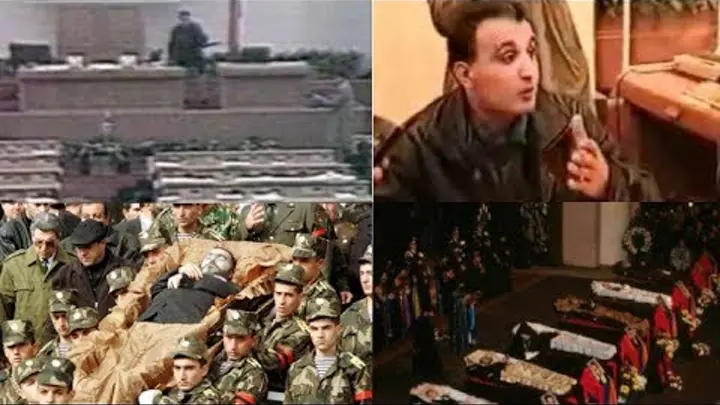
The morning of October 27, 1999, began as an ordinary day in the Armenian Parliament, but it soon turned into a tragedy that shook the entire country. Nairi Hunanyan, armed and determined, entered the assembly hall accompanied by his closest relatives — his brother Karen Hunanyan and his uncle Vram Galstyan —as well as several trusted associates: Derenik Bejanyan and Eduard Grigoryan. This was not a spontaneously formed group; its members were bound by blood and friendship, trust, and a shared conviction that radical measures were necessary.
Hunanyan’s group acted with a high level of coordination. Family ties provided not only moral support but also operational cooperation, which was crucial for the preparation and execution of such an attack. His brother and uncle were fully involved, sharing feelings of injustice, disappointment, and frustration with the political regime.
The chronology of the attack was swift and precise.
At around 5:15 p.m. local time, the group burst into the assembly hall, concealing firearms under long trench coats. The first target was Prime Minister Vazgen Sargsyan, followed by Parliament Speaker Karen Demirchyan and several members of parliament.
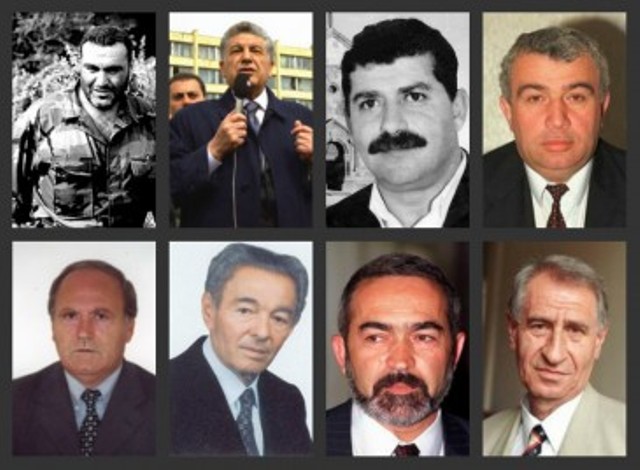
As a result, eight high-ranking officials, including the deputy speakers and a minister, were killed. After the shooting, the attackers took hostages and held them until the following day, October 28. Following lengthy negotiations with the authorities and after receiving security guarantees, they eventually surrendered to the police.
According to Nairi Hunanyan, the group’s motives were deeply personal and based on the belief that radical action would help “clean the country of corruption and collapse.” However, the group’s composition — close relatives and trusted associates — indicates that the decision to carry out the attack was made in advance. The participants acted as a single entity, following an agreed tactical plan until the moment of surrender. People who knew Nairi Hunanyan believe he was driven by a desire to become a national hero.
Following the Tragedy: Propaganda Campaign and Attempts to Shift Responsibility
Immediately after the tragic events of October 27, 1999, a large-scale information and political campaign was launched in Armenia, aimed at accusing Robert Kocharyan and Russia of organizing the attack on Parliament. Several key actors stood behind this campaign.
Representatives of Vazgen Sargsyan’s circle and the successors of Karen Demirchyan openly questioned the impartiality of the investigation, fueling growing public distrust toward the authorities. Through public statements and extensive use of mass media, they promoted a narrative of external interference and “undiscovered motives” behind the assassinations.
The Yerkrapah Union of Volunteers, through pressure on the investigation and direct engagement with parliamentarians and law enforcement bodies, generated media coverage emphasizing the alleged “incompleteness” and “ineffectiveness” of the investigation.
Military Prosecutor Gagik Jhangiryan, who had close ties to Sargsyan’s family, headed the investigation, further politicizing the events. His actions created the impression that the investigation was being used as a tool to exert pressure on political opponents
Levon Ter-Petrosyan and his supporters used the tragedy to criticize Robert Kocharyan. While there is no direct evidence that these actions were coordinated, their public statements and support for opposition media were evident.
Opposition media outlets and analytical newspaper articles shaped public opinion by focusing on “undiscovered motives” behind the assassinations and portraying the events as the result of external or hidden interference.
This information campaign caused a major public outcry, heightened political tensions, and created an atmosphere in which the actions of a radical individual were perceived as part of a broader domestic or international political game. Media publications and analytical commentaries repeatedly circulated narratives accusing Kocharyan of complicity and alleging Russian interference — despite the absence of direct evidence and despite findings pointing to Hunanyan’s personal initiative. At the same time, it should be noted that the investigation was effectively under the influence of Vazgen Sargsyan’s family, as it was led by a family associate, Military Prosecutor Gagik Jhangiryan. This further increased the political coloration of the investigation and contributed to the information campaign surrounding it.
For example, in October 2001, the leader of the opposition Republic Party, Albert Bazeyan, publicly stated that the events of October 27 had been organized by Robert Kocharyan and Serzh Sargsyan.
On October 20, 2000, Ashot Manucharyan also voiced similar accusations against Robert Kocharyan, believing that the key motive behind the murder of Vazgen Sargsyan was the issue of a possible exchange of Meghri for the Lachin Corridor.
Nairi Hunanyan's Personal Motivation
Личная мотивация Наири Унаняна
At the same time, a subjective analysis of materials related to the events of October 27 indicates that the assassination of Vazgen Sargsyan was Hunanyan’s personal initiative. He was convinced that he was capable of saving a people devastated by tyranny and injustice. Amid deep public discontent following the 1996 elections, Hunanyan came to the conclusion that there were no legitimate means to change the authorities. “They drained the people dry, scum,” were Hunanyan’s first words after the tragedy.
He was not carrying out anyone’s order. By involving his brother and uncle, he placed their lives at risk. Public dissatisfaction and frustration with Sargsyan were widespread. Nairi hoped his actions would be perceived as an act of national revenge and believed this was his chance to become a national hero who would save the people from “tyranny and outrage.” What he did not anticipate was being labeled a terrorist. In an interview with the A+ television channel, Hunanyan stated:
“It was considered the only possible way to somehow stop the destruction process of our nation.”
This interpretation is supported by testimony from Robert Kocharyan:
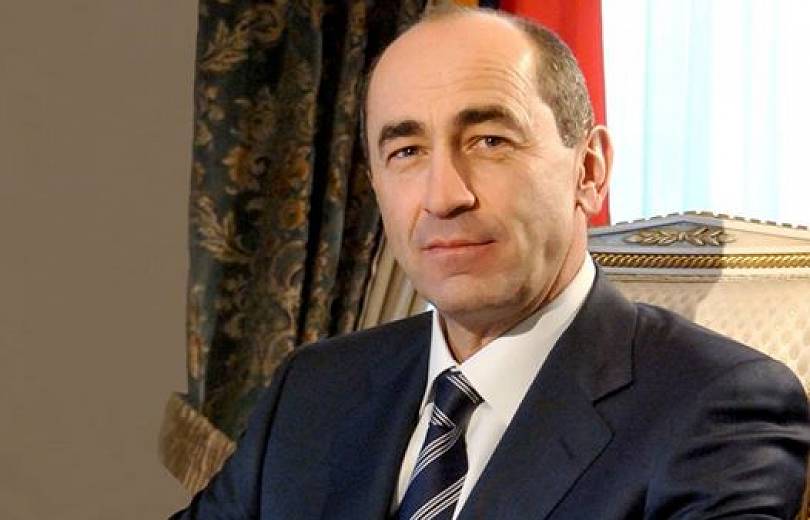
“Our conversation lasted about 20 minutes. He tried to remind me of our meeting in 1988. When asked whether he had any personal hostility toward Sargsyan, he answered negatively and complained about the situation in the country, Sargsyan’s role in hindering development, and the need for a shock. He said he had taken this step for the people, for history, and that future generations would appreciate it. Apart from Sargsyan, all the casualties were accidental” , Kocharyan said.
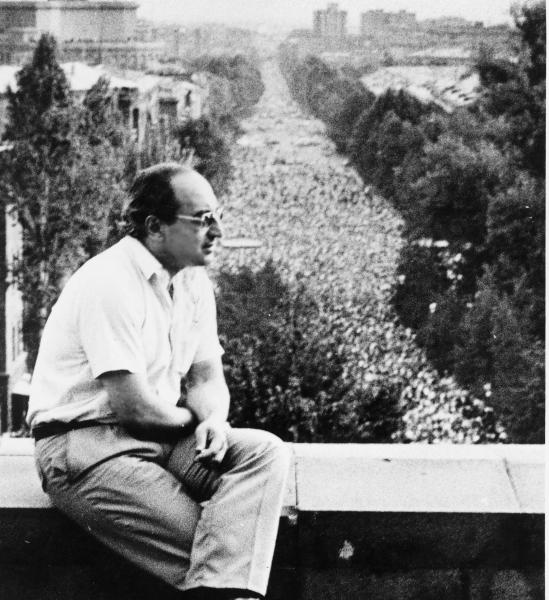
The version suggesting the complicity of the first president, Levon Ter-Petrosyan, does not withstand scrutiny. Vazgen Manukyan, one of Ter-Petrosyan’s key opponents, openly stated:
“I am not a supporter of conspiracy theories… there was no force behind it, no one incited it,” Aravot.am quoted Vazgen Manukyan as saying.
Unclassified documents of the U.S. Department of State, also confirmed that no external forces were behind the tragedy.
According to those documents, “Armenia also was roiled when gunmen with apparently personal grievances assassinated the premier, legislative speaker, and six other politicians in late 1999, but a new speaker and premier were chosen peacefully."
Even the Armenian Revolutionary Federation (Dashnaktsutyun) refrained from accusing Levon Ter-Petrosyan, despite efforts by the Armenian Pan-National Movement’s propaganda apparatus to link Vazgen Sargsyan’s assassination to the ARF. These accusations were based on Nairi Hunanyan’s phone call to ARF representative Hrant Margaryan. However, analysis of the evidence showed, that Hunanyan had made similar calls to many politicians and parliamentarians. These contacts were intended to mobilize support and were not directed against any specific individuals. Nairi attempted to gather people in front of the National Assembly, believing he would receive public backing and that his actions would free Armenia from Vazgen Sargsyan’s tyranny.
Although Hunanyan’s motivation was personal and sincere, the possibility cannot be excluded that his actions may have been used “in an unwitting manner.” History offers many examples in which an individual driven by a moral mission becomes an instrument for the strategies of others. The late 1990s in Armenia were marked by widespread public discontent, parliamentary instability, and intense debates over Nagorno-Karabakh. In such a context, the actions of individual actors could acquire strategic significance.
The mass media of the time actively reported on public dissatisfaction with the security structures, shaping an image of Sargsyan as an “uncontrolled and unfair” leader. Hunanyan was influenced by this highly negative media coverage and believed his actions would be perceived as a national act of revenge. Public discussions, calls to parliamentarians, media reports, and analytical articles created the illusion of such a necessity, ultimately pushing toward a radical solution.
Thus, Hunanyan may have acted independently, but his actions coincided with the interests of forces seeking an opportunity to reshape the political landscape and advance their strategic objectives. This coincidence does not prove the existence of a plot; it merely demonstrates how an individual act, in an oversaturated political and public environment, can serve as a catalyst for broader events.
Conclusion: Consequences and Hidden Mechanisms After October 27, 1999
The tragedy of October 27, 1999, was not merely a bloody act of violence; it became a catalyst for broader political and strategic changes. Before these events, Robert Kocharyan’s policy in the negotiation process was under clear pressure and control from Vazgen Sargsyan. After Sargsyan’s assassination, Kocharyan gained greater freedom of action, which suggests that his earlier steps had been constrained by external influence.
At the same time, a wide-ranging propaganda campaign was launched to discredit Kocharyan and to create the image of an “external and internal plot,” despite the absence of any evidence of his involvement in the October 27 events. This campaign likely pursued a strategic objective: to reestablish control over the president and preserve influence over key decisions related to the Karabakh negotiations and territorial issues.
Against this backdrop, the so-called Goble Plan, which envisaged the transfer of five regions surrounding Karabakh and the town of Meghri to Azerbaijan, was actively discussed. Following Sargsyan’s death, no formal obstacles to the plan remained; however, the document was never signed. In October 1999, Strobe Talbott made numerous visits to Baku, Yerevan, and Ankara, indicating intensive diplomatic efforts that were largely unknown to the broader public at the time.
In November 1999, a delegation led by Ilham Aliyev arrived in Washington to discuss a territorial exchange involving Meghri and the regions around Nagorno-Karabakh. Unclassified U.S. Department of State documents indicate that pressure was exerted on President Kocharyan to implement these agreements. However, after the events of October 27, Kocharyan used domestic instability and the need to protect the border with Iran as grounds to delay the process and gain time, under the guise of consolidating internal support.
Within Armenia, the October 27 tragedy shattered a carefully constructed political scenario. Levon Ter-Petrosyan and Vazgen Sargsyan had planned to achieve strategic objectives — including territorial concessions and the normalization of relations with Turkey — through Kocharyan, and then remove him from the process so that Sargsyan could assume the presidency and complete the project. Nairi Hunanyan’s actions disrupted this plan and led to chaotic developments, upsetting the balance of power and exposing the vulnerability of political schemes.
Thus, the tragedy of October 27 was not only an act of violence but also a dramatic demonstration of how personal decisions by individual actors, combined with media propaganda and diplomatic maneuvering, can alter the course of national policy. In this sense, October 27 became a turning point at which hidden mechanisms of control, influence, and manipulation were revealed, once again demonstrating the multilayered nature of political reality.