
How the Current Catastrophic Situation in Armenia Began: From Romanticized Independence to Systemic Vulnerability – Part 2 (continuation)
GOBLE PLAN: A GEOPOLITICAL TRAP SET IN 1997
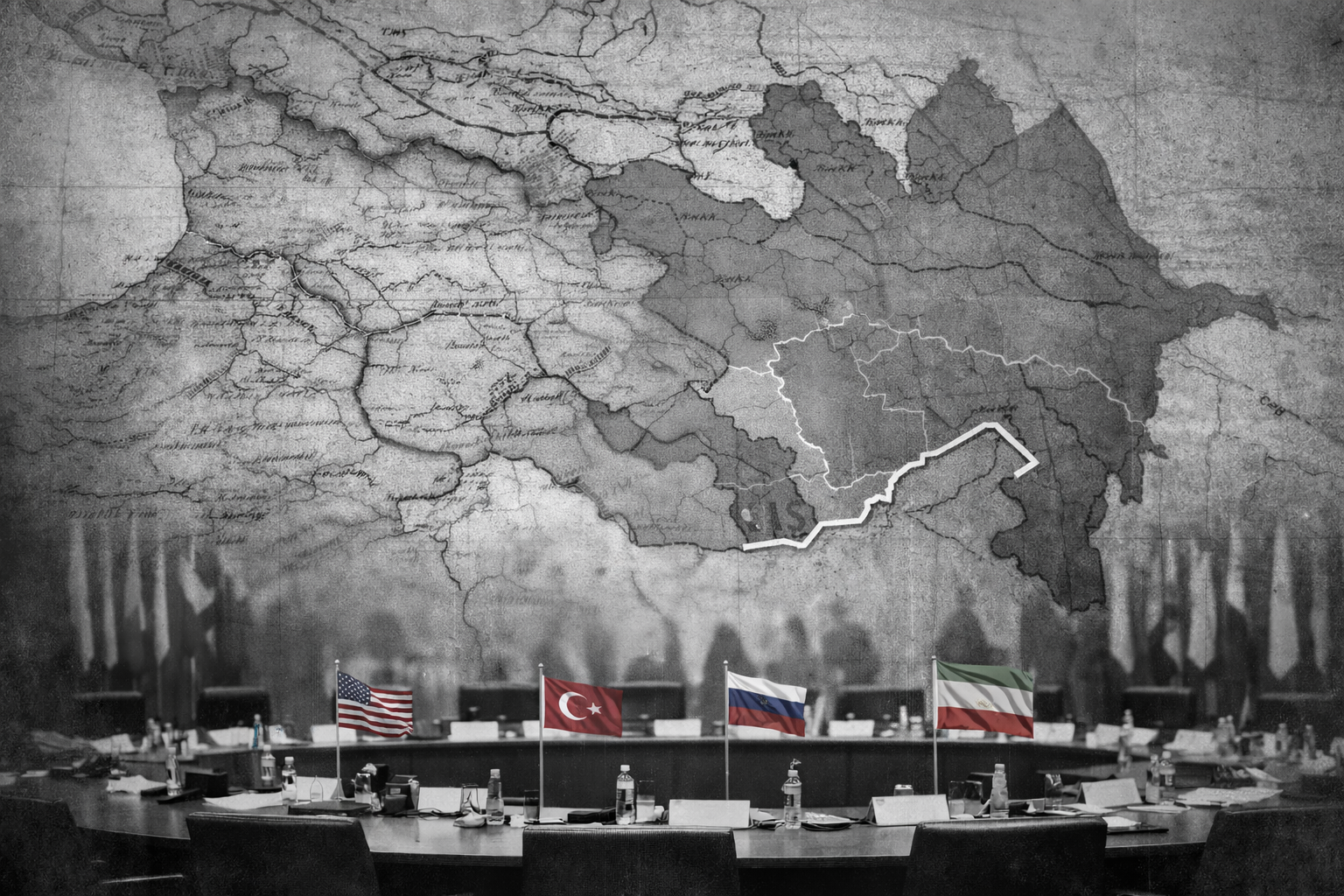
MOSCOW, WASHINGTON, AND MEGHRI: A GEOPOLITICAL SPLIT THAT TORE ARMENIA APART
PAUL GOBLE AND THE “GOBLE PLAN”: THE ORIGINS OF THE IDEA
Paul Goble is a U.S. diplomat and analyst who worked at the U.S. Department of State in the 1990s and specialized in the Caucasus. The so-called “Goble Plan,” which emerged in expert and diplomatic circles in the mid-1990s, is commonly attributed to him.

The essence and logic of the plan were as follows:
- Armenia would gain control over Nagorno-Karabakh and the Lachin Corridor;
- Azerbaijan would receive a corridor through Meghri, providing a direct land link to Nakhijevan;
- The regional map would be “simplified” in the name of long-term stability and transit logistics.
It is noteworthy that Goble himself later emphasized that this was merely an analytical scenario rather than an official proposal. Nevertheless, in real diplomatic practice in the late 1990s, this scheme was widely perceived as a working model and discussed in various formats — from the OSCE Minsk Group negotiations to closed-door U.S. consultations with regional actors.
MOSCOW: CONCERNS GROWING INTO ALARMS
Russia generally avoided public discussion of ideas related to Meghri. However, within Russian expert and diplomatic circles in the late 1990s, the concept of a corridor through southern Armenia was viewed as strategically dangerous.
Analyzing the logic of the “corridor projects” of the late 1990s, Russian political analyst Sergey Markedonov repeatedly emphasized that, for Moscow, the Meghri issue was never simply part of the Armenian-Azerbaijani conflict. Rather, it concerned the preservation of the southern segment of the post-Soviet space and the prevention of any transit architecture that excluded Russia.
In his analytical writings, Markedonov frequently noted that the territorial exchanges proposed under the “Goble Plan” undermined the principle of the status quo - a principle that had ensured a relative stability in the region after active hostilities ended. According to him, such solutions set a precedent in which geography was reshaped to serve external logistical interests rather than the security needs of the countries in the region.
Markedonov also pointed out that the loss of direct access to Iran would not merely limit Armenia’s foreign-policy maneuverability, but would place the country in structural dependence on the political will of transit states. From this perspective, he viewed Moscow’s concerns in the late 1990s as rational and strategically grounded, rather than as manifestations of imperial inertia.
Russian analysts of that period also argued that:
- Iran would perceive such a corridor as a direct threat to its northern communications and would respond with maximum severity;
- Russia would lose control over southern transit routes, which were vital to its strategic planning at the time;
- The United States would gain an opportunity to establish a southern bypass corridor that excluded both Russia and Iran.
In the 1990s, the CIS Institute, the Institute of World Economy and International Relations of the Russian Academy of Sciences (IMEMO RAN), and the Academy of Geopolitical Issues published analytical notes that today appear almost prophetic. For example, the Analytical Bulletin of IMEMO (Issue No. 7, 1998) stated:
“The transfer of Meghri will create a corridor that splits Russia’s presence in the Caucasus and opens the way for U.S. control over the southern arc.”
In 1998, the journal Issues of the Post-Soviet Space (Russian: “Проблемы постсоветского пространства”) published an article whose diagnosis seemed exaggerated at the time:
“The Meghri corridor: the beginning of the end of Armenia’s security?”
Moscow was not merely concerned - it was alarmed. Russian reports, memoranda, and expert articles of the 1990s reached a common conclusion: any project involving a corridor through Meghri would inevitably undermine the regional balance of power. Analytical writings of the late 1990s consistently described the exchange of Lachin for Meghri as asymmetric. Southern Armenia was viewed as a strategic hub, the loss of which would automatically weaken not only Armenia but also Russia’s positions across the entire southern vector.
Now, in 2025, as the United States and Armenia launch the TRIPP project —closely mirroring the logic of the same corridor — it becomes evident that the warnings voiced by Russian diplomats and experts in the 1990s were not alarmist rhetoric. They constituted an early and accurate forecast of the geopolitical framework into which Armenia has been drawn for the past 25 years. Those analyses, in effect, anticipated the evolution of U.S. strategy in the region. Then, it was called the “Goble Plan.” Today, it is framed as an infrastructure alliance. The drama was not in the articles or analytical forecasts. The drama lay in history itself — repeating over and over again while we chose not to see it.
WASHINGTON: ARMENIA CAUGHT IN THE GAMES OF OTHERS
In the late 1990s, Washington viewed the South Caucasus not as a diplomat, but as an architect shaping a new strategic contour. Armenia was not seen as a center, but as a node — a crossroads where future logistics would be determined. The United States approached the South Caucasus primarily through the lens of energy and transit. This perspective is clearly reflected in the analytical writings of American think tanks of the period, as well as in the memoirs of senior diplomats.
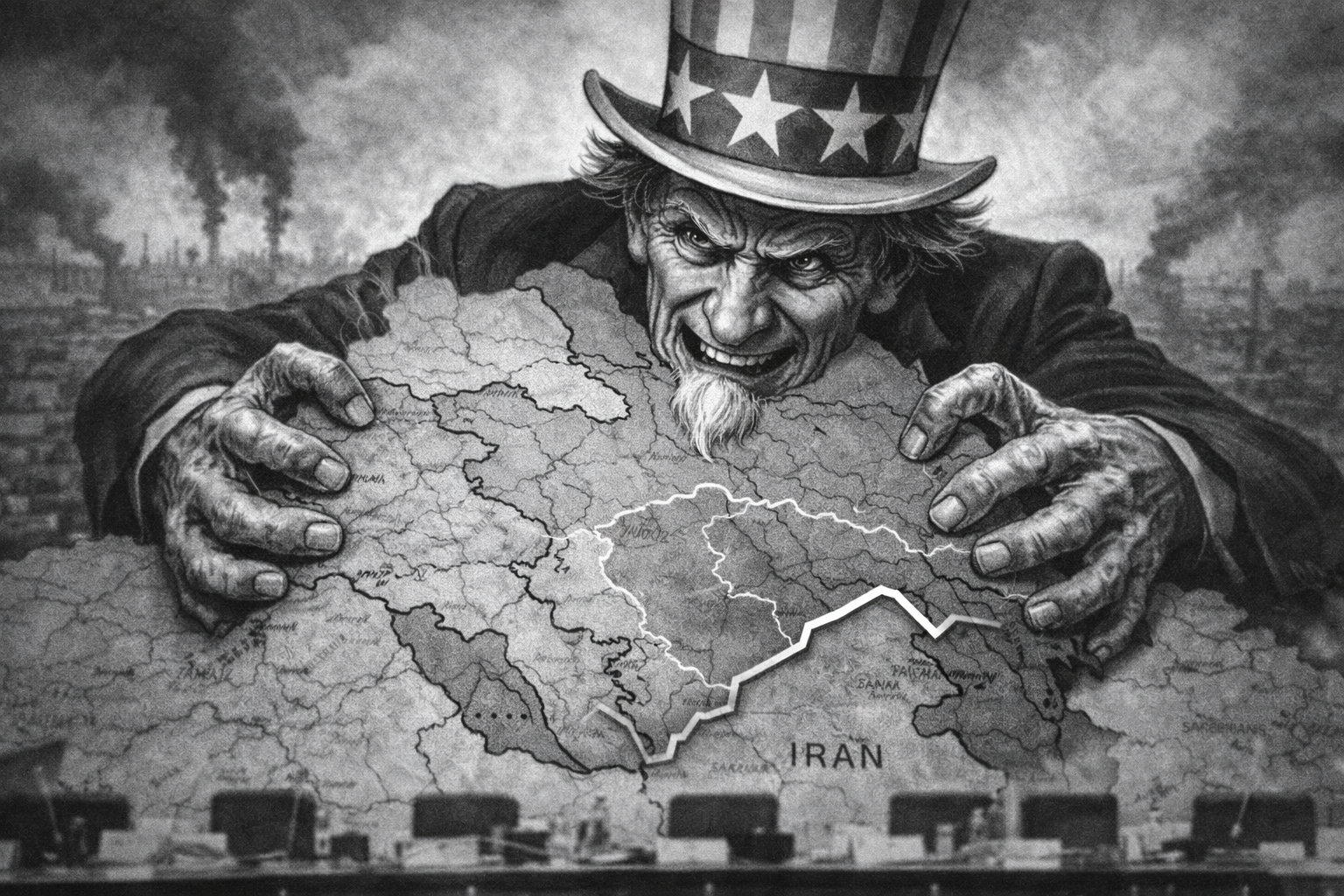
The foreign-policy logic of U.S. analytical centers in the mid-1990s was rarely made public, yet it guided practical decision-making. One of the key institutions in this process was the RAND Corporation, which served as an intellectual intermediary between academic analysis and strategic planning. It was at RAND that conceptual frameworks were developed that treated individual regions not as collections of sovereign states, but as components of a broader geopolitical architecture.
In this context, the RAND Corporation’s 1996 report “Regional Balances and the Strategic Future of the Caucasus” is particularly noteworthy. Written in a technocratic style characteristic of such research, the report nonetheless carried conclusions with far-reaching implications. Its authors argued that long-term control over the “Caspian region–Turkey–Mediterranean” route would be impossible without creating an infrastructure alternative to Russia’s transit corridor through the South Caucasus. This logic removed transport and energy routes from the realm of economic feasibility alone and placed them squarely within strategic competition, where the region’s territorial and political parameters were treated as variables subject to adjustment.
Three years before the political crisis in Yerevan, the fate of Meghri was already being discussed in offices where no Armenians were present — yet decisions about Armenia’s geopolitical future were being made.
In a series of reports by the Center for Strategic and International Studies (CSIS), the region was described primarily as an element of a broader Eurasian logistical architecture, in which political borders needed to be adjusted to meet transit requirements. These reports argued that the implementation of major transport and energy projects was impossible without opening the Armenian–Turkish border and establishing a direct route through southern Armenia linking the Caspian region with Turkey.
From this emerged an unspoken but rigid conclusion: Armenia was viewed not as an independent actor, but as a missing link in an infrastructure chain. Its participation in the project was assumed by default, while refusal was seen as a factor that would marginalize the country in the process of shaping the region’s architecture.
Analysts at the Carnegie Endowment of that period expressed this approach even more directly. In their publications, they argued that Armenia’s inclusion in the new regional configuration was possible only in exchange for serious territorial and political concessions — concessions that would inevitably provoke an acute domestic crisis. In other words, integration was understood as a process inherently coupled with internal destabilization. Yet such a price was deemed acceptable in light of broader strategic objectives.
It was within this intellectual and policy context that the “Goble Plan” took shape: an attempt to tie the settlement of the Karabakh conflict to territorial exchanges and the establishment of corridors required for the region’s transit infrastructure. The conflict was treated not as a matter of security or self-determination, but as a technical obstacle standing in the way of implementing that infrastructure project.
In the spring of 1998, this logic - previously confined to expert reports -entered the sphere of public debate through leading international newspapers and journals. Analytical articles published in Foreign Affairs emphasized that a corridor through southern Armenia could radically alter the strategic configuration of Eurasia by establishing direct connectivity between the Caspian region, Turkey, and European markets. At the same time, it was stated openly that such a route was impossible without a settlement of the Armenian–Azerbaijani conflict - meaning that the settlement itself would have to be structured around the task of creating these corridors.
Journalist Thomas de Waal, who covered the Karabakh negotiations in the late 1990s, noted that the Meghri proposal provoked such a strong reaction precisely because:
“For Armenia, this was not a compromise but a transformation of the country’s geography.” (Thomas de Waal, articles in the western press in late1990s, and later in Black Garden)
Thus, by the end of the 1990s, a fixed formula had taken shape within Western analytical and policy circles: the goal of negotiations was not conflict resolution, but territorial concessions; not compromise, but a technical prerequisite for completing a regional logistics infrastructure. This formula became the basis of the political pressure Armenia faced in 1997–1998. Documents published by RAND, CSIS, and the Carnegie Endowment demonstrate that the “Goble Plan” was not merely a diplomat’s idea, but an integral part of this logic: energy + transit + control = changes to borders.
A similar conclusion was reached in an analytical article by expert Vigen Hakobyan, published by EADaily. Hakobyan draws attention to a detail that for a long time remained on the periphery of public debate, yet fundamentally alters the understanding of the crisis of the late 1990s. In his article, he refers to a statement by Armenia’s first president, Levon Ter-Petrosyan, who acknowledged that the so-called “basic formula” for settling the Karabakh conflict - adopted at the OSCE Summit of Heads of State in Lisbon in December 1996 - was promoted not by diplomats in the classical sense, but primarily by U.S. oil interests, first and foremost those linked to Texas.
This admission is significant not as an element of retrospective political polemics, but as a key to understanding the entire logic of the subsequent pressure exerted on Armenia. According to Ter-Petrosyan, in 1996–1997, following the formation of an international oil consortium in Azerbaijan with the participation of American and British companies, both Baku’s rhetoric and the tone of Western mediation changed sharply. The Lisbon Summit became a turning point: a standard OSCE document - one that had been repeatedly negotiated and agreed upon - was replaced overnight by a new formula, a formula approved by all participants except Armenia.
The Lisbon Summit marked not only Yerevan’s diplomatic failure, but also an institutional transformation. Nagorno-Karabakh was removed from the negotiation framework as an independent party, and the conflict itself began to be interpreted primarily through the prism of infrastructure and energy interests.
In this sense, the Lisbon Summit directly aligns with what later became known as the “Goble Plan.”
DIPLOMATIC ACTIVITY OF STROBE TALBOTT
The key political promoter of this direction within the U.S. administration was Deputy Secretary of State Strobe Talbott, who oversaw policy in the post-Soviet space and energy diplomacy from 1994 to 2001. In his memoirs, Talbott openly wrote:
“Transport and energy routes in the Caspian region were no less important than the issue of borders. Sometimes they were determining the frameworks of possible political decisions.” — attributed to Strobe Talbott, The Russian Hand (2002)
In other writings, he explicitly emphasized the need to view the South Caucasus as a unified strategic space, rather than merely a collection of sovereign states. This perspective is crucial for understanding the Western approach to Armenia: not as an independent actor, but as a component within a broader geopolitical scheme.
It was during this period that Talbott’s diplomatic activity regarding Armenia, Azerbaijan, and Turkey intensified, and Yerevan’s “flexibility” increasingly became a topic of informal discussions.

By the late 1990s, Armenia found itself caught in the strategic game of others, where infrastructure and energy strategies were advanced under the guise of diplomacy. The West did not regard Armenia as an ally, a partner, or even a state seeking security; rather, it was treated as a geographic element to be integrated into a project that extended far beyond Armenia’s sovereignty.
Thus, if Levon Ter-Petrosyan had signed onto the “Goble Plan,” he would have been welcomed not for resolving the Karabakh conflict, but for completing a logistical puzzle. Washington, therefore, supported only a policy of concessions — because only concessions could open the gateway to a larger geopolitical infrastructure.
DOMESTIC POLITICAL SPLIT: 1997-1998
It was during this period that geopolitical ambitions collided with domestic realities. In Armenia in 1997–1998, proposals for “painful but necessary concessions” triggered a sharp division within both the political elite and the general public.
Journalistic investigations from the time indicate that the prospect of territorial concessions met strong opposition from a significant portion of the political class, including war veterans and the military:
Proposals related to the south of Armenia were perceived not as diplomacy, but as a threat to the state structure.” — Review of the Armenian press, late 1990s, Azatutyun/RFE/RL)
The parliament, military leadership, much of the expert community, and large segments of the public viewed the Meghri corridor proposal as a red line. Opposition was both emotional and strategic: the concessions were seen as asymmetric and irreversible.
The crisis culminated in Levon Ter-Petrosyan’s resignation. This marked the first instance in post-Soviet Armenian history in which a president stepped down not under external pressure, but as a result of a domestic strategic conflict.
THE PAST’S WARNINGS ABOUT FUTURE CATASTROPHE
Armenia’s political history has repeatedly shown that the country’s fate was often decided not on the battlefield, but through external agreements and so-called “realistic concessions.”
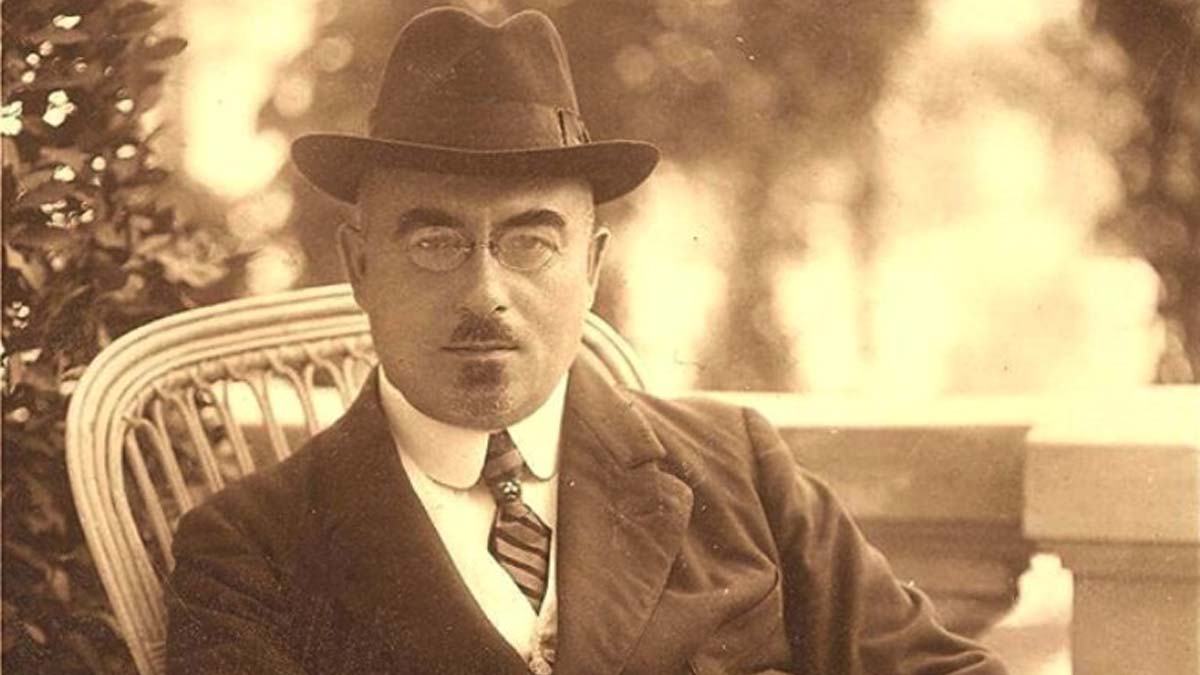
The Prime Minister of the First Republic, Aleksander Khatisyan, admitted in his memoirs that Armenia was involved in a system of decisions in which its own agency was minimal and real choice was elusive.
Khatisyan noted that Armenian diplomacy in 1919–1920 “had to maneuver between superpowers having neither enough power nor real guarantees,” and that concessions presented as temporary often proved irreversible. He observed that every “minor” territorial or political concession under external pressure accelerated the collapse of statehood.
The disagreements over strategic decisions faced by Armenia in the late 1990s partially mirrored the structure of crises characteristic of the First Republic of Armenia (1918–1920). During the country’s early years of independence, amid the collapse of the Russian Empire and deep geopolitical turbulence, Armenian statehood was entangled in the games of superpowers, leaving its independence and ability to influence its own fate severely constrained.
The First Republic of Armenia declared independence on May 28, 1918, following the collapse of the Transcaucasian Democratic Federation, and was soon surrounded by wars and tense foreign political challenges. The foreign policy context was extremely complex: the Republic sought diplomatic recognition from the Entente countries, the United States, and neighboring states, but often faced contradictory superpower interests that were unwilling — or unable — to ensure effective protection of its sovereignty. Even international agreements, such as the Treaty of Sèvres, which recognized the Armenian people’s legal right to a united Armenia, including Western Armenia, provided limited practical guarantees. (analysis of the foreign policy of the Re[ublic of Armen ia in 1918-1920).
Historical research shows that the Armenian government often found its independence and territorial claims contingent on the responses of superpowers and their willingness to implement promises in practice —promises that frequently fell short of the Armenian elite’s expectations. Efforts to gain diplomatic recognition and participate in the Paris Peace Conference of 1919 were hampered by Armenia’s limited international standing and the relative inattention of the world powers, despite the delegation’s active participation and pursuit of security through external guarantees.
The foreign policy strategy of the First Republic also included attempts to build sustainable alliances and diplomatic ties with states such as Germany, Austria-Hungary, Georgia, and Azerbaijan. However, the success of these efforts heavily depended on the superpowers’ readiness to support them and on rapidly shifting regional dynamics, amid wars and revolutions across Eurasia.
The collapse of the First Republic in early December 1920 culminated in the signing of treaties that effectively deprived Armenia of parts of its territory and its sovereignty. These events revealed how thin the line can be between the preservation of statehood and its loss under pressure from external powers. The failure of international promises and the resulting erosion of the country’s security offer a historical analogy to the dilemmas Armenia faced in the late twentieth and early twenty-first centuries, when foreign infrastructure and geopolitical projects again called into question the country’s strategic positions.
This historical parallel is not about the repetition of events, but about the recurrence of a structural dilemma. In both periods, the Armenian state was forced to maneuver amid competing geopolitical interests. Its foreign policy inevitably intersected with the projects of external actors — whether the great powers of the early twentieth century or the major international centers of influence of the late twentieth and early twenty-first centuries.
The logic of concessions in exchange for postponement, a compromise for the sake of survival, ended tragically in 1920. It is for this reason that the events of 1997–1998 in Armenia evoke familiar patterns: once again, reliance on external guarantees; once again, territorial issues treated as a technical component of a “grand bargain”; and once again, domestic political warnings relegated to secondary importance.
CONCLUSION: THE GOBLE PLAN AS THE IDEOLOGICAL BASIS OF CONCESSIONS
Levon Ter-Petrosyan’s readiness for concessions in 1997–1998 was neither an impulsive mistake nor the result of short-term pressure. It fit squarely within a stable conceptual model that was widely circulated in Western diplomatic and analytical circles at the time and clearly articulated through what became known as the “Goble Plan.”
Within this model, territorial change was treated as an acceptable price for stabilization; geography as an object of manageable transformation; and sovereignty as something conditional upon external guarantees and integration into someone else’s security architecture. The state itself was not regarded as a value in its own right, but rather in terms of its functional role within a broader regional structure.
Armenia’s historical experience in the early twentieth century had already demonstrated the limits and dangers of such an approach. In the late 1990s, the country once again faced a similar choice, though framed in a different language and under a different diplomatic guise. Rejection of the “Meghri formula” was not an expression of irrational obstinacy, but an act of political self-preservation at a moment when compromise had ceased to be symmetrical.
From this perspective, the Lisbon Summit of 1996, the “Goble Plan,” and the proposal for a corridor through Meghri were not a series of random episodes, but elements of a single cause-and-effect process. Diplomatic formulas, energy interests, and territorial solutions merged into a unified mechanism of external pressure, in which Armenia was viewed as a space to be optimized for transit and balance-of-power considerations - never as an independent political subject.
For this reason, the events of 1997–1998 remain relevant today. The idea of “corridors,” regardless of terminology or packaging, is never neutral. It invariably implies asymmetric concessions and, over time, leads to the erosion of statehood.
The year 1998 marked the moment when Armenia refused the role of a mere component in someone else’s design — not out of ideological rigidity or geopolitical romanticism, but in order to preserve a minimum margin for strategic choice. The “Goble Plan,” conceptually elegant for external architects but structurally destructive for Armenian statehood, was suspended. That decision did not resolve all problems, but it postponed the loss of sovereignty.
History, however, suggests that such plans do not disappear. They return under new names and updated rhetoric, while preserving their original premises. For this reason, the experience of the late 1990s should be viewed not as a closed chapter, but as a warning - one that is becoming increasingly relevant today.