
Ara Harutyunyan: Diagnosing Armenia’s Political Deadlock
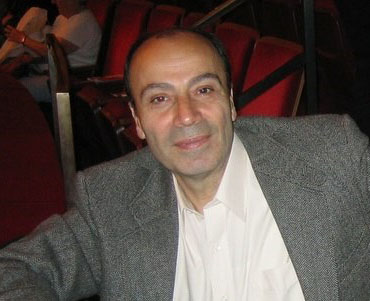
The “Public Tribunal” project presents to its readers the work of Ara Harutyunyan, “The Political Situation of the Armenian People, Its Theory, What Must Be Done and What Must Not Be Done.”
Ara Harutyunyan’s writings occupy a distinct place in contemporary Armenian political commentary. His works do not conform to prevailing political trends or offer comforting explanations. In the presented work, the author examines not individual policy failures, but the underlying mindset that has repeatedly produced Armenia’s political crisis.
Harutyunyan deliberately avoids academic detachment. His language is sharp and often uncomfortable, yet it follows a coherent logic: the quality of governance is inseparable from the level of societal accountability. When society relinquishes control, power becomes self-serving. Accordingly, his criticism is directed not only at political elites, but also at collective indifference.
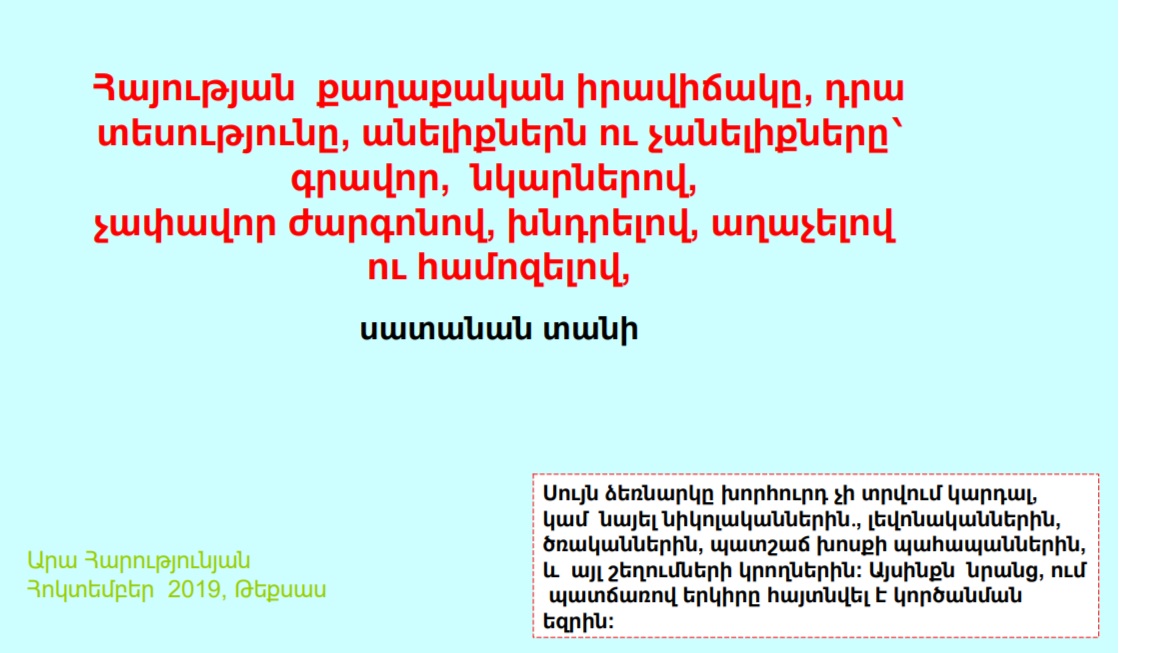
Within this framework, Nikol Pashinyan appears not as an aberration, but as a predictable outcome. Harutyunyan argues that such leadership emerges where professionalism is replaced by rhetoric and responsibility by emotional mobilization. Pashinyan, in this sense, is a product of an environment that has lost its political immunity.
A significant element of the work is its historical dimension. Drawing parallels with early Armenian thinkers such as Movses Khorenatsi, Harutyunyan shows that similar moral and political failures have recurred for centuries. These patterns, he insists, are not fate, but the result of an enduring refusal to learn.
The central conclusion of the work is uncompromising: without effective mechanisms of public oversight and personal responsibility, statehood becomes an illusion. Harutyunyan’s work seeks to restore clear boundaries between what is acceptable and unacceptable in politics.