
How the Current Catastrophic Situation in Armenia Began: From Romanticized Independence to Systemic Vulnerability – Part 1: LEVON TER-PETROSYAN – THE ARCHITECT OF POST-SOVIET VULNERABILITY (continuation)
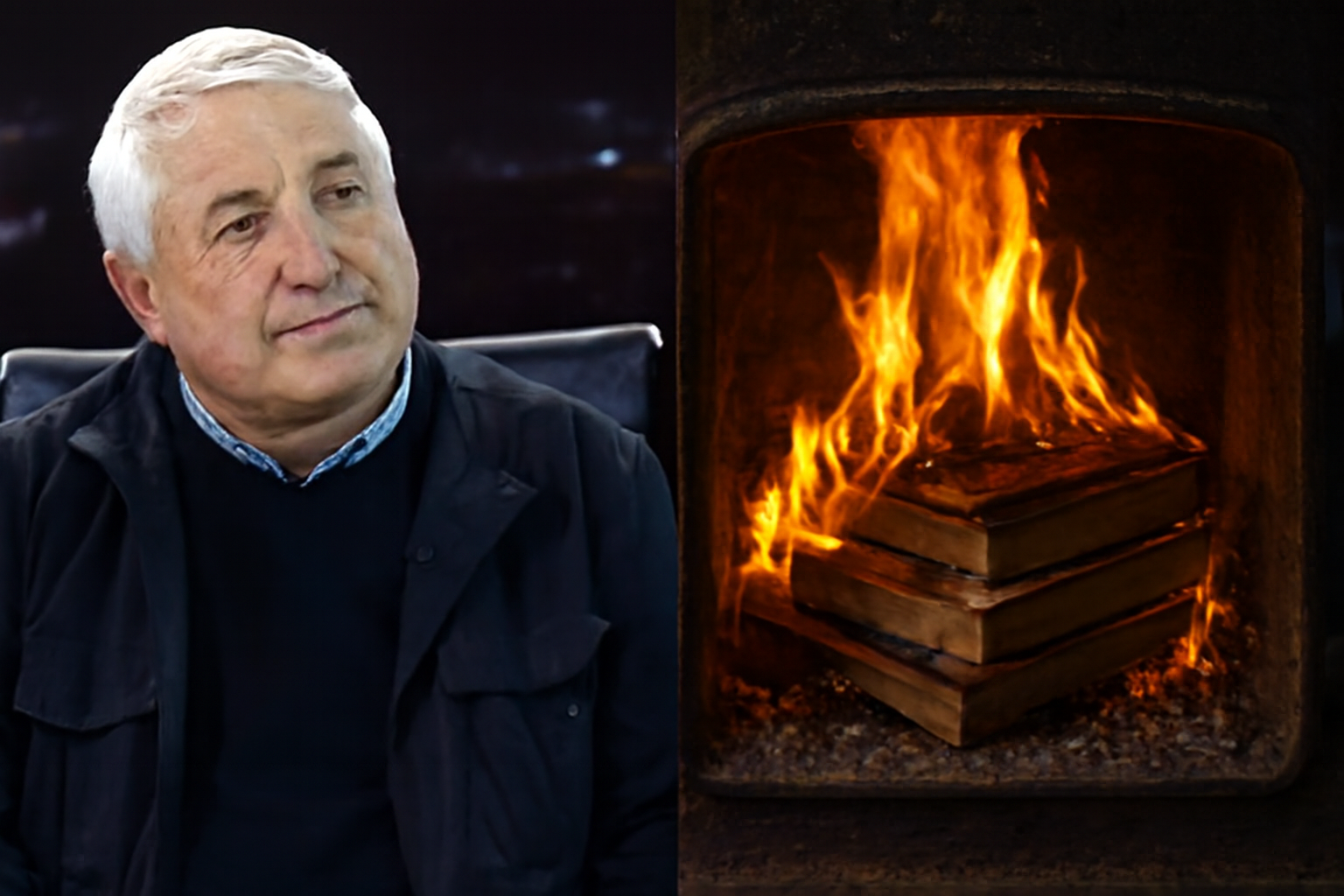
WHEN SCHOOL LIGHTS GO DOWN, THE NATION FALLS INTO DARKNESS: ASHOT BLEYAN’S REFORMS AS A BLOW TO THE COUNTRY’S FUTURE
If the collapse of industry deprived Armenia of its material foundation, the educational reforms launched by Minister Ashot Bleyan in the mid-1990s dealt a blow to the country’s human capital - the very resource that ensures long-term resilience. It was, in essence, a blow to the nation’s ability to reproduce itself.
These reforms became one of the most contentious and painful processes in the country’s modern history. During the Ter-Petrosyan administration, some hailed them as “a brave modernization effort,” while others called them “an ideological experiment conducted on an entire nation.” Yet witnesses remember something else entirely.
Vocational and technical colleges - institutions that had once produced engineers, machinists, energy specialists, and other professionals capable of reviving the ruined industrial base - began shutting down one after another. In an article published on October 12, 1995, Golos Armenii newspaper cited testimony from a professor at the Yerevan State Polytechnic College:
“Our students graduate to nowhere. Our machine tools have been taken away, we’ve been deprived of funding - and of our very sense of purpose.” (Golos Armenii, Issue No. 187, 1995)
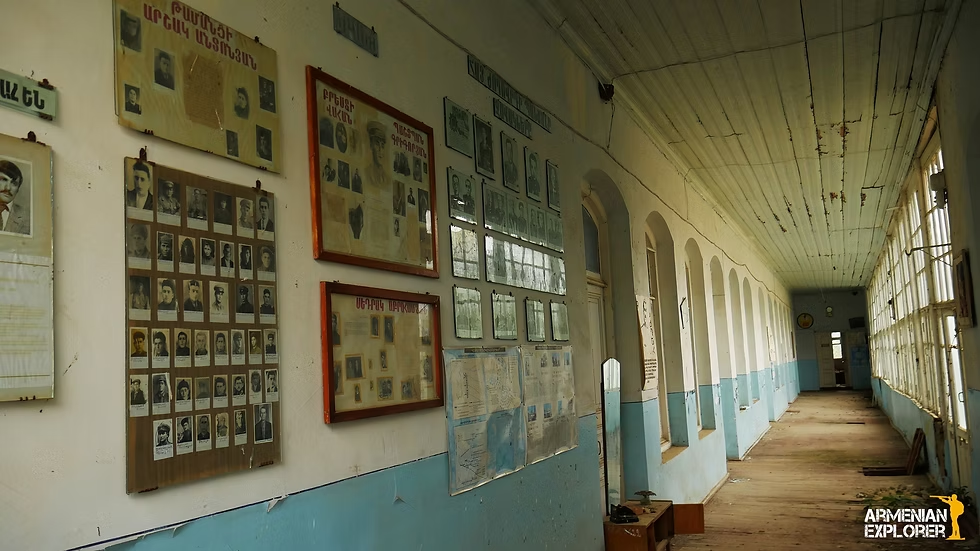
Journalists at the time noted that the closure of vocational colleges coincided with the mass removal of equipment from factories and plants - a symbolic and literal erasure of the industrial future. Teachers’ salaries became the subject of dark humor. In an interview with Aravot newspaper (March 28, 1996), the director of a Yerevan school recalled:
“We don’t fire teachers - they leave on their own. They say: We love our profession, but love alone cannot heat our homes.”
As a result, the best teachers, those capable of teaching languages, mathematics, and the natural sciences, left for the private sector, for the market, or simply left the country. This brain drain created an irreparable void.
The political rhetoric of the era revolved around a simple formula: breaking away from the Soviet past. But that formula extended to everything, including the values that had sustained the educational system. Media reports repeatedly sounded the alarm about shortages of textbooks, cuts to natural science curricula, and the dismantling of professional training.
Students attended classes in unheated buildings, studying by candlelight or kerosene lamps. This was not a metaphor but the stark reality of the energy crisis.
What occurred was widely described as an attempt to dismantle the Soviet educational model without preparing a viable alternative. In a 1998 report, public figure and educator Mikayel Harutyunyan wrote:
“The state set education aside as an unnecessary burden. Yet nations survive not because of their armies or their oil, but because of their schools.”

These words sounded like a requiem for an era that had not yet grasped the scale of its losses. Armenian culture was sounding the alarm; a ruined industrial sector was in desperate need of engineers - precisely at the moment when colleges were closing. The darkest years demanded scientists and energy specialists, yet the education system was being hollowed out. The state needed a national ideology, while the country’s leadership dismissed the very notion of a national idea as “a false category.” All of this fits into the logic of an era defined by dismantling faster than building, breaking before thinking, reforming not the system itself but its shadow. What was officially called “reform” was perceived by many as a symbol of the country’s unraveling future. A schoolteacher who worked in 1997 testified:
“We survived the earthquake, the blockade, the freezing years. But losing hope that future generations will be stronger than us - that is worse.”
That hope became a casualty of the ideology of “separating” from the Soviet past. The result was a weakened system - and a forewarning of the catastrophes yet to come.