
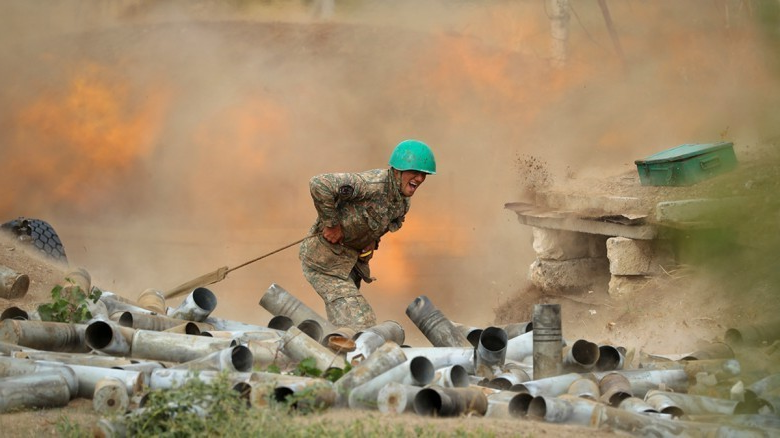
Karabakh War 2020: Five Years Later
September 27, 2025. Verelq.am reports:
On September 27, 2020, one of the most tragic and devastating chapters in the history of the Armenian people began — the Karabakh War. The fierce fighting lasted for 44 days, reshaping the political map of the region, altering the lives of thousands of families, and profoundly impacting the national consciousness. Today, five years later, Armenians continue to reflect on that painful experience, drawing vital lessons for the future of statehood and national unity.
The Outbreak of War
The morning of September 27 began with a large-scale offensive by Azerbaijani forces along the entire line of contact. The attack involved air strikes, armored vehicles, heavy artillery, and unmanned combat aerial vehicles (UCAVs), resulting in significant losses among Armenian troops as well as civilian casualties. From the very first hours, not only military positions but also populated areas in Artsakh came under intense fire, prompting immediate mobilization of reserve forces, volunteers, and widespread civilian support
One of the most devastating aspects of the war was Azerbaijan’s extensive use of combat drones — particularly the Turkish-made Bayraktar TB2s and Israeli “kamikaze drones.” Their sustained deployment against Armenian defensive positions and civilian targets posed a serious challenge to Artsakh’s defense capabilities. These drones severely restricted the ability to conduct effective military operations and led to heavy casualties on both the battlefield and among the civilian population.
Turkey provided open and direct support to Azerbaijan throughout the conflict, including military assistance.
The Course of Military Actions
In the initial weeks of the war, the most intense fighting took place in the southern direction, where Armenian forces faced relentless assaults from Azerbaijani aviation, artillery, and unmanned combat aerial vehicles (UCAVs). Despite the heroic resistance and determination of Armenian troops, Azerbaijan succeeded in capturing Jabrayil, Fuzuli, and Zangelan. By late October, the front lines had shifted dangerously close to Shushi — a city of profound symbolic and strategic significance for Armenians. Its fall on November 7, 2020, marked a tragic and decisive turning point. With Shushi lost, Stepanakert came under the threat of direct attack, and the defense of Artsakh was pushed to its limits.
The human cost was immense. According to official Armenian data, more than 3,700 soldiers and hundreds of civilians were killed, with around 200 people still missing. Azerbaijan, in turn, reported approximately 2,900 military casualties.
The End of the War
The military operations lasted for 44 days. In the early hours of November 10, 2020, the leaders of Armenia, Russia, and Azerbaijan — Nikol Pashinyan, Vladimir Putin, and Ilham Aliyev — signed a trilateral statement declaring a full ceasefire in Artsakh. The agreement outlined the following key provisions:
- a complete ceasefire and cessation of hostilities;
- deployment of approximately 2000 Russian peacekeepers;
- transfer of the Aghdam, Kalbajar, and Lachin districts, as well as several populated areas in the Hadrut, Askeran, Martakert, Martuni, Shahumyan, and Kashatagh regions, to Azerbaijani control;
- ensuring the safe operation of the Lachin corridor, maintaining communication between Artsakh and Armenia.
The agreement allowed for stopping the bloodshed and saving thousands of lives.
The Aftermath of the War
The signing of the ceasefire agreement sparked intense debate within Armenian society. Many viewed it as a devastating defeat, while others believed it was a necessary step to halt the bloodshed and preserve what remained of the population in Artsakh.
From a regional standpoint, the war significantly altered the balance of power. A substantial portion of the territory in and around Artsakh came under Azerbaijani control, while Russia emerged as a key player in ending hostilities and maintaining a fragile stability through its peacekeeping mission.
Three years later, following a nine-month blockade of the Lachin Corridor, Azerbaijani forces launched a renewed offensive against Artsakh. As a result, the remaining Armenian population was forced to flee, marking another tragic chapter in the region’s history.
Five Years Later
The 44-day Karabakh War remains etched in the memory of Armenians as both a national tragedy and a turning point in history. It exposed deep vulnerabilities but also revealed the resilience, courage, and unwavering spirit of those who defended their homeland.
Today, five years later, we honor and commemorate the thousands of heroes whose sacrifice has become an integral part of our national narrative — a solemn reminder of the high cost of freedom.
This memory calls upon us to be stronger, more united, and wiser. Only through unity and resolve can we safeguard the future of Armenia and the Armenian people.
Prepared by Kristina Nebish