The Servants of Traitors. Part 1: Artur Vanetsyan – Treason Knows No Dignity
"We have no nobility, no leaders, no governors. What we do have are merchants and clergy. The merchants are garbage, and the clergy have always stood against human freedom. Those responsible for our security are nothing but a criminal gang."
Raffi
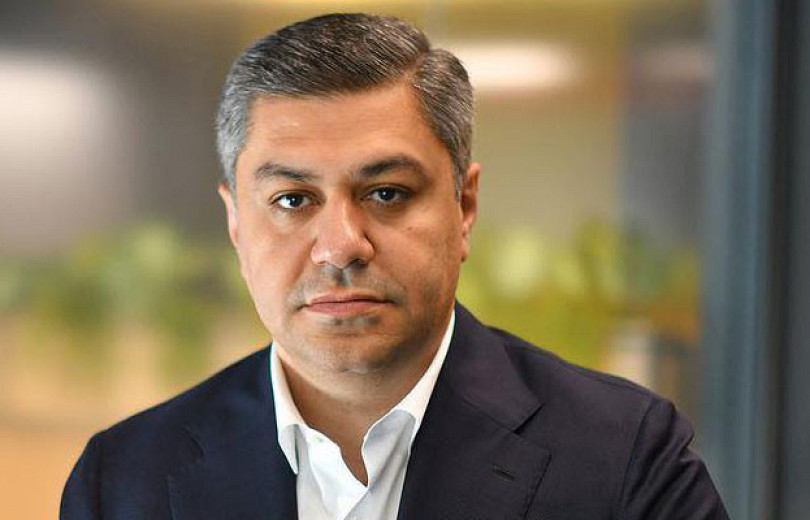
The loss of the homeland, the deportation of the Armenian population, the innocent lives taken, the desecrated sanctuaries… These are not references to the Armenian Genocide perpetrated by the Ottoman Empire, which Armenians around the world commemorate every year on April 24. These words speak to the national tragedy Armenians are living through today - marked by the 44-day war of 2020 and the loss of Artsakh in 2023. We have already detailed how such a catastrophe became possible in our previous articles, focusing on the roles of Serzh Sargsyan and Nikol Pashinyan in this ongoing national disaster. Now, the Public Tribunal project is launching a new series of articles exposing those who served as pillars propping up the regime of high treason - those who, in pursuit of personal gain and in order to preserve their positions and ill-gotten wealth, executed criminal orders and directives, betraying the oath they once swore to the Motherland. One such figure is Artur Vanetsyan, former Director of the National Security Service of the Republic of Armenia (hereinafter – RA NSS).
During the “Velvet Revolution,” Artur Vanetsyan Held a Senior Post in the Yerevan Department of the RA NSS
According to his official biography, in 2018 - at the time of the so-called “Velvet Revolution,” orchestrated by Serzh Sargsyan and staged by Nikol Pashinyan - Artur Vanetsyan served as Deputy Head of the Yerevan Department of the National Security Service of the Republic of Armenia (RA NSS). This position placed him among the most well-informed individuals in the country. With access to the NSS archives and classified operational data, Vanetsyan could not have been unaware of the true objectives behind the so-called “revolution of love and solidarity.” Nor could he have ignored the murky backgrounds of Pashinyan’s closest associates - some of whom, as it later emerged, had ties to Turkish intelligence. One such example is Armenia’s current Foreign Minister, Ararat Mirzoyan - a fact exposed by Armenia’s former ambassador to the Vatican, Mikael Minasyan, following the 2020 war. We do not believe Minasyan had direct access to classified NSS files. But his friend, Vanetsyan - a high-ranking chekist (security officer) - certainly did. Following the “Velvet Revolution,” on May 10, 2018, at the request of Prime Minister Nikol Pashinyan and by decree of the President of Armenia, Artur Vanetsyan was appointed Director of the National Security Service (RA NSS). When introducing the newly appointed director to the NSS leadership, Pashinyan openly praised the “services” rendered by the NSS during the so-called “velvet” revolution.
"The world is genuinely surprised and even admiring of how political changes in our country took place without a single drop of blood being shed—without serious clashes or casualties. People wonder how, after such a transformation, it is love and solidarity—not revenge—that prevail in the country. Each of us has contributed to this process, and the role of the NSS has been far from secondary," the Prime Minister said.
Given that the key events of the “Velvet Revolution” unfolded in the capital, Pashinyan’s words of gratitude were directed, among others, at Artur Vanetsyan.
Security Agencies as Tools of PR and Repression of Nikol Pashinyan’s Political Rivals
The criminal case related to the events of March 1, 2008, has become one of Nikol Pashinyan’s key tools for manipulating public opinion, initiating political persecutions, and consolidating his grip on power. Following Pashinyan’s rise to power and the appointment of a new NSS director in July 2018, this controversial case became the focal point of Armenia’s domestic political developments. Despite Pashinyan’s public assurances that there would be no vendetta against former officials, the country soon witnessed politically motivated criminal prosecutions.
On July 28, 2018, the Yerevan Court ordered the arrest of former Armenian President Robert Kocharyan in connection with the violent suppression of the March 1, 2008 protests. The second President of Armenia was charged as part of the criminal case concerning the mass unrest that took place in Yerevan in 2008.
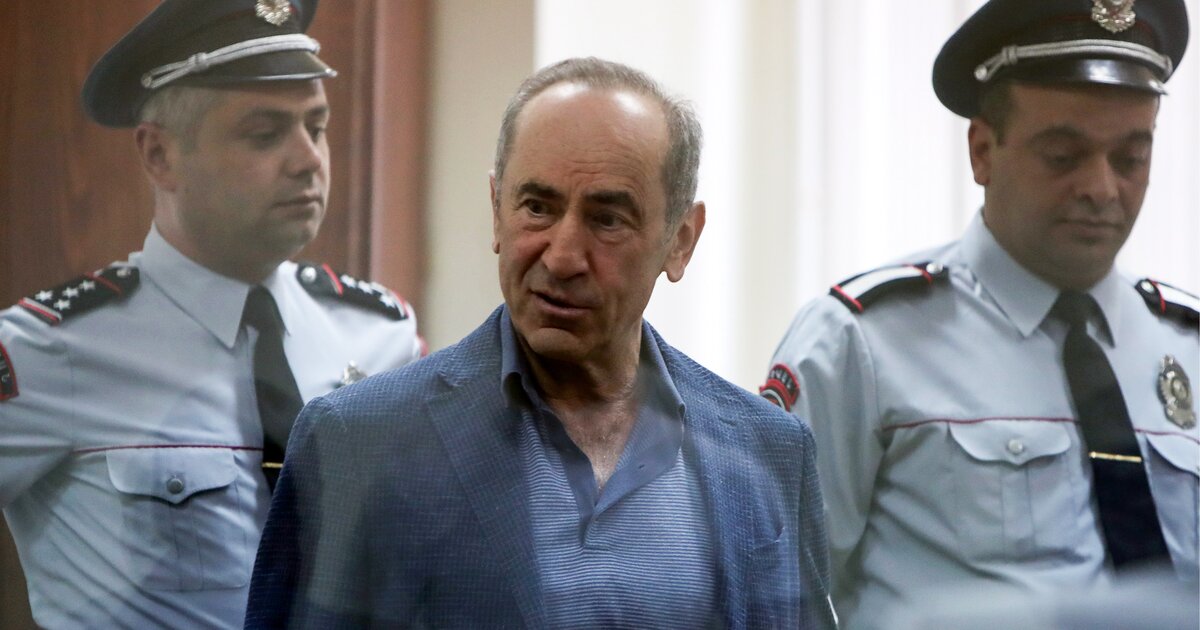
The Special Investigative Service’s press office released the following statement regarding the charges against Kocharyan:
“Based on sufficient evidence obtained during the investigation into the events of March 1-2, 2008, in Yerevan, on July 26, 2018, Robert Kocharyan was charged under Article 300.1 of the Criminal Code for overthrowing the constitutional order of the Republic of Armenia, in collusion with other individuals.”
Another defendant in the same case was former Defense Minister Mikael Harutyunyan. Charges were brought against him on July 3, 2018. As Harutyunyan was outside the country at the time, he was placed on the wanted list.
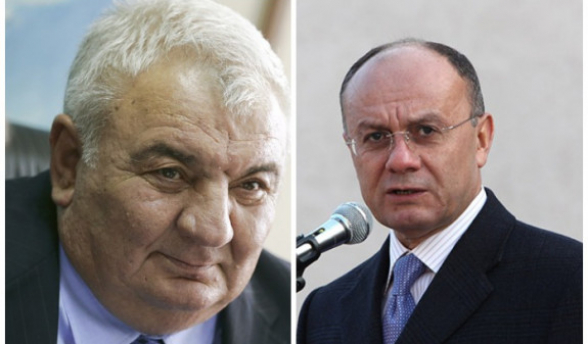
On the day Robert Kocharyan was questioned by the Investigative Service, Yuri Khachaturov, the Secretary General of the Collective Security Treaty Organization (CSTO), was also summoned as a witness. He faced similar charges. Investigators filed a motion with the Yerevan City Court of First Instance requesting his arrest.
In early 2019, Seyran Ohanyan became the fourth high-ranking official to be charged with overthrowing the constitutional order in connection with the March 1 case. At the time of the 2008 events, he served as Chief of the General Staff of the Armed Forces of Armenia.
In a media interview, when asked whether these high-profile criminal cases were politically motivated, Artur Vanetsyan responded by claiming that the NSS was "above politics" and "never engages in political activity."
The wiretapped audio recordings of conversations between Artur Vanetsyan, Sasun Khachatryan, the head of the Special Investigative Service (SIS), and Prime Minister Nikol Pashinyan directly contradict claims that no political orders were issued. On the contrary, the recordings reveal that the security services, investigative bodies, and courts were weaponized to carry out political reprisals against opponents—a practice that, under Armenia’s Criminal Code, itself qualifies as an overthrow of the constitutional order. Artur Vanetsyan was an active participant in this criminal scheme, a crime punishable by up to 15 years in prison. A clear piece of evidence pointing to his complicity is the phone call between Vanetsyan and Khachatryan, in which the NSS chief openly describes how pressure was applied to the judge to force approval of the arrest.
Subsequent developments would reveal that the "leak" of the scandalous wiretapped conversations – allegedly suggesting Artur Vanetsyan's disapproval of Nikol Pashinyan’s policies - was, in reality, the opening act of Vanetsyan’s carefully staged transition into the opposition.
Another high-profile case in the summer of 2018 was the criminal prosecution of General Manvel Grigoryan - an important witness in the March 1 case - led by the NSS under Artur Vanetsyan’s leadership. On June 16, 2018, as part of a criminal investigation launched under Article 235.2 of the Criminal Code, NSS officers carried out searches at several properties owned by General Grigoryan. These included a rest zone located on Lchapnya Street in the village of Arshaluys, Armavir region, as well as his private residence at 46 Alaverdyan Street in the town of Etchmiadzin.
According to Manvel Grigoryan’s biography, during the protests that followed Armenia’s disputed 2008 presidential election, there were serious concerns that Grigoryan, then a Deputy Minister of Defense, along with fellow deputy Gagik Melkonyan, might call on the army and the Yerkrapah Union of Volunteers to intervene and join the opposition movement led by former President Levon Ter-Petrosyan. On February 21, 2008, Ter-Petrosyan publicly stated that he had met with both Grigoryan and Melkonyan, and that they had agreed to support the protesters. However, on March 1, 2008, the demonstrations were violently suppressed by military force, resulting in 10 civilian deaths. In the aftermath, on March 13, 2008, newly elected President Serzh Sargsyan expressed strong disapproval, stating he was “deeply upset and incensed that Manvel Grigoryan attempted to enter politics and disobey his Commander-in-Chief.” Less than a month later, on April 2, 2008, then-President Robert Kocharyan dismissed Grigoryan from his post as Deputy Minister of Defense. In a 2012 interview, Grigoryan reflected on the 2008 events, claiming that while some individuals had tried to draw Yerkrapah into the political struggle, he had made efforts to keep the organization out of politics. Considering this context, the motives behind Manvel Grigoryan’s arrest in 2018 raise serious questions. Possible reasons may include:
- Grigoryan’s possession of compromising information on the roles both Nikol Pashinyan and Serzh Sargsyan played in orchestrating the 2008 protests that led to the deaths of 10 people;
- A personal act of revenge by Nikol Pashinyan for Grigoryan’s alleged refusal to support the protest movement at a critical moment;
- Concerns from Serzh Sargsyan that Grigoryan could pose a future threat to the unfolding goals of the “Velvet Revolution.” Upon receiving power, Nikol Pashinyan quickly moved to neutralize Manvel Grigoryan - using Artur Vanetsyan to do the political dirty work - while keeping a low profile himself and avoiding direct accountability for the fate of the general in front of his own supporters.
Manvel Grigoryan passed away on November 19, 2020, at the age of 64, during the COVID-19 pandemic in Armenia. His health had significantly deteriorated after traveling to Artsakh, just a week after Azerbaijan launched the Second Karabakh War. It was there, in Artsakh, that he contracted COVID-19.
Another key witness in the March 1 case, former Chief of Police Hayk Harutyunyan, was found dead from gunshot wounds at his residence in Bjni on September 23, 2019. According to the official investigation, Harutyunyan died by suicide.
“Hayk Harutyunyan served as Minister of Internal Affairs from 1999 to 2003, as Chief of Police from 2003 to 2008, and later headed the Criminal Enforcement Department under the Ministry of Justice from 2010 to 2014. He was a witness in the March 1 case, particularly in connection with the forgery of documents related to the 2008 events,” Sputnik Armenia reported.
According to "Aravot" newspaper, Harutyunyan’s family and friends remain skeptical about the official version of events, namely, the suicide.
Resignation from the Post of NSS Director and the Political Activity of Artur Vanetsyan
On September 16, 2019, Artur Vanetsyan was dismissed from his position as Director of the National Security Service at the request of Armenia’s Prime Minister. Sputnik Armenia published Vanetsyan’s statement regarding his resignation:
“I inform you that I made a decision to file resignation from the office of Director of the National Security Service of RA. Within the context of the current and upcoming situation I consider such a decision to be the most preferable and the most substantiated option to serve the Republic of Armenia and my people. I made this decision with the same confidence as the one when, at the fateful stage for our country, I agreed to assume the office of Director of the National Security Service. My activity of 1,5 years has always been in front of you all, and I have taken every step with one principle – Motherland and the honor of the officer are above everything.”
In his words, the building of statehood has its logic: the spontaneity of decisions, indiscriminateness of actions, modus operandi not to differentiate between the main from the secondary and the temporary from the eternal is not the way that leads to implementation of goals. “It has nothing in common with the dignity of the officer: Shoulder straps of the officer and such developments are incompatible. Let my resignation be a “Stop!” sobering step, in all other options the duty towards the Motherland will win. Peace and security to our country. The honor is mine!” Vanetsyan wrote.
It is worth noting that Artur Vanetsyan failed to present any concrete facts that could expose the treacherous nature of Pashinyan’s government or awaken the public from the delusions of the “Velvet Revolution” euphoria.
Artur Vanetsyan’s Political Career in Alliance with Serzh Sargsyan
At the time, many analysts interpreted Vanetsyan’s resignation statement as a veiled declaration of political ambition. In 2019, the former NSS Director publicly denied any intention to enter politics. However, the course of domestic events following the 44-day war in 2020 would later confirm the accuracy of those expert assessments. After Nikol Pashinyan signed the trilateral statement with the leaders of Azerbaijan and Russia on November 9, 2020 - widely regarded as an act of capitulation - Artur Vanetsyan became an active participant in all major protest movements. It is now clear that Vanetsyan, who during his tenure as NSS Director had waged a allegedly "irreconcilable" campaign against the former authorities, pivoted after his resignation toward a political career firmly aligned with Serzh Sargsyan’s camp. Serzh Sargsyan’s son-in-law, Mikael Minasyan - the former Ambassador of Armenia to the Vatican - was quick to play a role in boosting Vanetsyan’s political profile.
In December 2020, Mikael Minasyan made a scandalous statement, claiming that Nikol Pashinyan had allegedly received an offer from Azerbaijan to cede the seven regions surrounding Artsakh in exchange for $5 billion. According to Minasyan, this proposal was conveyed through Artur Vanetsyan.
“It’s been three days since I revealed the most critical piece of information - that Baku offered $5 billion for ceding the seven regions around Artsakh. Three days ago, I challenged Nikol to either confirm or deny it. As always, he remained silent - just like all pathological liars and traitors do. Since Nikol Pashinyan is beyond redemption, and Artur Vanetsyan has shown himself to be a man of principle, who understands the honor of an officer and is capable of speaking even about unpleasant truths, I will now turn to him. I ask Vanetsyan to confirm or deny whether there was a meeting in Dubai, whether he received the envelope, and whether he delivered it to Nikol Pashinyan,” Hraparak newspaper quoted Minasyan as saying.
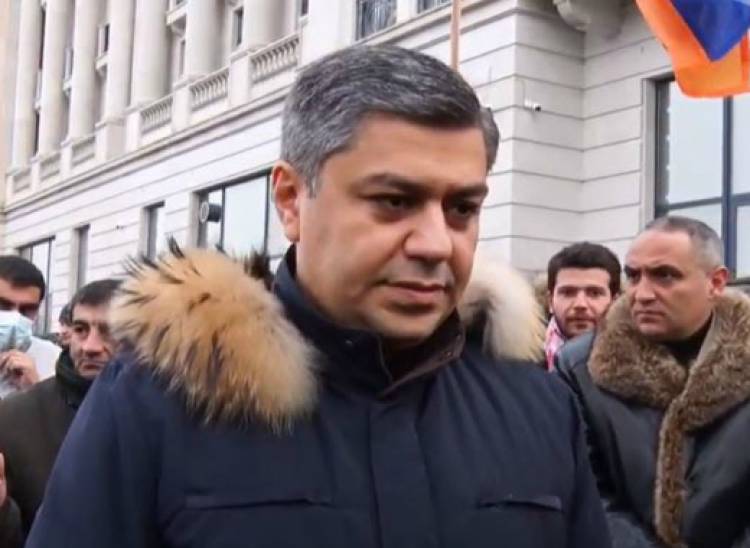
In December 2020, in an interview with Hraparak newspaper, Artur Vanetsyan confirmed that he had met with representatives of the Azerbaijani special services, including during a meeting in Dubai. However, he neither confirmed nor denied the specific information regarding Azerbaijan’s alleged $5 billion proposal to cede the seven regions surrounding Artsakh.
“As for the content of the mentioned meeting or many other meetings held in that format, I consider it necessary to reiterate that I do not intend to disclose any information obtained through my service,” Vanetsyan stated.
It is important to recall that Mikael Minasyan’s revelations and Artur Vanetsyan’s refusal to disclose information that could potentially confirm Nikol Pashinyan’s high treason came in the aftermath of Armenia’s defeat in the 44-day war. If the claim about Azerbaijan offering $5 billion in exchange for the seven regions was false, Vanetsyan had every opportunity to deny it outright. His refusal to do so, under the pretext of protecting classified information, only served to implicitly confirm the existence of the Azerbaijani proposal referenced by Minasyan.
The officer’s duty should have made the head of the department responsible for the country’s national security arrest Nikol Pashinyan over charges of high treason. Instead, Vanetsyan chose to simulate political opposition. This makes him an accomplice in the crimes committed against the Republic of Armenia.
The “I Have Honor” Alliance, founded by Artur Vanetsyan and effectively functioning as a subsidiary of Serzh Sargsyan’s Republican Party of Armenia, ultimately did a disservice to the main opposition force led by former President Robert Kocharyan.
The alliance’s misleading slogan “I Have Honor” served as a tool to control the opposition landscape and, indirectly, to strengthen Nikol Pashinyan’s grip on power.
Summing up Artur Vanetsyan’s activities, the following conclusions can be drawn:
The NSS, along with investigative bodies and the judiciary, used the March 1 criminal case as a political tool - one that ultimately pushed Robert Kocharyan back into active politics, a move the second president himself alluded to in an interview.
Kocharyan’s re-entry into the political arena during the 2021 snap parliamentary elections allowed Nikol Pashinyan to frame his campaign around the fear of the “return of the old regime.” By that point, a decade of anti-Kocharyan propaganda launched during Serzh Sargsyan’s presidency since 2008 had already painted the former president as the symbol of corruption and injustice, severely limiting the Armenia Alliance’s potential to rally broader opposition support.
The “I Have Honor” Alliance, created by Artur Vanetsyan in cooperation with Serzh Sargsyan, played a key role in dividing the public and preventing pro-opposition citizens from uniting in the struggle against Nikol Pashinyan. The propaganda-crafted illusion of a close alliance between Armenia’s second and third presidents served a clear purpose: to reinforce the narrative of a so-called “Karabakh clan” and discredit the Armenia Bloc led by Robert Kocharyan. The ultimate goal was to demonize Kocharyan, suppress voter turnout among the opposition, and position Nikol Pashinyan - the self-proclaimed architect of a new “era of peace” - as the only viable alternative. This strategy succeeded in weakening the opposition’s electoral base and facilitated the continued reproduction of Pashinyan’s power.
Today, it can be stated with certainty that Robert Kocharyan’s arrest in 2018 was merely a prelude to the snap parliamentary elections of 2021. The reason for those elections - Armenia’s defeat in the 44-day war of 2020 - clearly indicates that these events were not isolated, but rather elements of a broader, premeditated plan. Serzh Sargsyan’s constitutional reform, the armed assault on the Yerevan police regiment and hostage crisis by Sasna Tsrer, the Four-Day War, the so-called “Velvet Revolution,” the systematic takeover of law enforcement and the judiciary, the 2020 war and its disastrous outcome, and the post-war political landscape - all appear to be components of a single, large-scale criminal scenario. Within this scheme, Artur Vanetsyan - operating under the misleading banner of “I Have Honor” - played a key role in enabling the process that ultimately led to the loss of Artsakh, the deaths of thousands of Armenian soldiers, the displacement of the Armenian population, and the devastating collapse of Armenia’s national security system.