Legal Outrage of Authorities against the Armenian Apostolic Church. The Tribunal Accuses Pashinyan of Overthrowing the Constitutional Order
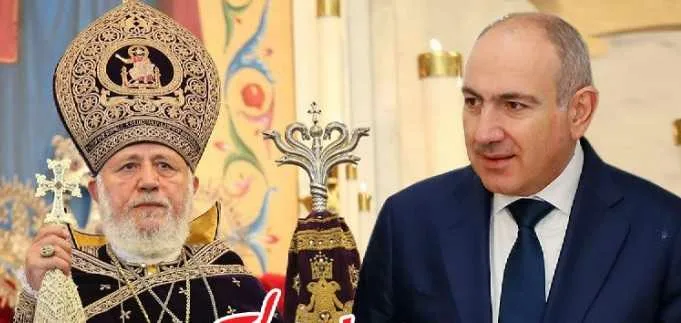
The conflict between the Armenian Apostolic Church (AAC) and the Government of Armenia began immediately after the 2018 Velvet Revolution. Following Nikol Pashinyan’s rise to power, rallies and marches were organized across the country under the banner “New Armenia, New Patriarch,” demanding that Karekin II voluntarily relinquish his position as Supreme Patriarch and Catholicos of All Armenians. In July 2018, with the tacit approval of law enforcement, protesters forcibly entered the Chancellery of the AAC Spiritual Center - the Mother See of Holy Etchmiadzin.
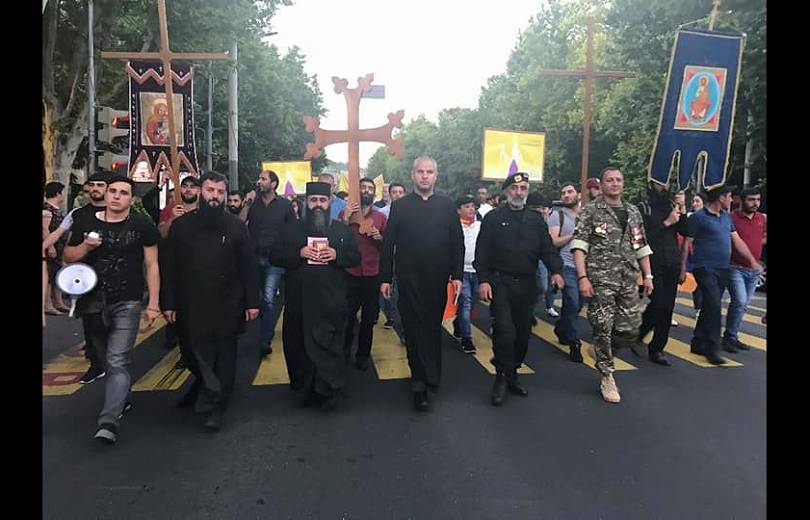
The action of the "New Armenia movement. the new Patriarch" demanding the resignation of Catholicos Karekin II
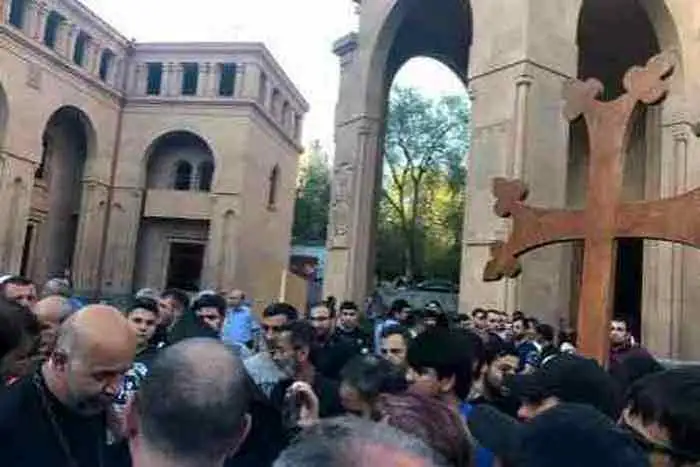
A group of demonstrators are trying to break into the office of Catholicos of All Armenians Garegin II.
After the defeat in the 44-day war, Catholicos Karekin II called on Pashinyan to resign. In April 2023, citing the dangerous and alarming situation in the country, Karekin II repeated his call. “Wrong and unacceptable statements have been made regarding the status of Nagorno-Karabakh. The deepening division and intolerance among our people is deeply troubling,” the Catholicos said at the time.
The new wave of the Armenian prime minister’s verbal attacks on the AAC is unprecedented, not only due to immoral actions by Nikol Pashinyan and his close circles, but also the arbitrariness and legal outrage of the incumbent authorities.
Everything started on May 29, 2025, at the Government meeting, when Nikol Pashinyan said that “our churches have been turned into closets.” In the morning on May 30, 2025, the Armenian social media were flooded with Prime Minister Nikol Pashinyan’s insulting and improper posts on the Meta social network: “The Most Holy, go ‘have fun’ [editor’s note: in fact, the PM used an obscene word] with your aunt. What do you have to do with me?” Pashinyan wrote on his Meta page [social network banned in Russia].
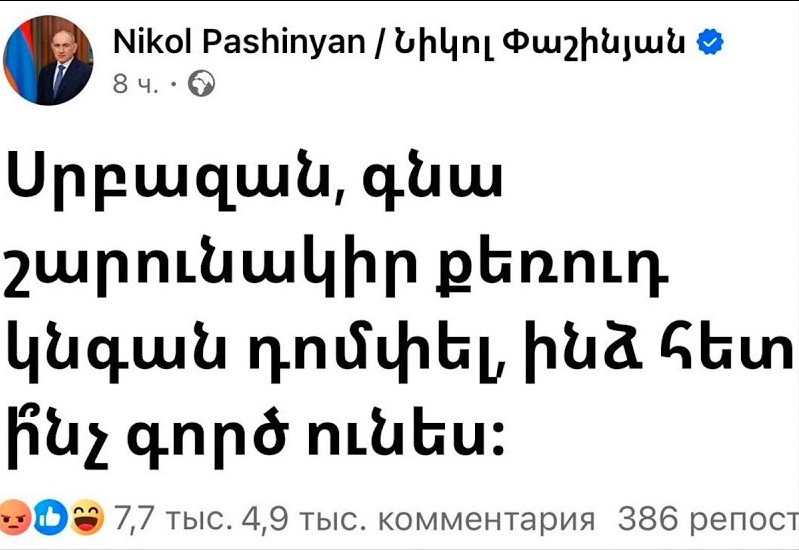
Nikol Pashinyan's entry on the social network
Accusing the Catholicos of All Armenians Karekin II of violating the lifelong celibacy, the Armenian prime minister called on the public to elect a new Catholicos.
On June 24, 2025, Nikol Pashinyan published an article in the government-affiliated media outlet Civic.am, alleging preparations for a coup d’état in the country. The Investigative Committee of the Republic of Armenia promptly launched a search of the residence of Archbishop Bagrat Galstanyan, the leader of the “Holy Struggle” movement and head of the Tavush Diocese of the Armenian Apostolic Church. As a result, questionable evidence was reportedly found, allegedly supporting the claims made in Civic.am. The investigation led to the arrest of Bagrat Galstanyan.
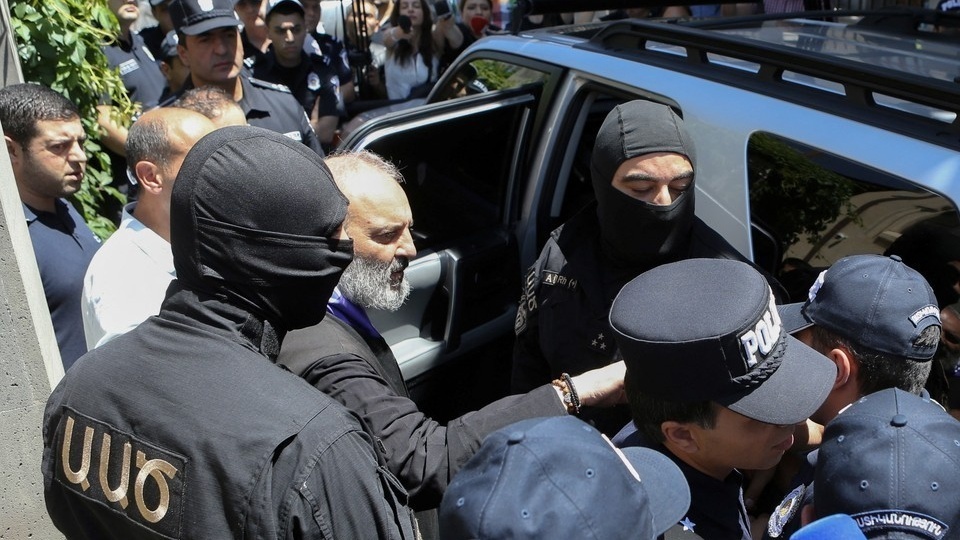
The arrest of Archbishop Bagrat Galstanyan
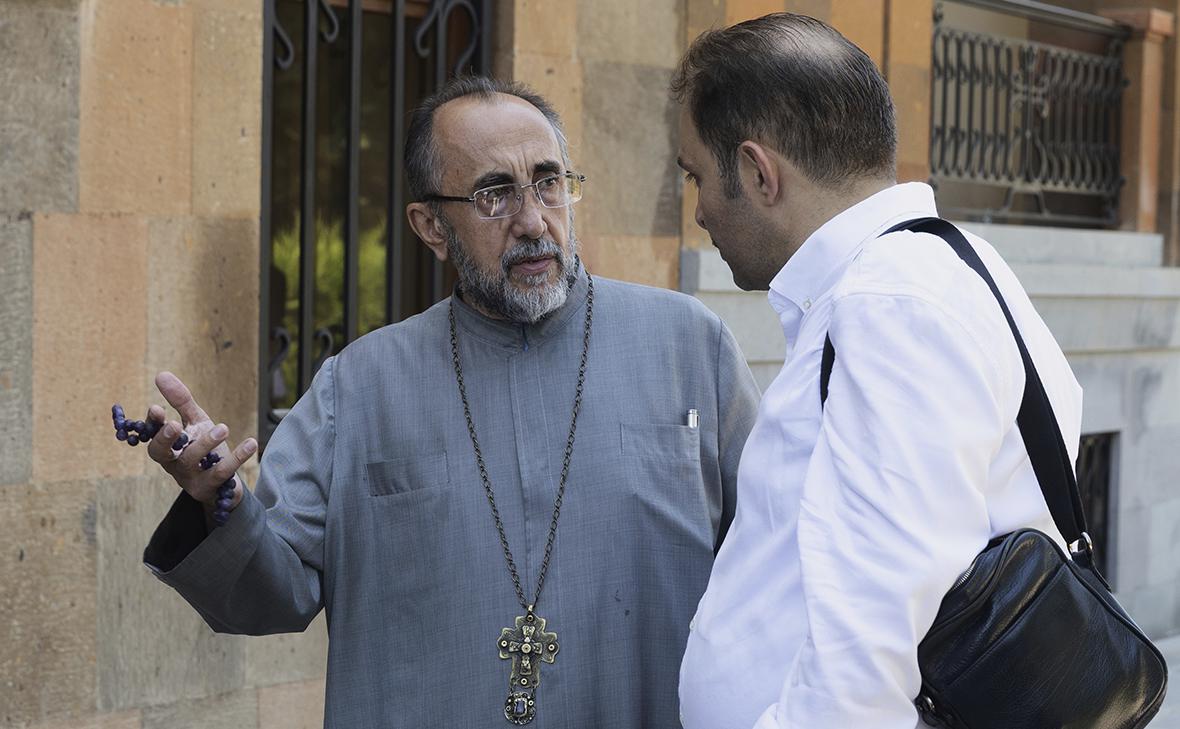
Archbishop Mikael Ajapakhyan near the building of the Investigative Committee
On June 17, 2025, criminal proceedings were initiated against Archbishop Mikael Ajapahyan, head of the Shirak Diocese, under Article 422.2 of the Criminal Code, pertaining to public calls for a coup d’état, violation of territorial integrity, rejection of state sovereignty, and the forced overthrow of the constitutional order.
Setting aside the geopolitical and domestic political context of these actions of the Prime Minister of Armenia and his close circles, let us examine the legal dimensions of the attacks on the Armenian Apostolic Church.
Article 17 of the Constitution of the Republic of Armenia reads as follows: In the Republic of Armenia, freedom of activities of the religious organizations is guaranteed. The religious organizations are separated from the state.
Article 18 of the Constitution of the Republic of Armenia reads as follows: The Republic of Armenia recognizes the exclusive mission of the Armenian Apostolic Sacred Church as the national church in the spiritual life of the Armenian people, in the development of its national culture, and preserving its national identity.
State–church relations in Armenia are governed by the Law of the Republic of Armenia "On Relations Between the Republic of Armenia and the Armenian Apostolic Church", in accordance with Article 2.1, which states: “The Republic of Armenia recognizes the self-governance of the Armenian Apostolic Holy Church within its dioceses.”
Therefore, Nikol Pashinyan’s interference with the internal affairs of the AAC, namely the resignation and election of the Catholicos, is a direct violation of the Constitution of the Republic of Armenia and the Law of the Republic of Armenia On Relations Between the Republic of Armenia and the Armenian Apostolic Church.
On June 10, 2025, Nikol Pashinyan appealed to the people, calling for the liberation of the Mother See. Considering the existence of various religious sects in Armenia, such a call was a potential detonator of public clashes. The calls to overthrow the Catholicos of All Armenians are a propaganda of violence, giving a free hand to sects for more radical actions aimed at weakening the influence and special role of the AAC to prevent the people’s unification against the anti-national policy of Nikol Pashinyan.
Article 77 of the Constitution of the Republic of Armenia says: The use of basic rights and freedoms for the purpose of violent overthrow of the constitutional order, incitement of national, racial or religious hatred or propaganda of violence or war shall be prohibited.
In his aspirations for the replacement of the Catholicos of All Armenians, Nikol Pashinyan resorts to evident blackmail and threatens to publish evidence of violation of celibacy by the clergymen. It is obvious that the ‘evidence’, if there is such, will be provided to the prime minister by the special services. It is also evident that marital relations and the existence of children are private matters of citizens. The right to inviolability of private and family life is guaranteed by Article 31 of the Constitution. In this sense, Nikol Pashnyan abuses his power, using government resources, special services, and collecting compromising materials on the lives of his political opponents. Such actions of the prime minister fall under Article 441 of the Republic of Armenia Criminal Code.
"The use by an official of his authority or official powers or the impact caused by them to the detriment of state or official interests, or the failure to perform or improper performance of his official duties, or the commission of an act that does not follow from his authority or goes beyond his authority, which has caused significant damage to the rights, freedoms or legitimate interests of a person or organization, or legitimate interests of society or the state, is punishable by a fine in the amount of twenty to forty times, or by deprivation of the right to hold certain positions or engage in certain activities for a term of three to seven years, or by restriction of liberty for a term of one to three years, or by short-term imprisonment for a term of one to two months, or by imprisonment for a term of one to four years․"
Public attacks on the Armenian Apostolic Church, the publication of articles in government-affiliated media alleging preparations for a coup d’état, the initiation of criminal cases against prominent clergymen, and the use of pretrial detention - all point to a broader pattern in which law enforcement bodies, the Prosecutor General’s Office, investigative agencies, and the courts operate not independently, but under the direction of the Prime Minister, representing the executive branch. This is a violation of Article 4 of the Constitution of the Republic of Armenia, stating: “State power shall be exercised in conformity with the Constitution and the laws, based on the separation and balance of the legislative, executive and judicial powers.”
Violation of Article 4 of the Constitution of the Republic of Armenia falls under Article 420 of the Criminal Code and is classified as the overthrow of the constitutional order, punishable by 10 to 15 years of imprisonment. “Overthrow of the constitutional order” is defined as the actual elimination of a constitutional provision set forth in Articles 1–5 or Article 6.1 of the Constitution, resulting in the loss of its legal effect within the legal system.
Levon Zurabyan, Deputy Chairman of the Armenian National Congress party, stated that Nikol Pashinyan violates the Constitution of the Republic of Armenia while visiting Narek Galstyan.:

The Tribunal accuses Prime Minister of Armenia Nikol Pashinyan of the following:
- Overthrow of the constitutional order through the subjugation of the judiciary of the Republic of Armenia, in violation of Article 4 of the Constitution of the Republic of Armenia.
- Violation of the inviolability of the private life of the citizens of Armenia – a right guaranteed by the Constitution of the RA.
- Interfering in the internal affairs of the AAC in violation of Article 17 of the Constitution of the RA and the Law of the RA on Relations Between the Republic of Armenia and the Armenian Apostolic Church.
- Calling for the violent overthrow of the Catholicos of All Armenians, which risks inciting public unrest and clashes.