“An Allegory Truth and Deception” and the 44-Day War
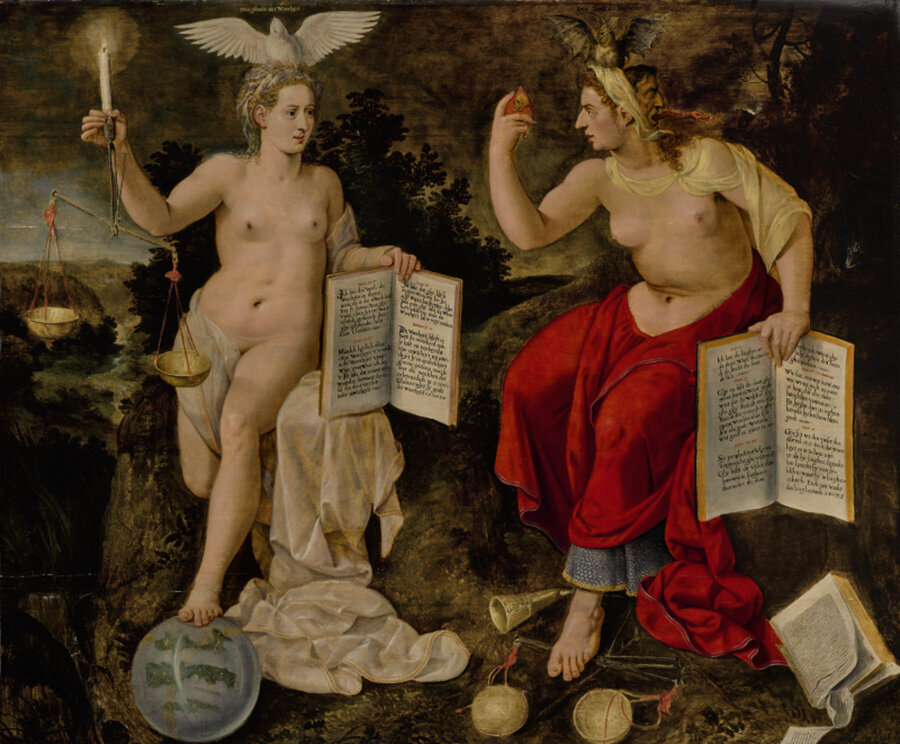
Flemish painter Crispijn van den Broeck’s renowned work, An Allegory of Truth and Deception, portrays two female figures embodying Truth and Deception. In the painting, Deception is clothed and holds a stone marked with a skull—symbolizing the hidden, deadly impact deception can carry.
During the 44-day war in Artsakh, представитель Минобороны Армении Artsrun Hovhannisyan, the representative of Armenia’s Ministry of Defense, came to personify Deception. Capitalizing on the public’s trust in Nikol Pashinyan’s post-“velvet revolution” government, Hovhannisyan repeatedly misled the population about the realities on the battlefield, reinforcing false hopes with the slogan “We Will Win!” This fueled widespread misconceptions about the likelihood of an Artsakh Defense Army victory.
On October 10, 2020, Artsrun Hovhannisyan delivered a message to Armenians around the world, stating:
“We have no oil or gas reserves, but we have young people who heroically defend our Motherland, sacrificing their lives. We have no sea, but we have a heroic nation protecting the home front. After all, unlike our enemy, we don’t have a population of 10 million—but we do have 10 million Armenians across the globe. We have our Diaspora. I’m speaking not just to 10 million Armenians, but to 10 million fighters, 10 million who give everything, and 10 million winners. I want each and every one of you to feel as if you're in the fight with us—to get into the trenches and keep going.”
The Diaspora responded to the call. Numerous organizations and individuals mobilized to collect aid for Artsakh. Volunteers around the world approached Armenian diplomatic missions, expressing their willingness to join the army. There is ample evidence that representatives of embassies and consular offices in the Diaspora assured them there was no need for additional manpower, claiming the Armenian Army had the situation on the frontline under control. At the same time, they encouraged people to donate to the “Hayastan” All-Armenian Fund or the Military Insurance Fund.
In addition, in the early days of the war, a law was adopted banning mercenary activity, which created obstacles for Russian volunteers who wished to defend Artsakh. In this context, Aleksandr Borodai, Chairman of the Union of Donbas Volunteers, stated:
“Apparently, Nikol Pashinyan is not a thief—but unfortunately, that’s his only virtue. He is part of an American spy network. The current leadership in Armenia is, to put it mildly, not friendly toward Russia. I’m addressing all volunteers now: don’t go anywhere. Of course, Karabakh needs our Russian volunteers, but there’s no point in heading there while an unfriendly, pro-Western government remains in power in Yerevan. By the way, they recently passed a law criminalizing mercenary activity. Very timely! Stay home until the political situation changes.”
Throughout the war, Artsrun Hovhannisyan, the Armenian Defense Ministry’s representative, regularly posted updates on his Facebook page using the hashtag “We Will Win” (Armenian: «Հաղթելու ենք»). During press briefings and television appearances, Hovhannisyan repeatedly assured the public that the Armenian Army was delivering heavy blows to enemy forces and military equipment, fostering the impression that victory was inevitable. At the same time, he downplayed the losses suffered by the Armenian side, referring to them as “tactical retreats” or “relocating to more advantageous positions.” For instance, on October 20, 2020, Hovhannisyan wrote on Facebook:
“Retreat is not defeat. There were retreats in 1918 and 1941. There was a retreat in 1992 as well. Yes, there have been retreats—but victories followed each of them. We will witness another victory soon.”
Meanwhile, on October 20, 2020, Azerbaijani President Ilham Aliyev announced the capture of Kovsakan (Zangelan).
It’s enough to remember the bravado surrounding the so-called “Operation Gyorbagyor” and the “Zangelan Trap,” or the publication of images claimed to show a destroyed airport in Ganja—which were later revealed to be photos of a destroyed airport in Luhansk—to grasp the extent of the misinformation campaign.
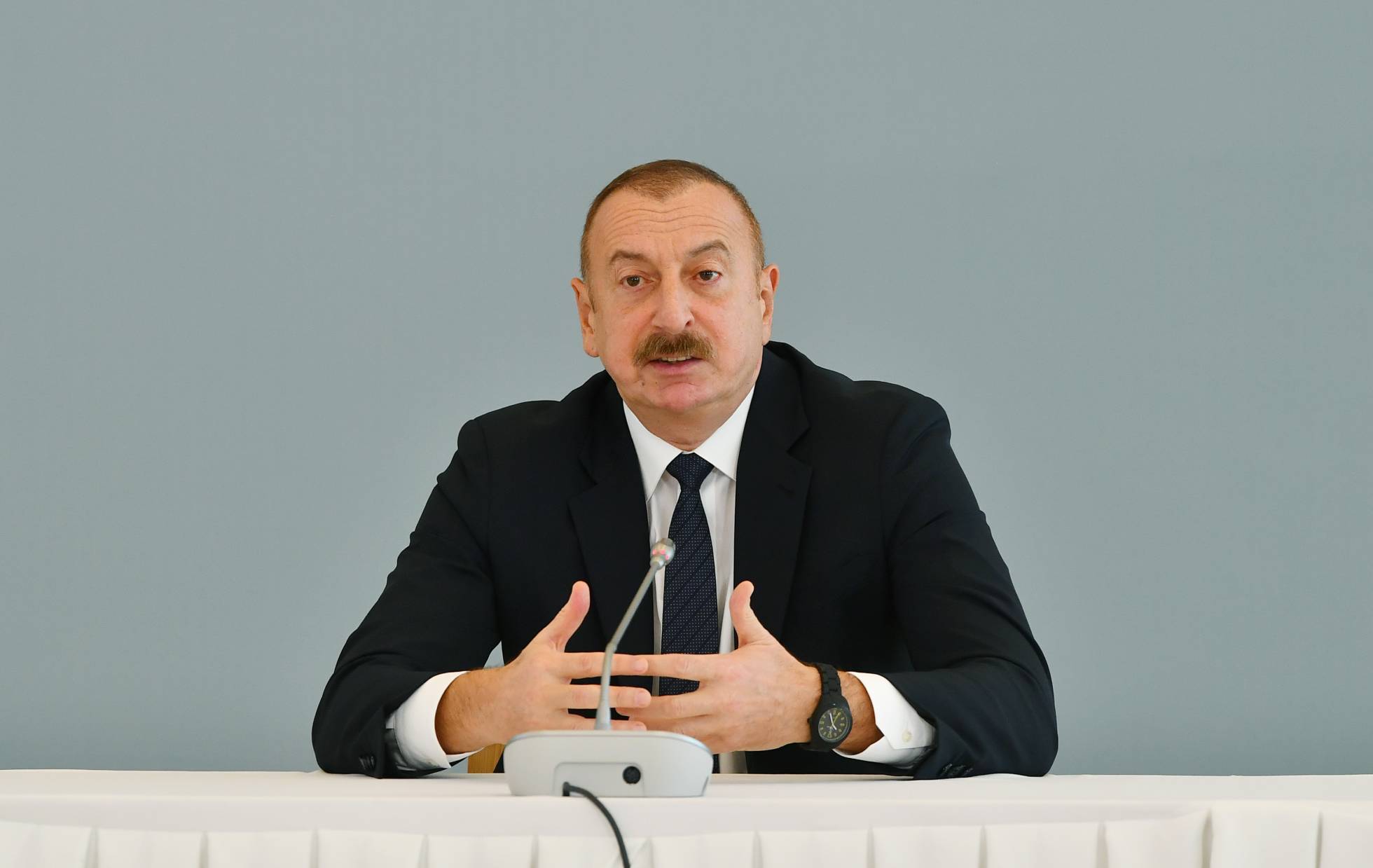
On October 9, 2020, Azerbaijani President Ilham Aliyev addressed the nation, announcing that their army had taken control of several settlements in Nagorno-Karabakh, including Hadrut.

Meanwhile, Hovhannisyan continued posting on Facebook:
“I am currently in Hadrout and I can see only Armenians here.”
Later, after his dismissal, Artsrun Hovhannisyan attempted to justify his statements by claiming that all his wartime reports were based on information provided by the General Staff and the Defense Army.
It was only after the war that it became clear Aliyev had been telling the truth, while Artsrun Hovhannisyan had been misleading the public.
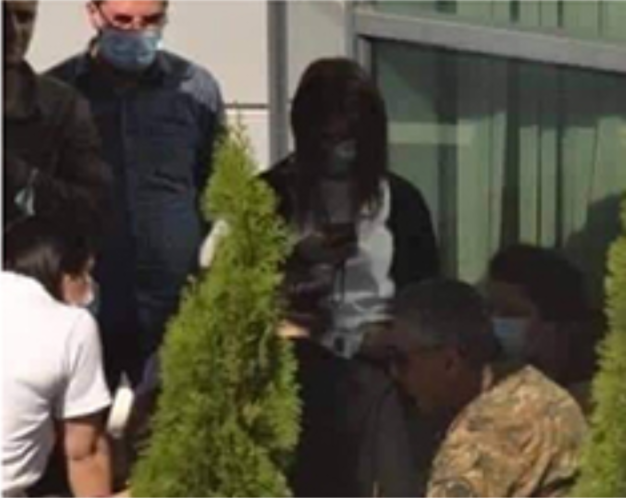
A media report later revealed that Artsrun Hovhannisyan and Prime Minister Nikol Pashinyan’s spouse, Anna Hakobyan, were seen discussing the wartime agenda on the balcony of the Radio Free Europe/Radio Liberty (Azatutyun) office. It turned out that the strategy for state wartime propaganda was not set by the General Staff or Armenia’s Security Council, but was instead shaped by the Prime Minister’s spouse—at a media outlet funded by the U.S. Department of State.
It’s no exaggeration to say that, during those days, the Armenian public anxiously awaited the regular press briefings of Defense Ministry representative Artsrun Hovhannisyan, trusting him as the most reliable source of information about the situation on the Artsakh frontline. That’s why many were left shocked and disheartened when, on November 9, 2020, Defense Ministry spokesperson Shushan Stepanyan made the following announcement:
“Defense Ministry representative Artsrun Hovhannisyan will not be hosting his regular briefing today. He will be replaced by Suren Sarumyan, a representative of the Artsakh Defense Army.”
That same day, the Armenian public was suddenly confronted with the harsh reality of defeat in the war—confirmed by the joint statement of the leaders of Azerbaijan, Armenia, and Russia, signed on November 9, 2020
Artsrun Hovhannisyan’s deception had turned out to be as unexpected as it was devastating for Artsakh.
P.S. In the aftermath of the war, Artsrun Hovhannisyan and Styopa Safaryan were spotted enjoying themselves in Milan—sipping coffee, smoking cigars, and seemingly at peace with their “fulfilled duty.