
Arthur Hambardzoumyan: Silence as a Key Factor in State Destruction
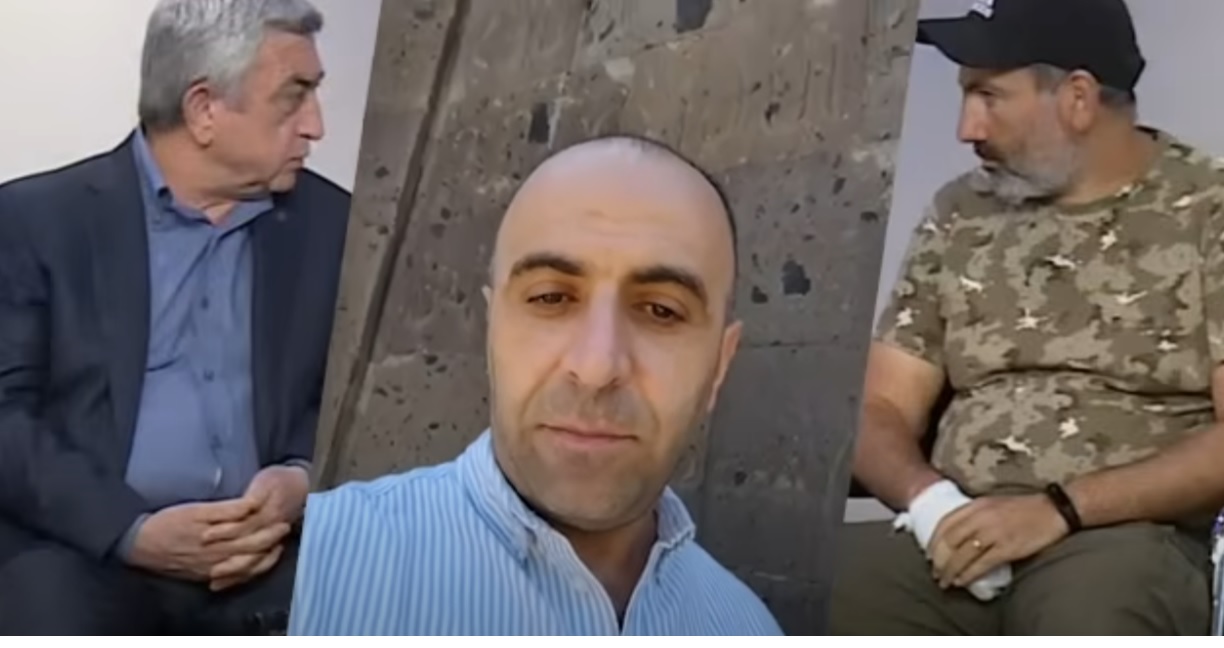
In his regular YouTube address, Arthur Hambardzoumyan raises issues that are either deliberately avoided in Armenia’s public discourse or pushed to the margins of public attention. In his assessment, over the past few years, the Armenian people have gradually become accustomed to developments that would have been considered unacceptable not long ago.
From the opening moments of the video, Hambardzoumyan clarifies that the issues he addresses are not about himself or how he is perceived - whether as a patriot, a traitor, or a provocateur. Rather, they concern everyone who lives in Armenia or has relatives there. These issues directly affect the security, dignity, and future of families, and therefore cannot be dismissed as a personal opinion or a “political commission.”
One of the central themes of the episode is what Hambardzoumyan describes as a de facto admission by Armenia’s Ministry of Defense regarding the conditions of military service at certain positions, including in the area of Sev Lich. He points out that the ministry effectively confirmed that Armenian servicemen, on their way to their posts, are forced to pass through Azerbaijani control, inspection, and humiliation. At the same time, he notes that parliament, the government, and the judicial system remain silent on the matter.
Hambardzoumyan also directs particularly sharp criticism at parts of the journalistic community and at the editorial policies of certain media outlets, which, in his view, maintain silence in the face of unacceptable actions by both the authorities and the opposition. He characterizes this behavior not as professional caution, but as complicity through inadmissible silence.
In a broader context, Hambardzoumyan speaks about the normalization of developments that, in any country, would normally trigger a large-scale political and public response. Among such phenomena, he cites the absence of any consequences following Andranik Kocharyan’s statements calling for the “verification” of victims of the Armenian Genocide; espionage accusations leveled against high-ranking officials without any accompanying investigation; and the deployment of conscripts to areas that the authorities themselves have acknowledged as disputed or effectively under the adversary’s control. According to Hambardzoumyan, society has tolerated all of this, coming to accept it as the normal state of affairs.
In this context, he contrasts this passivity with the wave of public indignation over secondary issues, such as fuel imports. He interprets the controversy surrounding such contracts as a symptom of deeply distorted public priorities, in which fundamental problems are replaced by safe and convenient pretexts for scandal.
Hambardzoumyan devotes a separate segment of his video to the role of the opposition. He argues that in Armenia the boundary between the authorities and the opposition has become dangerously blurred, with many political and public figures effectively “embedded” within a system of mutual cover. The absence of sharp questioning in parliament and the lack of legal or political assessment of key decisions, he maintains, are not the result of weakness or limited resources, but a deliberate choice.
Hambardzoumyan devotes a significant portion of his video to the issue of the Church. He criticizes what he describes as the selective “protection of the Church,” which, in his view, is confined to rhetorical declarations and vanishes whenever the centuries-old traditions of the Armenian Apostolic Church come under threat. He draws attention to what he sees as the authorities’ inconsistent and contradictory policy toward the Armenian Apostolic Church. He recalls that Nikol Pashinyan’s so-called “Velvet Revolution” was carried out under the slogan “Reject Serzh,” yet it was not Serzh Sargsyan who faced pressure and criminal prosecution, but the head of the Shirak Diocese of the Armenian Apostolic Church, Archbishop Mikayel Ajapahyan. Hambardzoumyan interprets this as pressure on Church institutions and hierarchs who do not fit into the prevailing political environment, carried out under the guise of democratic reforms.
Despite his sharp criticism and strong language, Hambardzoumyan stresses that he is not calling for punishment and does not demand that anyone accept his claims at face value. On the contrary, he invites critics to refute his arguments with facts and to publicly prove him wrong. He states that he is prepared to apologize and withdraw from public activity if his claims are disproven.
In conclusion, Hambardzoumyan emphasizes that the core problem is not external pressure or the actions of individual political figures, but society’s tolerance of what is happening. As long as systemic violations, the erosion of dignity, and the denial of responsibility are tolerated, isolated scandals will only distract from the underlying issues. Such silent consent, he argues, is a key factor in the destruction of the state.

The Public Tribunal’s Statement
The Public Tribunal regards the position articulated by Artur Hambardzoumyan in his video as well-founded and deserving of both public and political attention. The issues he raises go beyond personal opinion or political polemics; they address fundamental questions of responsibility on the part of the authorities, the opposition, institutions, and society as a whole. The Public Tribunal shares the author’s concern about the dangerous practice of societal tolerance toward processes that directly affect sovereignty, security, human dignity, and the foundations of statehood. In this regard, the Public Tribunal views this video material as important evidence of a public demand for truth, accountability, and a transparent public assessment of ongoing developments.