
How the Current Catastrophic Situation in Armenia Began: From Romanticized Independence to Systemic Vulnerability – Part 1: LEVON TER-PETROSYAN – THE ARCHITECT OF POST-SOVIET VULNERABILITY (continuation)
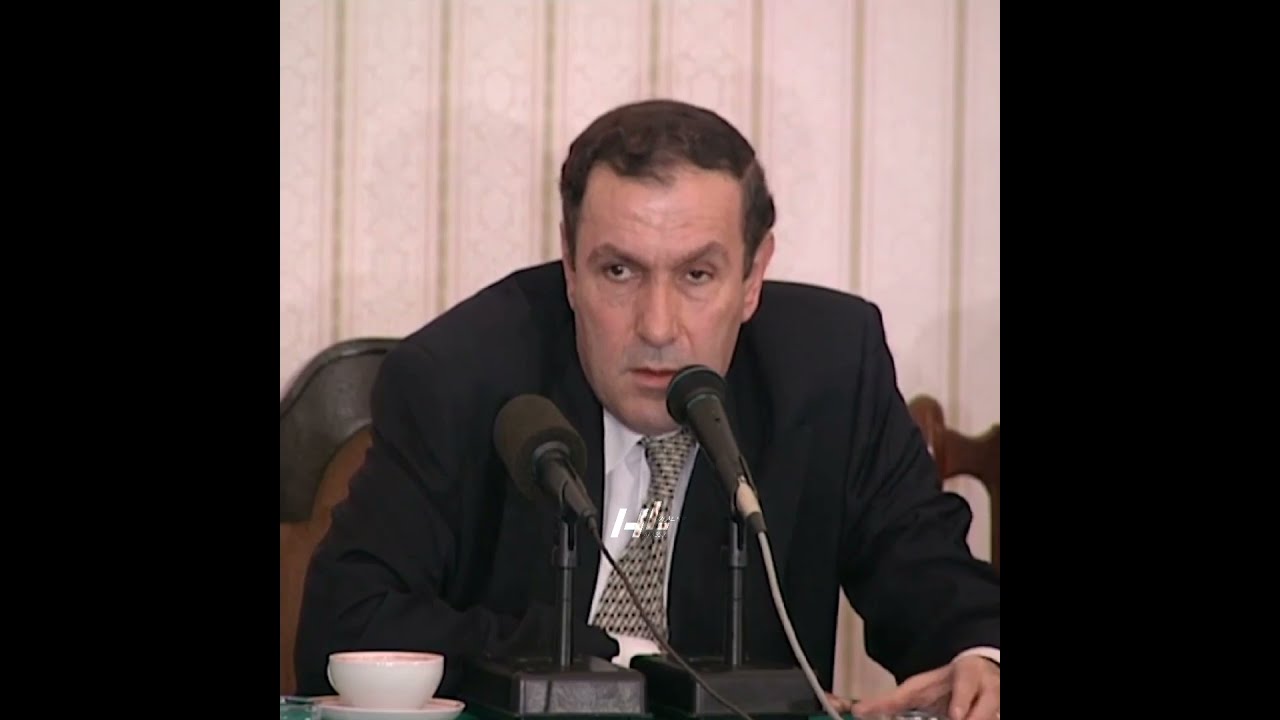
THE ARCHITECT'S OVERTHROW: PHILOSOPHY THAT DID NOT COINCIDE WITH REALITY
By the late 1990s, Armenia was living in an entirely different reality. The factories that once sustained the economy had become hollow, “yawning” shells - silent reminders of failed privatization and misguided reforms. Homes that had survived the winter without the nuclear power plant still remembered the freezing nights when electricity was a luxury. Warehouses filled with humanitarian aid, once overflowing with crates, had slowly become symbols of something that had simply evaporated.
It was in this different reality that Levon Ter-Petrosyan chose to launch his key reform: settling the Karabakh conflict through unilateral concessions. He believed this would open Armenia’s path to a “civilized future.” Yet the future does not negotiate with ideas that lack real resources and genuine state resilience.
Within the security establishment, a quiet circle began to form - people who viewed this policy not just as a mistake but as a danger. Their argument was clear: Armenia was too weak to make strategic concessions, yet strong enough not to make them unless faced with absolute necessity.
Even ministers who had long supported Ter-Petrosyan began to hesitate. They saw that the country had barely recovered from the energy crisis and the chaos of privatization, and that it could not withstand another blow - this time to the nation’s confidence in its own strength.
When resistance grew- from the army to the ministers, from the diplomatic corps to the government -it became clear: the president was losing support. He was left alone with his philosophy of concessions, a philosophy that painfully echoed the failures of the era: a ruined industrial sector, a shut-down nuclear power plant, vanishing humanitarian aid, the failed 1996 reform, and a weakened education system.
Reality proved stronger than political declarations. The country had accumulated too many mistakes and could not afford another one. In February 1998, Levon Ter-Petrosyan was forced to step down.
The legacy of Levon Ter-Petrosyan: A shadow that still hangs over the country
Today, looking back at the turbulent 1990s, one can see not only the events of those years but also the deep traces they left on the state’s very fabric. It is like walking through the ruins of an ancient city - its walls still standing, yet the cracks upon them mirroring an entire era.
Armenia of the late 1990s lived amid the ruins of its industry, with an energy system resting on the remnants of once-functioning capacities, and institutions surviving largely on the dedication of a handful of individuals. The shutdown of the nuclear power plant and the collapse of industry created a fragility that the country felt with every step.
The political course of the first post-Soviet years was built on the idea that concessions were inevitable and the only rational path forward. It was a kind of philosophy of weakness — rationalized, explained, and presented as necessity. Years later, this would become the ideological prototype for the political course pursued by the country’s leadership in 2018–2020.
A state apparatus weakened at the very outset was unable to respond adequately to economic, diplomatic, and military challenges in the years that followed.
Weakness embedded in a foundation always resurfaces — especially in the most critical moments.
This weakness manifested in the tragedies of the subsequent periods:
- March 1 2008,
- The April war of 2016,
- The defeat in the war of 2020,
- The events of 2023.
History is like a mirror reflecting past events and one’s own mistakes. Armenia has been looking into that mirror for thirty years. And the longer it looks, the clearer it becomes that those years were not the beginning of statehood, but the beginning of vulnerability.
If these lessons are ignored once again, history will return — as it always does — to remind us.