
How the Current Catastrophic Situation in Armenia Began: From Romanticized Independence to Systemic Vulnerability – Part 1
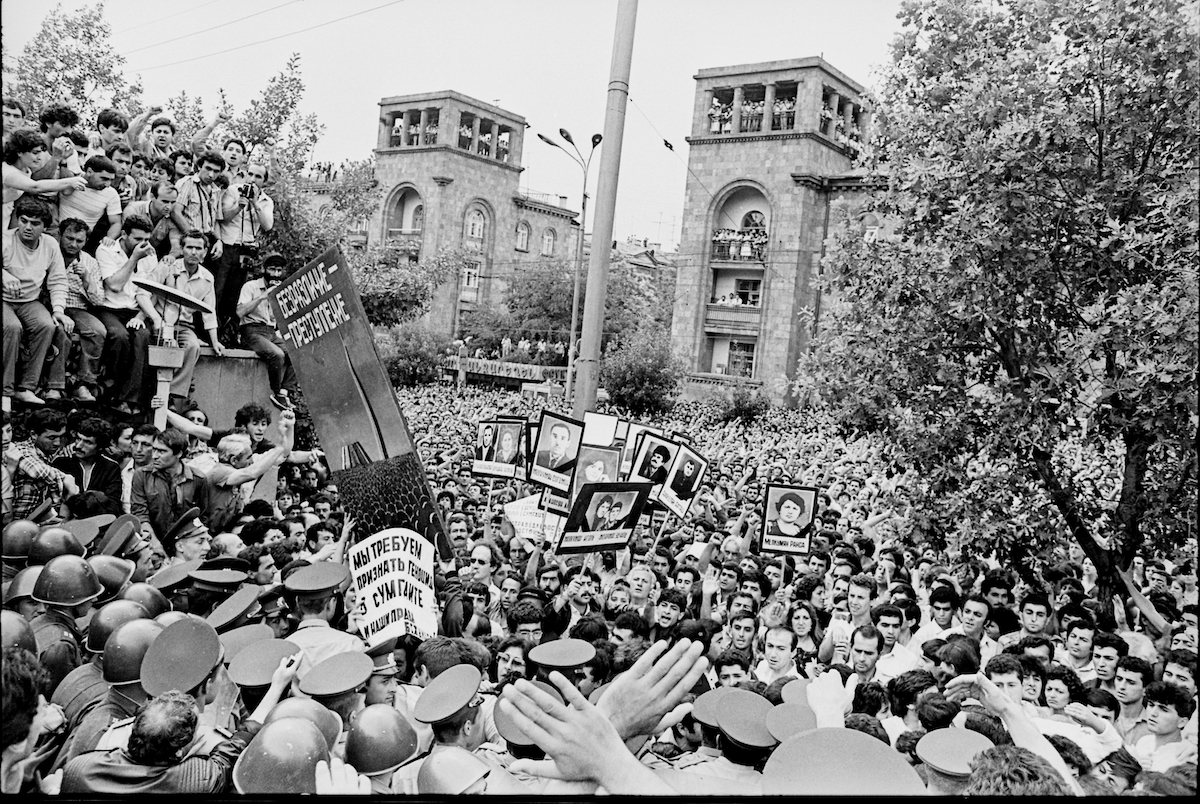
Catastrophes do not occur by accident - they ripen over years, sometimes over decades, through unnoticed decisions, concessions, and mistakes that later become fatal. Today, as Armenia is living through perhaps the most dramatic period of its modern history, we return to the very beginning to understand where exactly the point of no return was reached. As part of the project we announced earlier, we are launching a series of articles that will reconstruct step by step the political, geopolitical, and human logic of events: from the first days of the late-1980s rallies to the decisions that led the country to its current state.
LEVON TER-PETROSYAN – THE ARCHITECT OF POST-SOVIET VULNERABILITY
“Betrayal begins the moment personal gain is placed above the fate of a people.”
The night in Yerevan was calm and still, as if the capital - shaken by a tsunami of change - were holding its breath so as not to break the fragile boundary between past and future. Dark, haze-filled streets gazed silently at the lone light shining from a window on the upper floor of the government building - a room where time itself seemed to have stopped.
Behind a massive table polished to a mirror-like sheen sat the man whose decisions had shaped the fate of millions for years. The absolute silence of the room was broken only by the soft rustle of turning pages and the distant sounds of the night city slipping through the tightly closed windows.
His silhouette, outlined against the glow of the desk lamp, appeared both monumental and distant. He was leafing through documents, yet the papers were merely a pretext - what he was truly reviewing was the future. There was no fatigue in his eyes, only the strained concentration of a man accustomed to weighing every word, every decision, like an equation filled with unknowns.
An observer with a cool, barely perceptible smile. A philosopher whose thoughts unfolded in impeccably constructed chains of logic. His mind - mathematically austere, stripped of emotion - was a mind that believed too deeply in logic and far too little in the nation’s historical instinct.
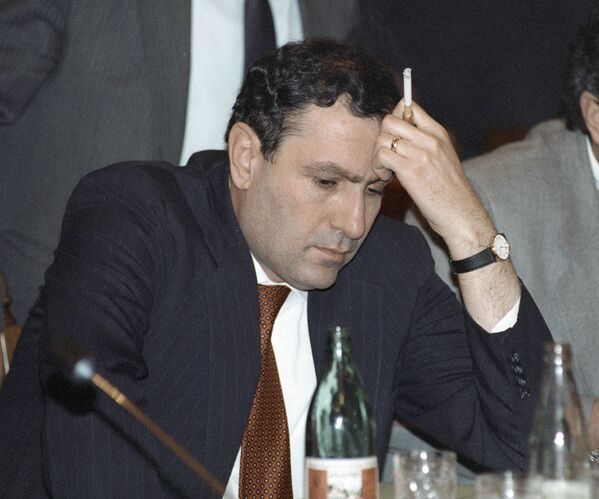
With restraint in his actions, distance in his gaze, and an entire epoch contained in silence. He understood that every decision made there, in that room, would reverberate across the coming decades. Time stretched—each minute felt like an age—and the silence became almost tangible.
It was in that room, amid the rustling of papers, that the decisions shaping the events to come were made: from the internal split to the February resignation that reshaped Armenia’s political architecture.
The epoch of turning points: Between liberation and destruction
“A nation that does not realize its own force becomes a toy in others’ hands.”
The early 1990s were a paradoxical period in Armenia - a time defined by stark contrasts. It was an epoch of both liberation and destruction. The country was tearing itself away from the weakened Soviet Union, and the very force that brought liberation was simultaneously becoming a force that unraveled the established order.
The streets of Yerevan, Gyumri, and Kirovakan (now Vanadzor) turned into a stage for turbulent events. Rallies charged the air like an electric current before a thunderstorm. The force organizing these rallies was young but bold and ambitious - the Armenian Pan-National Movement (APNM).
Within this movement, a new political elite was taking shape - people whose names would soon become synonymous with power: Vazgen Manukyan, Vano Siradeghyan, Ashot Manucharyan, Ararat Petrosyan, Samvel Grigoryan, Samvel Avetisyan, Rafael Ghazaryan… They were not just leaders; they saw themselves as makers of history, architects of a new statehood.
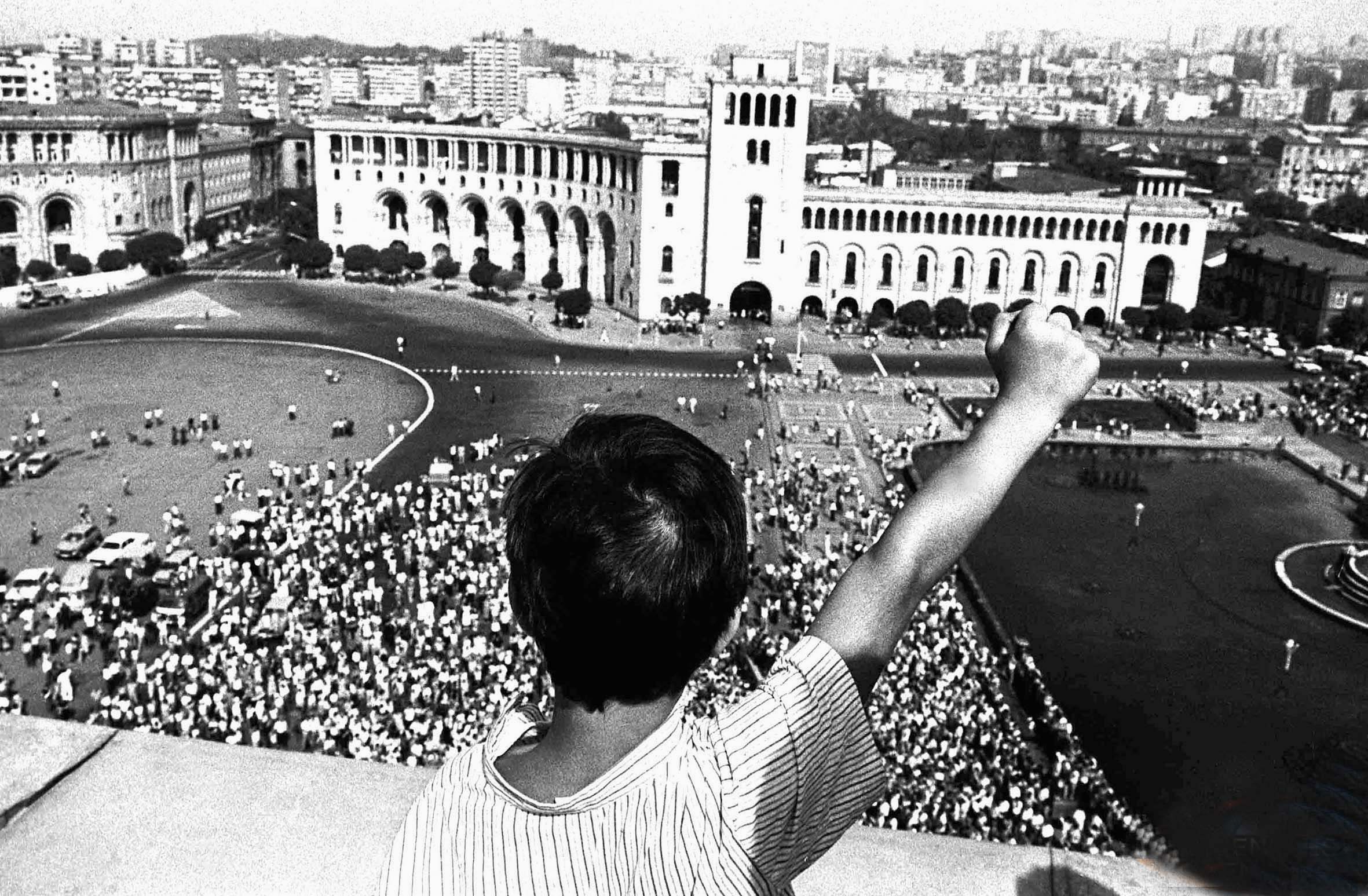
The APNM quickly transformed from a public force into a political machine. It was the APNM that took the decisive steps, feeding energy and momentum into the revolution. Yet history often turns back on itself: the steps meant to be creative planted a delayed-action mine beneath the foundations of the young state.
The top leadership of the APNM emerged on the wave of perestroika and the collapse of the Soviet Union. In that atmosphere, not only new ideals and methods were born, but also a strong - almost mystical - sense of special mission. The leaders believed they were the ones destined to guide the country to independence, the ones who should take the helm of the new state.
Key figures of that period included:
Vazgen Manukyan – the ideologist, the first prime minister, a man whose thinking set the movement’s direction.
Vano Siradeghyan – the future minister of internal affairs, whose decisiveness at times bordered on the reckless.
Vazgen Sargsyan – the legendary Sparapet, the future minister of defense, whose will and charisma made him a symbol of military strength.
Rafael Ghazaryan, Ararat Petrosyan, Samvel Grigoryan, Ashot Bleyan, and others – figures whose influence was felt at every turning point.
Within that unified impulse toward independence, another, more troubling tendency began to surface. The belief that the APNM leaders were the only ones entitled to govern the country gradually took hold. Their vision was seen as the only correct one, their experience as the only one that mattered.
This political culture, rooted in a sense of exclusivity and a monopoly on truth, became the groundwork for future crises. It gave rise not only to new power institutions but also to dangerous patterns of thinking, ones that would reverberate through Armenia’s political life for decades, dividing society and eroding trust in state institutions.
In that fire of revolution - amid hopes and illusions - a new reality was born, one marked by victories and tragedies, greatness and collapse.
Sovetashen: An episode that became a symbol of chaos
When the truth is silent, bullets begin to speak.
By the spring of 1988, what had once been a season of hope was turning into a season of trials. Yerevan was boiling like an overheated boiler, and at times a single spark was enough to turn a square or street into a place where history bent sharply and harshly. One such turning point was Sovetashen, on March 23, 1988. It entered the public consciousness as the first serious outbreak of violence between APNM activists and the Soviet military.
According to numerous witnesses, that day a group of radical activists —including figures such as Andranik Kocharyan, Ararat Petrosyan, Samvel Grigoryan, and individuals acting under the informal influence of Vano Siradeghyan - arrived in Sovetashen with a task to provoke clashes.
The crowd grew larger, and the slogans more aggressive. The Soviet Army subdivision stationed at the checkpoint had been ordered not to respond to provocations. Yet tensions continued to rise. Eyewitnesses recalled that the first projectiles were stones, followed by metal objects. Someone in the crowd shouted, “Blood will speed up the changes.” Words that, inevitably, push events toward tragedy. When radicals attempted to break through the cordon, pushing and shoving erupted. In the crush of bodies - soldiers squeezed against military vehicles, the crowd attempting to seize weapons - the first shots were fired.
They fired into the air at first, and later—according to subsequent investigations—some bullets may have been fired toward the crowd, though no definitive facts were ever established.
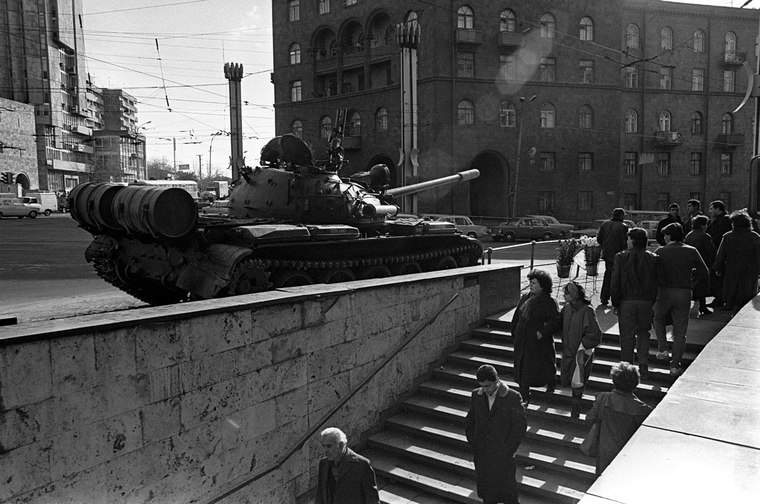
Dozens were wounded in that eruption of chaos. Casualties were not officially confirmed at the time, but later, at least two deaths were documented: Hrachik Harutyunyan, a resident of Sovetashen, and Karen Petrosyan, a student who happened to be caught in the epicenter of the clashes and gunfire. Both received fatal wounds in the confusion, as people tried to take cover behind cars and the walls of nearby houses.
For those who witnessed it firsthand, Sovetashen ceased to be just a suburb of Yerevan. It became the place where, for the first time, blood was shed on political grounds. A place where the radical members of the APNM realized that a crowd could be pushed to the edge—and where the military discovered that their restraint had limits.
The episode may seem local, but it served both as a sign and a warning. For APNM supporters, it confirmed the harshness of the “imperial troops.” For more sober observers, it showed that part of the emerging political elite had begun to view chaos as a tool, victims as political capital, and violence as an accelerator of historical processes.
“Where there is no responsibility, there can be no statehood.”
Sovetashen became the first red line drawn in blood. The spring of 1988 would echo into the future, shaping a logic that later hardened into the behavioral pattern of the new ruling elite: from street clashes to parliamentary coups, from provocation to full-scale tragedy.
Sovetashen was both a sign and a subtle yet unmistakable warning: those who provoked chaos in 1988 for political gain would do so again on a far larger scale in 1996, 1999, and 2008. For once, they felt the power of the crowd and the weakness of the state, the emerging elite learned one essential lesson of turbulent eras: if chaos works, it becomes a tool.