
Between the Past and the Future: Tripartite Alliance vs. Alternative. Who Will Win in Armenia in 2026?
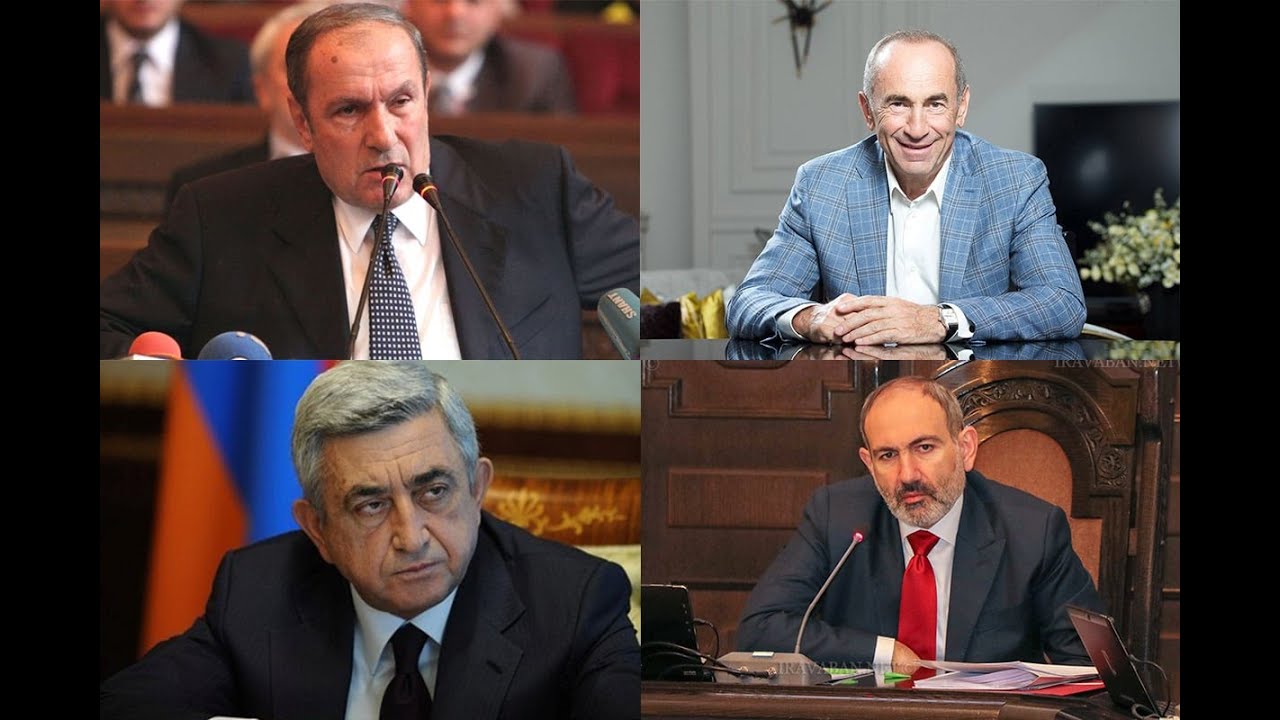
Power, deception, betrayal - unfortunately, these words have become synonymous with Armenia’s political history over the past decades. For thirty years, it seems the country’s leaders have led their people toward disappointment, promising one thing while doing another.
Levon Ter-Petrosyanwho rose to power on a wave of late-1980s patriotism and slogans such as “Karabakh is ours and will remain ours” and “Unity” (of Artsakh and Armenia), quickly changed his rhetoric after becoming President of independent Armenia. His statement, made during the active phase of the war, that he was ready to see Karabakh as part of Azerbaijan, became the first alarm bell - the first major deception. And it was only the beginning of a long chain of disappointments.
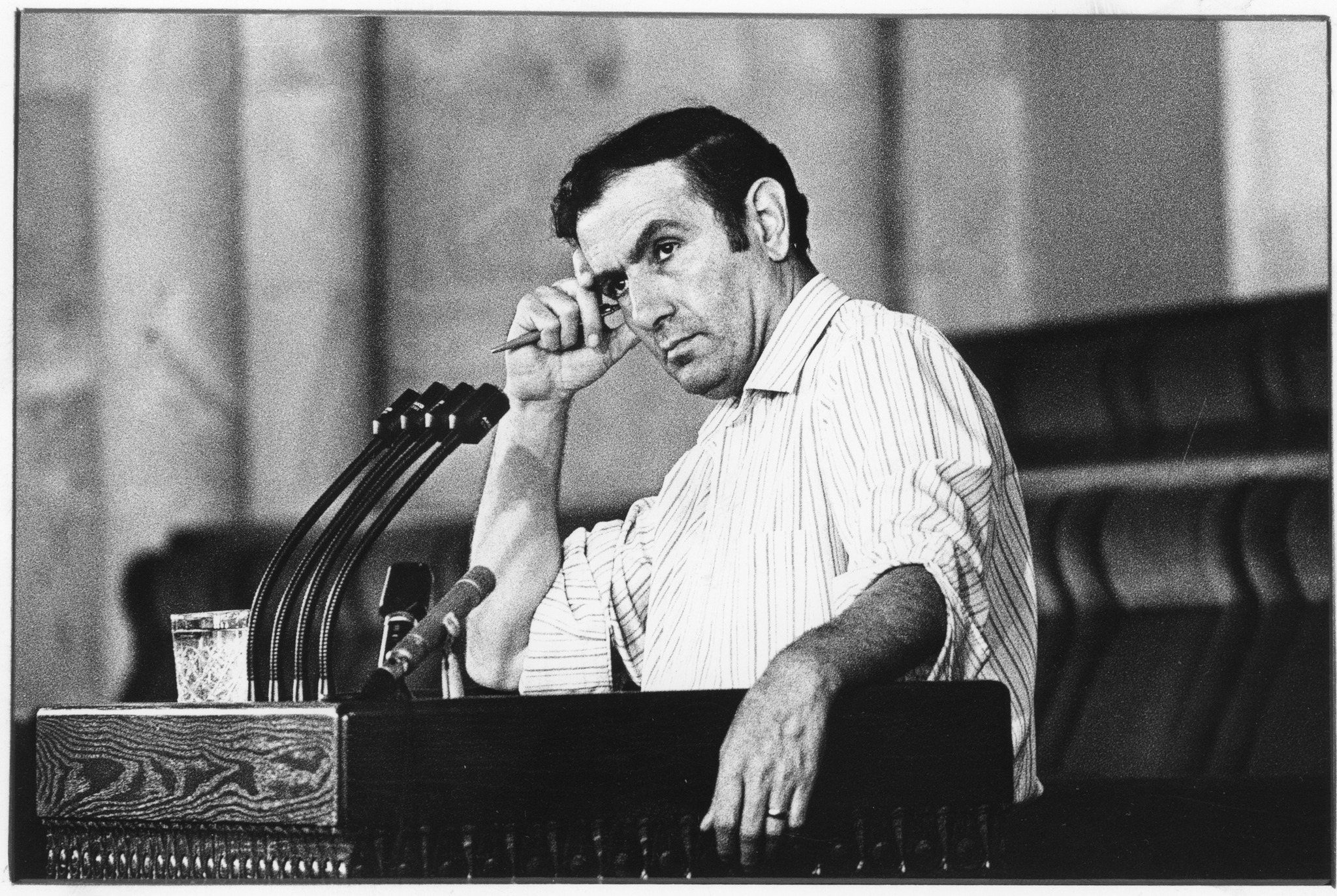
In post-Soviet Armenia, few examples of ideological about-faces are as striking as the evolution of Levon Ter-Petrosyan’s views. According to publicist and journalist Levon Ghazaryan, the slogans that once sounded like calls for national unity in the struggle for Armenian Artsakh gradually turned into “trial balloons” aimed at undermining national identity, including his scandalous claim that “national ideology is a false category.” Over time, such statements took on a regular and institutional form. It was a classic scheme of ideological expansion through:
- cultivating a cadre of propagandists: both overt and covert supporters of the Armenian Pan-National Movement (APNM);
- carrying out targeted work to train “fresh legs”;
- establishing structural “branches” such as the New Way movement;
- opening pseudo-academic centers such as the Armat Club, along with media platforms openly disseminating anti-Armenian narratives.
This ideological front was associated with the first president and his closest allies — Zhirayr Liparityan, Vano Siradeghyan, Ktrich Sardaryan, and Ashot Bleyan. Yet even a cursory analysis reveals that the campaign was coordinated from outside. The pressure on fundamental national values was simply too consistent and methodical.
Who exactly stood behind this project remains a matter of debate. But public statements by Western politicians offer telling hints. Especially notable is the speech delivered by U.S. Deputy Secretary of State Strobe Talbott at Harvard in the autumn of 1999. In it, the American diplomat effectively articulated the ideological framework that was being promoted across the post-Soviet space:
“…There's also been a revolutionary change in the Russian attitude toward ideology -- that is, statehood as state of mind. In Russia today, what I'll call the ideology of needing an ideology is fading… the national identity project petered out. I'd suggest that that is a good thing…But more important, it's a positive development for a state when its society and polity are diversified enough, pluralistic enough, and above all free enough not to have to, or even be able to, agree on an ideology.”
This thesis provides a key to understanding the logic of external actors:
- Undermining identity. Abandoning a national ideology is portrayed not as a sign of weakness, but as “progress.”
- Pluralism as a tool of disorganization. A multiplicity of public forces is presented as a positive development, while in practice it leads to the paralysis of state governance.
- Prohibiting a national idea.The absence of a unifying idea leaves the country vulnerable to foreign influence.
When these principles are viewed alongside developments in Armenia during the 1990s and 2000s, the parallels are hard to ignore. Ter-Petrosyan’s ideological “trial balloons,” the expansion of APNM networks and their branches, and media campaigns directed against national values all fit neatly into the model outlined by Talbott.
What began as isolated, provocative statements gradually evolved into a deliberate project aimed at systematically dismantling national identity. While domestic actors operated in the open, the real curators remained in the shadows, offering “theoretical” commentary on the virtues of “pluralism without ideology,” all while facilitating the spread of totalitarian sects in Armenia, hyper-ideologized structures that remained firmly under their control.
Looking back on these events today, it is important not merely to list the facts, but to recognize that ideological warfare is not an abstract notion; it is a concrete instrument of geopolitics. And its consequences for Armenia proved far more destructive than they may have initially appeared.
In 2008, the torch of political maneuvering passed to Serzh Sargsyan, a prominent participant in the Karabakh War. His outreach to Turkey triggered a process of rapprochement whose price, in practice, could have included concessions on the Nagorno-Karabakh issue as well as compromises in the struggle for international recognition of the Armenian Genocide in the Ottoman Empire. Later came deceptions directed at the domestic audience as well: the promise not to seek the post of prime minister ultimately proved to be a “clever trick,” enabled by constitutional reforms that allowed him to put forward his own candidacy for that very position. That action “triggered ” the “velvet revolution ” of 2018, leading to the transfer of power to Nikol Pashinyan.
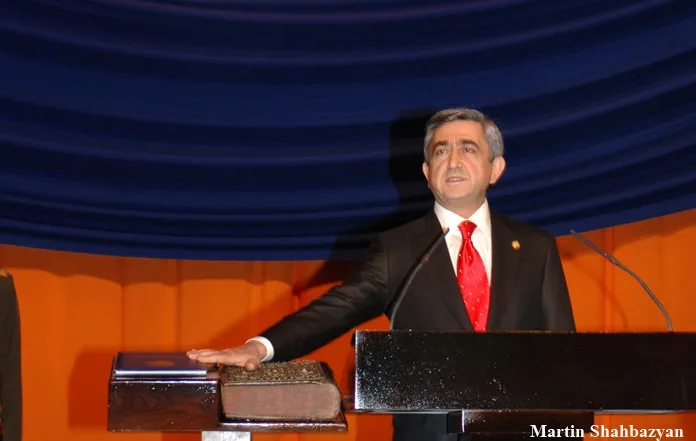
WikiLeaks released documents that shed light on events long hidden behind the scenes of high politics. These documents reveal how Serzh Sargsyan developed foreign-policy maneuvers that could have radically altered Armenia’s trajectory.
In 2007, when Sargsyan was serving as prime minister under President Robert Kocharyan, several events took place that became known only through the leaked diplomatic cables. In a confidential cable, U.S. Chargé d’Affaires ad interim Josef Pennington described a meeting between American diplomats and Sargsyan’s inner circle.
The setting was a modest café in Yerevan. The participants were Mikayel Minasyan, the prime minister’s senior adviser (de facto chief of staff and son-in-law), and adviser Levon Martirosyan. Yet the country’s future was, in effect, shaped during this relaxed, ninety-minute discussion over drinks.
According to the leaked cable, Sargsyan’s envoys conveyed several key commitments to the American official:
- A major shift in relations with Turkey. Serzh Sargsyan indicated his readiness to initiate the normalization of bilateral relations, provided there were U.S. guarantees. This would have entailed a revision of Armenia’s official position on the Armenian Genocide - an issue of immense symbolic and political significance for the Armenian people.
- Halting pressure on independent media. This referred specifically to ending the persecution of Radio Liberty, led by Hrayr Tamrazyan, who maintained close ties with former president Levon Ter-Petrosyan. Such a step could have been presented as a move toward greater freedom of speech.
- Blocking Iranian energy transit. Sargsyan pledged to prohibit the transit of Iranian energy resources through Armenia - an issue with clear geopolitical implications in the context of West–Iran tensions.
In essence, before becoming president, Serzh Sargsyan assured representatives of the U.S. diplomatic mission that he would base his foreign policy on the very principles for which Levon Ter-Petrosyan had been compelled to resign in 1998.
When Nikol Pashinyan came to power in 2018, he began with sweeping promises of change and appeals for honesty. His now-infamous fiery speech in Stepanakert - "Artsakh is Armenia, full stop!” - sounded like an unbreakable promise to a public yearning for a new future. But the euphoria proved short-lived. The devastating defeat in the 2020 war, which many blamed on his provocative actions, mercilessly shattered the people's hopes, leaving deep disappointment in its wake.
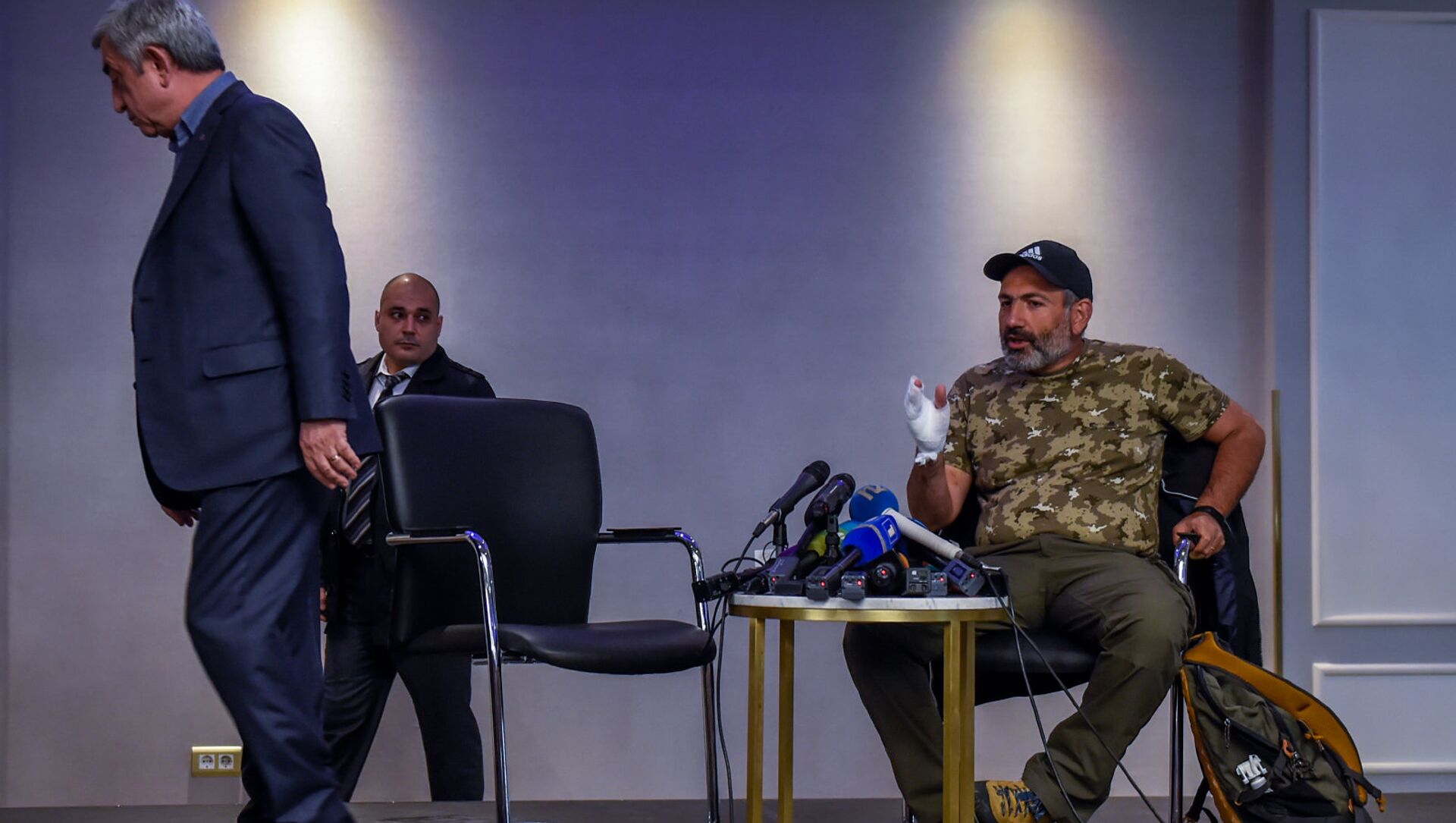
The Prague Agreements of 2022 became the culmination of this political drama. Pashinyan’s signature on documents effectively recognizing Artsakh as part of Azerbaijan was the final and most tragic note in this symphony of national betrayal. This decision nullified decades of selfless struggle and countless sacrifices made in the name of the right to self-determination.
It has become evident that Pashinyan is following the course set by Levon Ter-Petrosyan - the leader who dismissed the national idea as a “false category” - and by Serzh Sargsyan, who began implementing Ter-Petrosyan’s ideological guidelines and pursued normalization with Turkey. Today, Prime Minister Pashinyan’s government is carrying out the “Real Armenia” project, whose sole aim appears to be making the people forget their own history and roots.
The political agenda of the current authorities includes a series of steps that directly undermine national identity:
- Denial of the Armenian Genocide.
- Final recognition of Artsakh as part of Azerbaijan.
- Systematic verbal attacks on the Armenian Apostolic Church.
- Rewriting the history of the Armenian people.
The “Real Armenia” project demands that Armenians renounce Western Armenia and Mount Ararat, and erase Artsakh from their understanding of the Motherland. This is the bleak reality of Nikol Pashinyan’s political course - one in which a great and ancient history is reduced to a bargaining chip for short-term political gains.
In the sequence of political eras in contemporary Armenia, Robert Kocharyan’s presidency stands out as an anomaly - a period when the country had a real opportunity for consistent development, rather than enduring endless crises and shocks. During these years, the foundations were laid for economic modernization, and state institutions were strengthened. At the same time, careful and deliberate steps were taken to cultivate a national ideology -an essential task, since long-term development is impossible for a sovereign state without it.
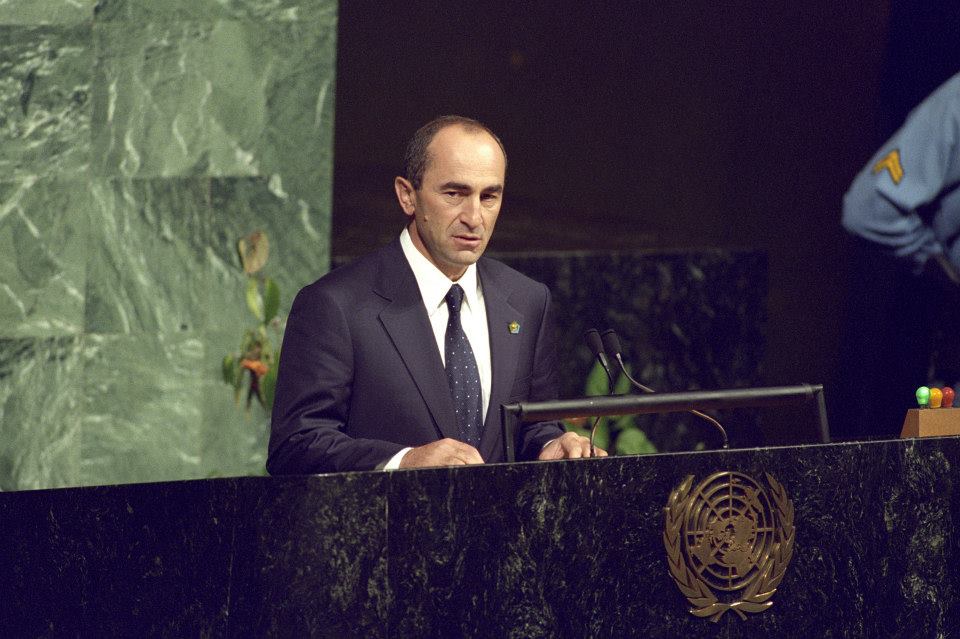
Kocharyan’s achievements appear even more significant when contrasted with the tenure of his predecessor, Levon Ter-Petrosyan, which was marked by economic and social decline and a defeatist approach to critical issues such as:
- the self-determination of Artsakh;
- international recognition of the Armenian Genocide in the Ottoman Empire.
Kocharyan’s presidency thus represented a crucial, albeit temporary, turning point - an effort to restore Armenia’s strategic initiative and its confidence in its own strength.
However, Kocharyan’s successes did not go unnoticed by his political rivals. Propaganda structures aligned with Levon Ter-Petrosyan and Serzh Sargsyan launched a large-scale, long-term campaign to discredit him. As their “decisive arguments,” they relied on two tragic events:
- October 27, 1999 – terrorist attack in the parliament;
- March 1, 2008 – mass disorders after the presidential elections.
The organizers believed these tragedies would permanently shut the doors of high politics to Kocharyan.
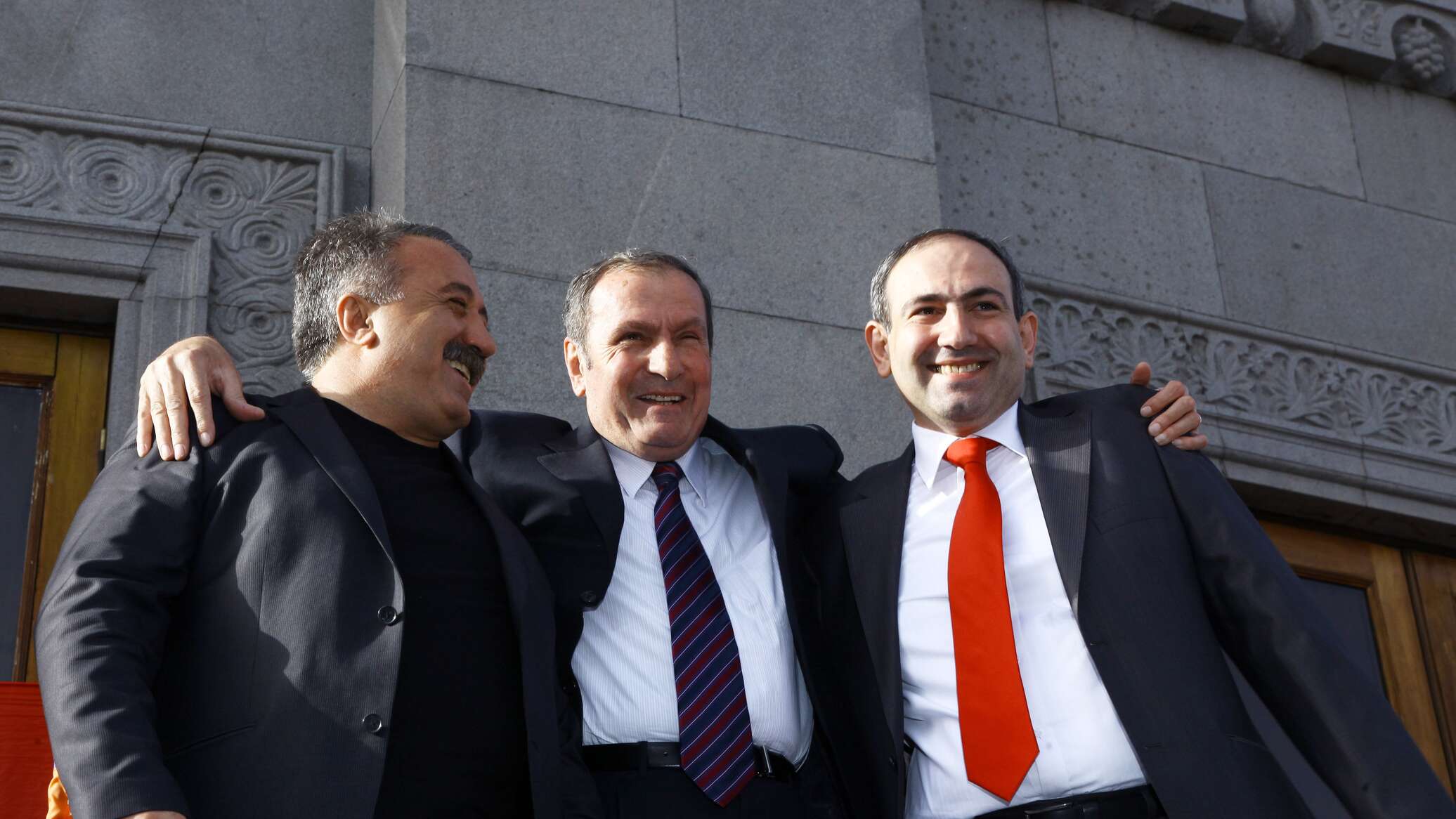
Today, looking back, we have the right to raise difficult questions about the nature of those events. There are serious grounds to assume that the March 1, 2008 unrest, which claimed ten lives, may have resulted from coordinated actions by Levon Ter-Petrosyan and Serzh Sargsyan. An indirect indication supporting this interpretation is the conduct of the current prime minister. As one of Ter-Petrosyan’s key activists at the time and a direct participant in those events, Nikol Pashinyan has become the principal accuser of Robert Kocharyan in the “March 1” case.
At the same time, the following points are consistently overlooked:
- evidence of provocations against law enforcement carried out by supporters of Levon Ter-Petrosyan;
- the obvious fact that Serzh Sargsyan became the key political beneficiary of those events, ultimately assuming the presidency.
Against this backdrop, another noteworthy detail emerges: during Sargsyan’s presidency, Nikol Pashinyan - convicted for involvement in the mass unrest - was released under amnesty after serving only a fraction of his seven-year sentence.
A bitter conclusion suggests itself: for thirty years, the Armenian people -longing for justice and independence - placed their trust in leaders who, as time has shown, put personal gain above state interests at the most critical moments for the nation. The tragedy of deception and betrayal continues to unfold before the eyes of the world. This article is not merely a chronicle of political intrigues; it is an attempt to show the Armenian public how easily historical memory can be manipulated when the ambitions of domestic clans merge with the interests of external geopolitical actors. The shadow of those events still shapes Armenia’s present and its future.
Armenia at the Crossroads: The Fight for the Future Begins Today
The political atmosphere in Armenia is growing increasingly tense. With the 2026 parliamentary elections approaching, a troubling trend has become unmistakable: an alliance of influential figures from both past and present - connected by shared ideological lines and supported by external patrons - is leaving virtually no room for a genuine alternative.
In the political arena, one side is represented by a tripartite alliance composed of anti-national forces:
- Nikol Pashinyan – the first president;
- Levon Ter-Petrosyan – the first president;
- Serzh Sargsyan – the third president.
The other side is represented by:
- Robert Kocharyan – the second president, who still has a serious political weight;
- Samvel Karapetyan – an entrepreneur who is establishing a new political platform.
The unity of Robert Kocharyan and Samvel Karapetyan is viewed by the tripartite alliance as a direct threat to the balance of power within Armenia. For this reason, coordinated pressure is being exerted against them: from information attacks and the use of administrative resources to arrests and criminal proceedings.
The unity of Robert Kocharyan and Samvel Karapetyan is viewed by the tripartite alliance as a direct threat to the balance of power within Armenia. For this reason, coordinated pressure is being exerted against them: from information attacks and the use of administrative resources to arrests and criminal proceedings.

The Public Tribunal calls on the citizens of Armenia to reflect carefully on the lessons of the country’s modern history and to approach the upcoming elections with thoughtful consideration of Armenia’s long-term future, and not to support the forces that lead the country to degradation.
Your vote is not merely a mark on a ballot; it is a meaningful contribution to the direction of the nation. Give it to the forces who see the country strong, independent, and prospering, not to those who sold the national interests for their personal gain.