“Football Diplomacy” and “Velvet Reshuffle”: How London Used Serzh Sargsyan
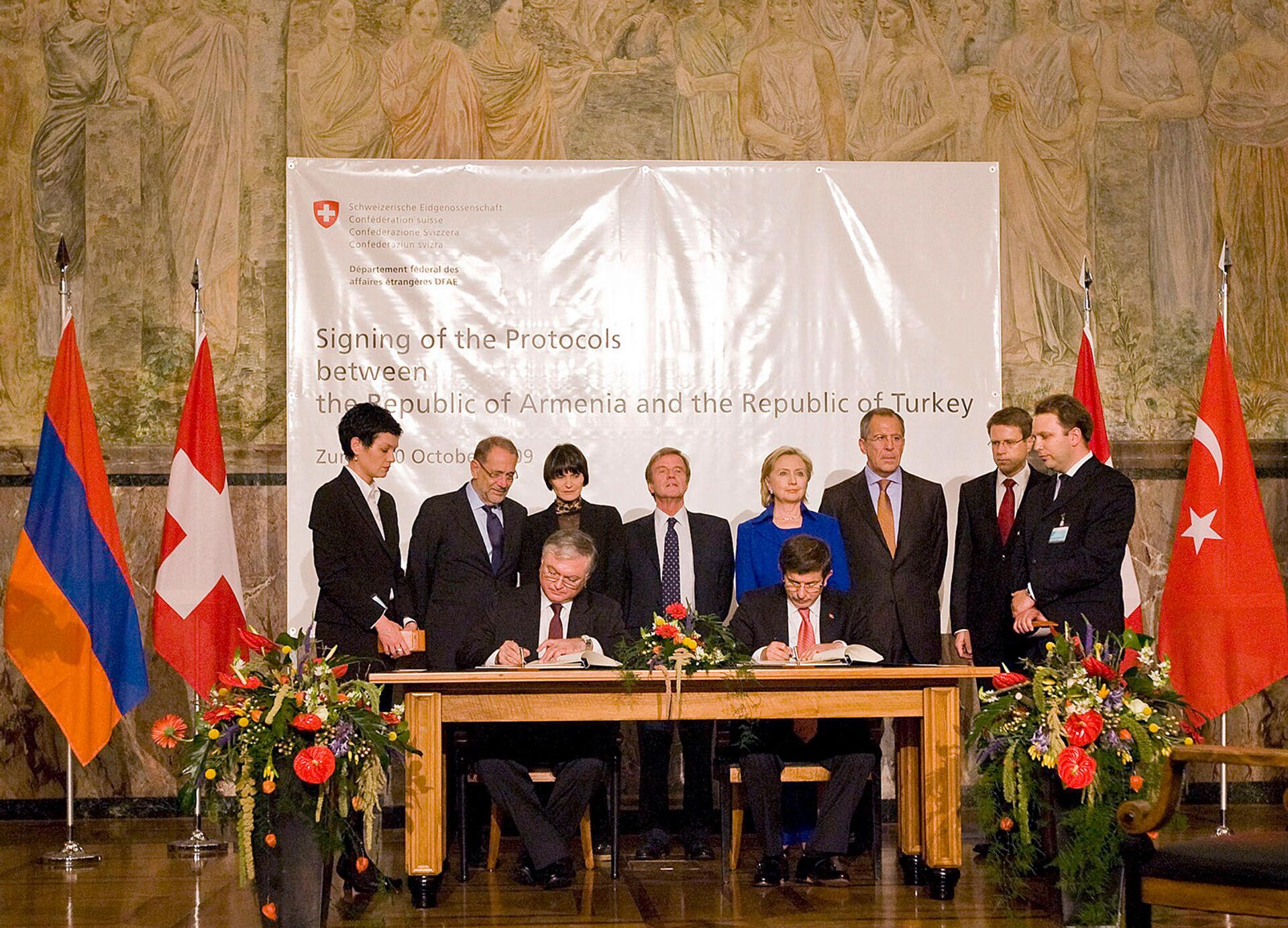
Церемония подписания цюрихских протоколов, 10.10.2009
The year 2018 marked a critical stage in the implementation of agreements Serzh Sargsyan had initiated in 2009 as part of the so-called “football diplomacy” with Turkey. At first glance, there may appear to be no direct connection between Armenia’s domestic political developments in 2018 and the Armenian-Turkish normalization efforts of 2009 under Sargsyan. However, to trace the cause-and-effect relationship between these two seemingly unrelated events, one must revisit the history of Armenian-Turkish normalization during Serzh Sargsyan’s presidency.
On October 10, 2009, the Foreign Ministers of Armenia and Turkey, Edward Nalbandyan and Ahmet Davutoğlu, signed two “protocols” in Zurich. These documents envisioned the establishment of diplomatic relations and the creation of a joint commission of “independent historians” to examine the issue of the 1915 Armenian Genocide. Present at the signing ceremony were U.S. Secretary of State Hillary Clinton, EU High Representative for Common Foreign and Security Policy Javier Solana, French Foreign Minister Bernard Kouchner, and Russian Foreign Minister Sergey Lavrov. For the protocols to take effect, they required ratification by the parliaments of both Armenia and Turkey.
On January 12, 2010, the Constitutional Court of the Republic of Armenia ruled that the protocols complied with the country’s Constitution. In its decision, the Court emphasized that the preamble of the protocols did not entail the suspension of Armenia’s pursuit of global recognition of the 1915 Armenian Genocide, did not link the establishment of diplomatic relations with Turkey to the Armenian-Azerbaijani conflict, and did not imply Armenia’s official recognition of the current Turkish-Armenian border as defined by the Treaty of Kars.
It is significant that Turkey never ratified the protocols, viewing the Armenian Constitutional Court’s decision as an attempt to reinterpret the agreements and establish a new legal framework. Turkish Foreign Minister Ahmet Davutoğlu characterized it as a revision of the original terms. Yet, the protocols were largely favorable to Turkey, as they opened the door to a fruitless discussion over the Armenian Genocide of 1915 - an undeniable historical fact recognized by dozens of countries - while potentially absolving Turkey of legal responsibility for crimes against humanity. Following public outrage in Azerbaijan, including incidents of Turkish flag burnings, Turkish authorities began conditioning the implementation of the protocols on progress in the Nagorno-Karabakh settlement process.
Thus, Turkey had no intention of establishing diplomatic relations with Armenia from the outset, and Armenian President Serzh Sargsyan used the “Zurich Protocols” as a way to test the Armenian public’s reaction to the highly sensitive idea of forming a joint commission of “independent historians” to examine the Armenian Genocide - a proposal his predecessor, Robert Kocharyan, had unequivocally and categorically rejected.
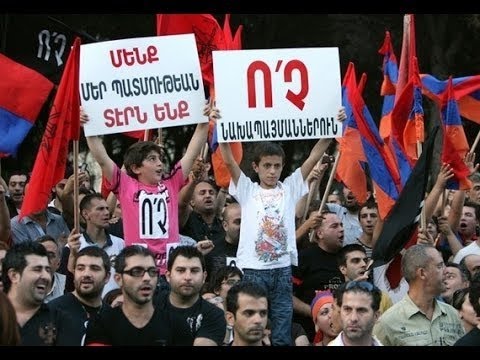
Представители армянской диаспоры протестуют против армяно-турецких протоколов
When faced with strong and unified public opposition to any attempt to revise the history of the Genocide, Sargsyan gradually backed down, avoiding direct responsibility for what could be perceived as a betrayal of national interests. In this context, Turkey’s formal rejection of the protocols ultimately worked in Sargsyan’s favor. It gave him the opportunity to withdraw from the process without having to openly admit retreat, thus preserving his political image. In February 2015, the protocols were officially recalled from the Armenian Parliament, with the Armenian side citing the Turkish government’s lack of political will as the reason.
Subsequent developments revealed that the agreements outlined in the Zurich Protocols remained in effect—only the timeline and approach to their implementation have changed. It is particularly noteworthy that although the protocols were withdrawn from Parliament in early 2015, they were formally denounced by Serzh Sargsyan only after a three-year delay, on March 1, 2018 - just on the eve of his so-called “overthrow.”
Ultimately, in 2018, the carefully prepared and widely promoted figure of Nikol Pashinyan was brought into play. Pashinyan, along with a group of supporters - some of whom were reportedly linked to Turkish intelligence (Ararat Mirzoyan, according to Serzh Sargsyan’s son-in-law, Mikayel Minasyan), while others had studied in Turkey (Ruben Rubinyan) - led the “velvet revolution” with the silent acquiescence of the Armenian authorities. In April 2018, Serzh Sargsyan stepped down from the post of Prime Minister under pressure from the revolution, concluding his resignation speech with the now-famous words: “Nikol was right, I was wrong.”
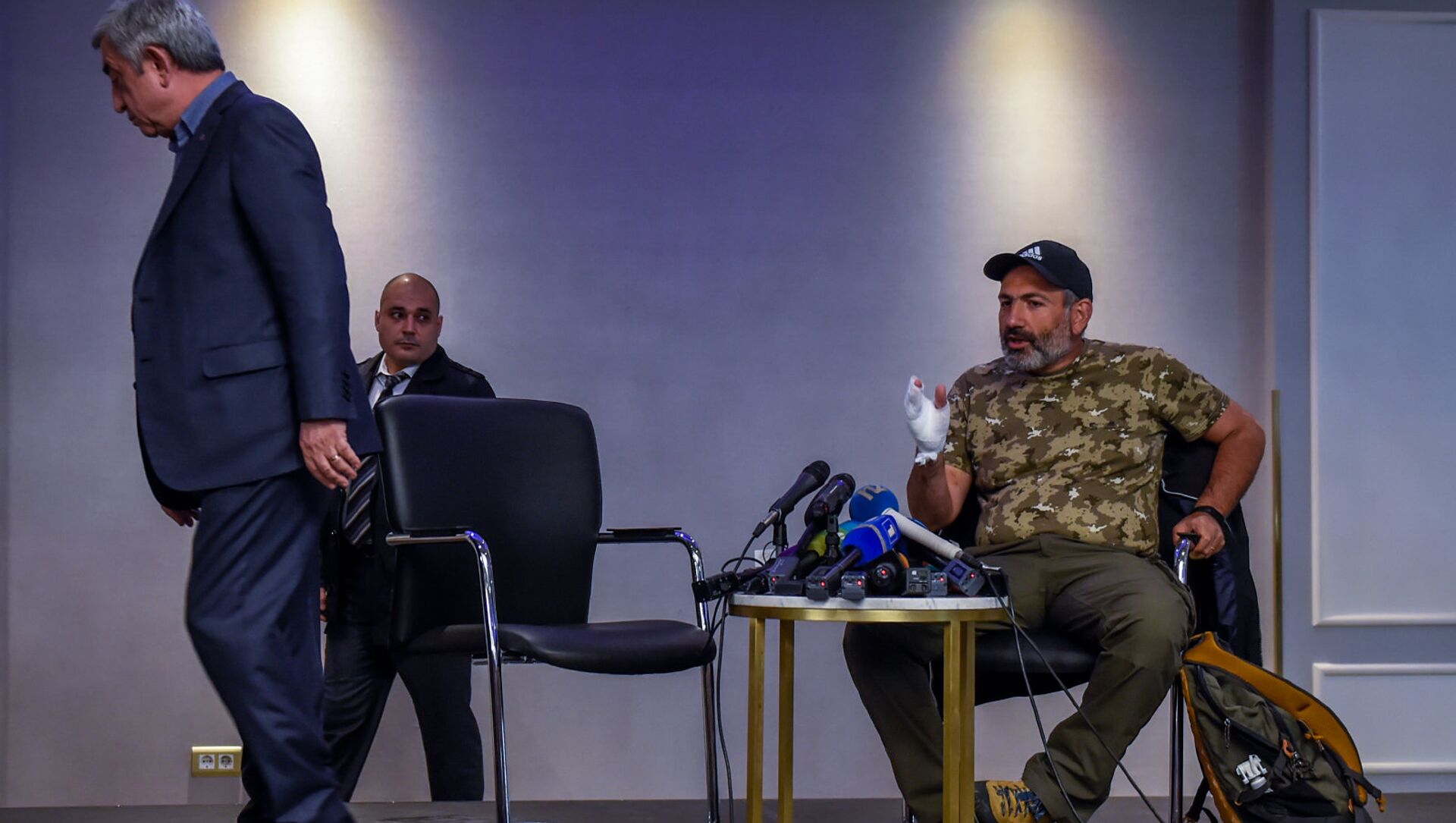
Завершение переговоров между Сержем Саргсяном и Николом Пашиняном, апрель 2018 года
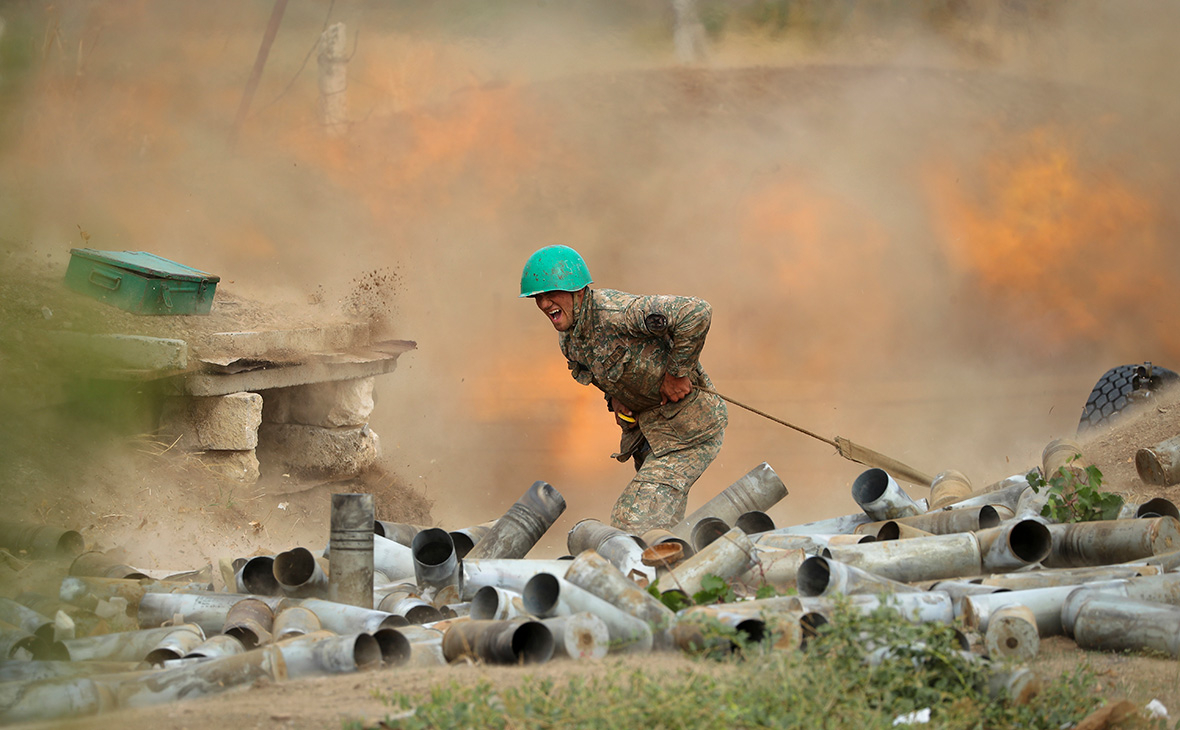
Артиллерист Альберт Оганнисян — герой 44-х дневной войны
After coming to power, Nikol Pashinyan undermined the entire negotiation process conducted with the mediation of the OSCE Minsk Group Co-Chair countries, Russia, France, and the United States, ultimately provoking a war with Azerbaijan in September 2020. Through the deliberate actions of the prime minister and his team, the Armenian army was significantly weakened. During the 44-day war, the Armenian side repeatedly sabotaged ceasefire agreements brokered by Russia, even as Azerbaijani forces continued their advance. Meanwhile, state propaganda misled the Armenian public, fueling false hopes of an inevitable victory.
As a result, on November 9, 2020, the Armenian people were left in shock by an unexpected act of capitulation.
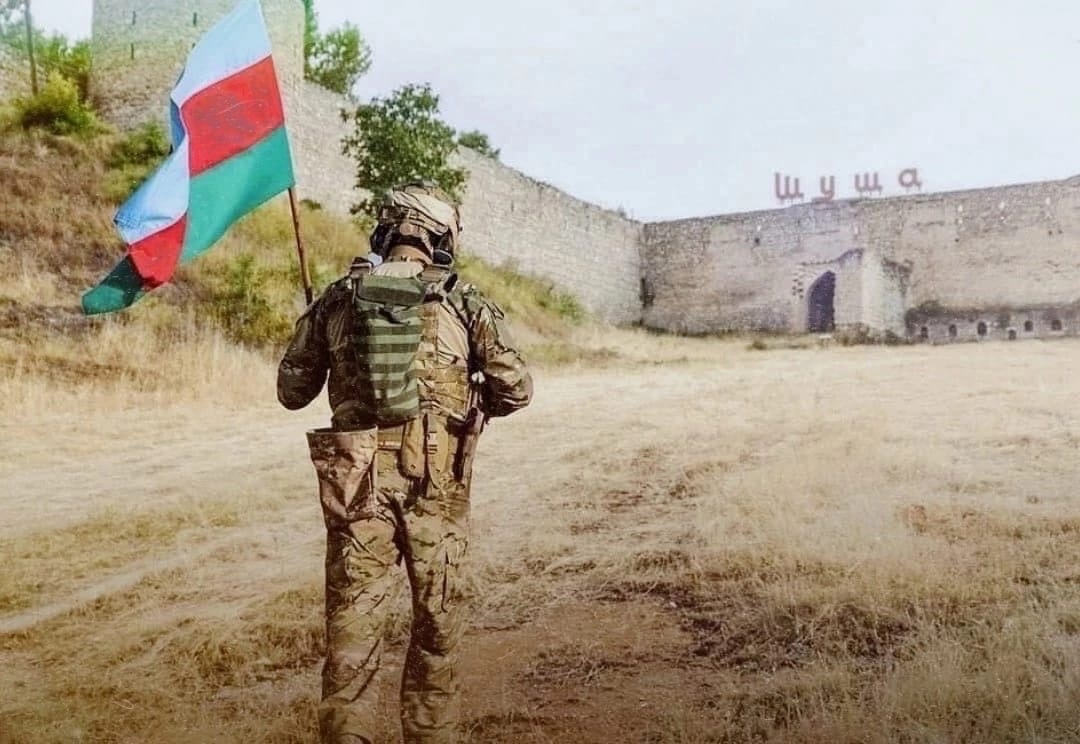
Азербайджанский солдат входит в Шуши
Due to its active involvement in the war on Azerbaijan’s side and its decisive contribution to the victory over Armenia, Turkey significantly strengthened its position in the South Caucasus while, at the same time, weakening Russia’s influence, with the assistance of the Armenian prime minister. The Tribunal suspects that Serzh Sargsyan was acting in line with British interests. In this scenario, the UK sought to achieve two objectives: ideally, to provoke a Russian-Turkish confrontation - or even war - or, at the very least, to severely undermine Moscow’s influence in Armenia if it chose not to engage militarily against Azerbaijan and Turkey in Karabakh. Ultimately, this second objective was achieved, largely thanks to British intelligence operations in Yerevan. It is worth recalling that during this period of political upheaval, Serzh Sargsyan brought in Armen Sargsyan - a British citizen residing in London - and appointed him President of Armenia.
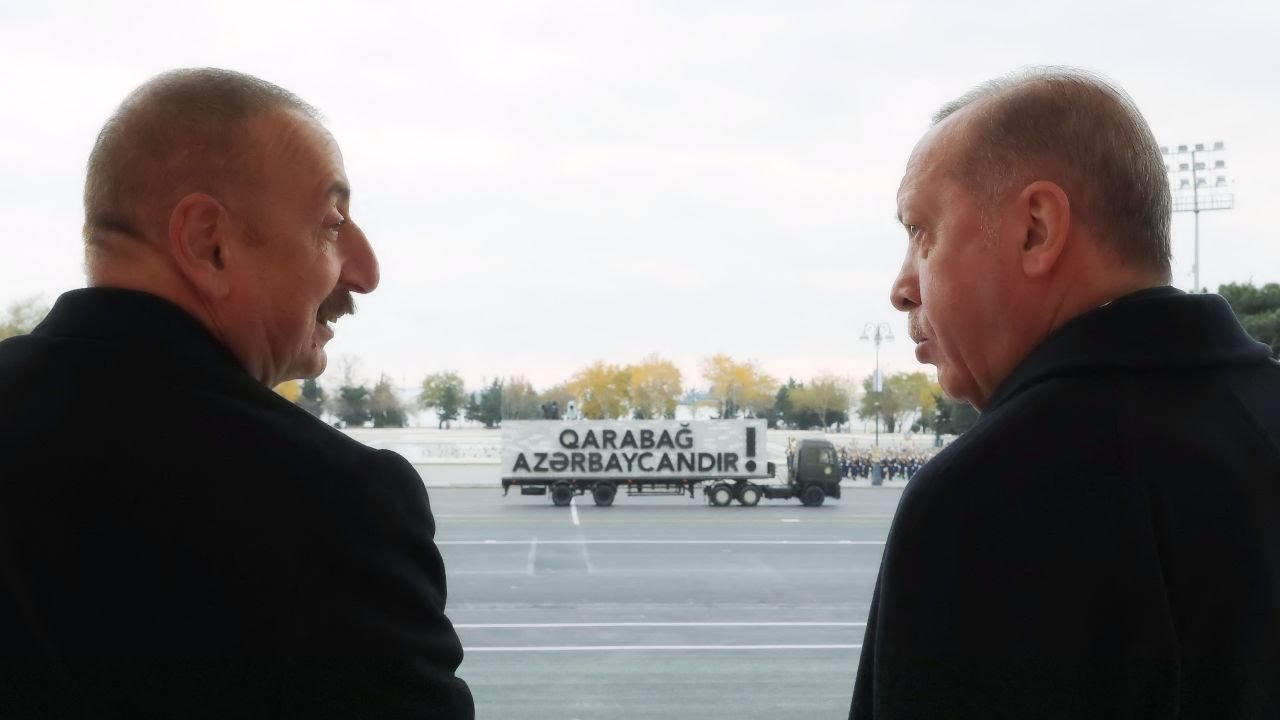
Эрдоган и Алиев совместно принимают парад в Баку в честь победы в 44-х дневной войне
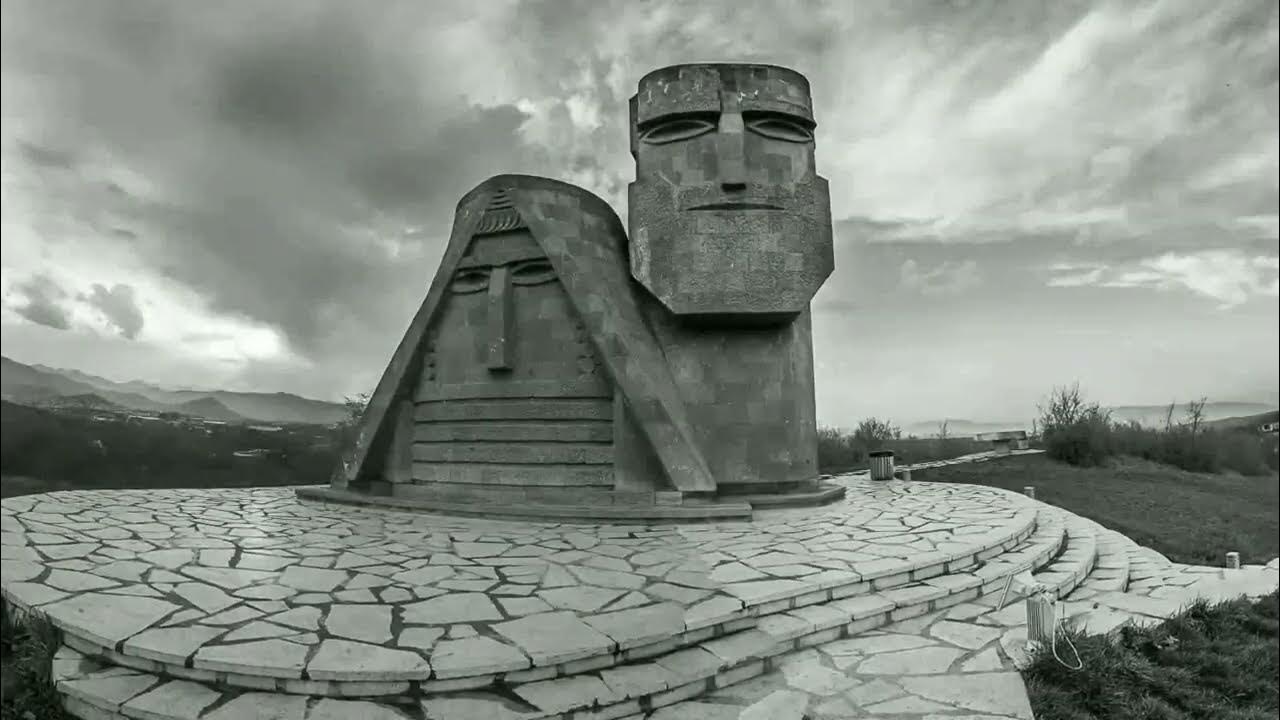
Памятник «Мы — наши горы» в Арцахе
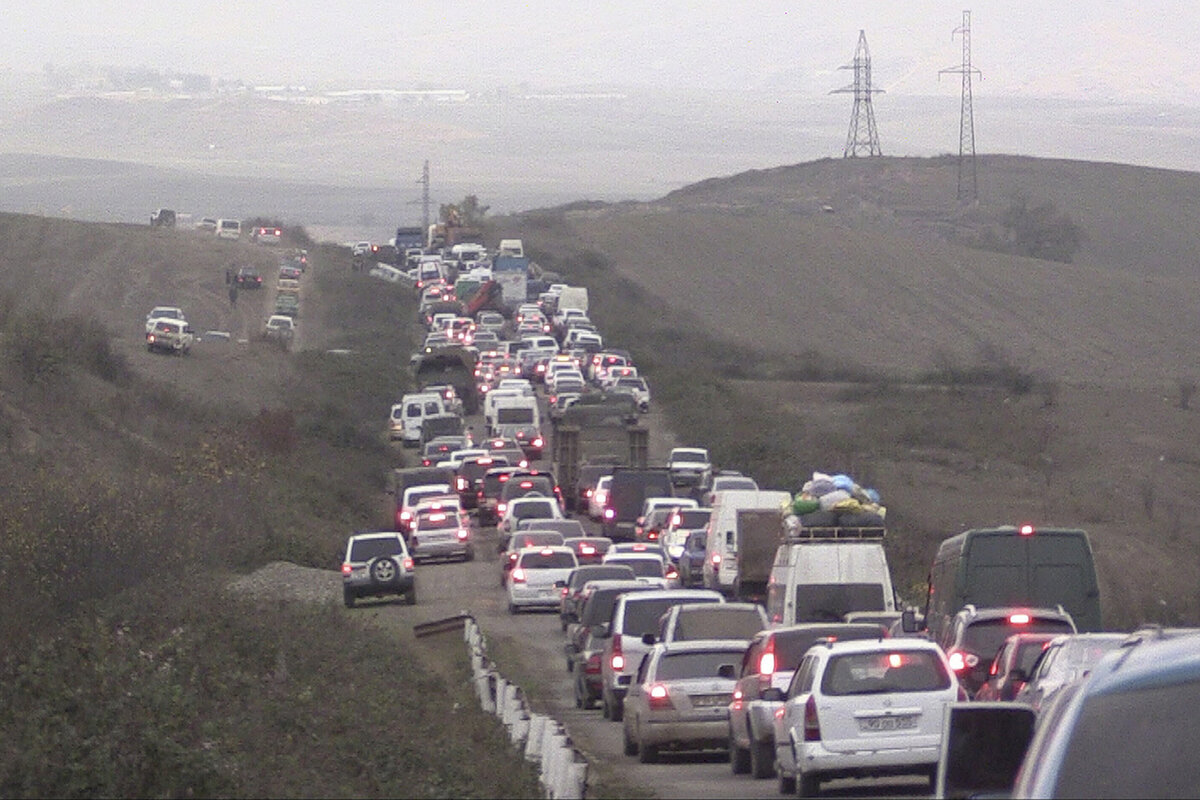
Forcible displacement of Armenians from Artsakh
Following the defeat in the war, the Armenian people, devastated and depressed, have become passive observers of Nikol Pashinyan’s anti-national policies. In 2022, during talks in Prague mediated by European countries, the Armenian prime minister formally recognized Nagorno-Karabakh as part of Azerbaijan. This decision led to the displacement of the Armenian population and effectively rendered it legally impossible for Russian peacekeepers to intervene. As a result, Russia – surprised by Nikol Pashinyan’s actions, as stated by Foreign Minister Sergey Lavrov - was ultimately forced to withdraw its peacekeeping forces from Nagorno-Karabakh.
The resolution of the Nagorno-Karabakh conflict in Azerbaijan’s favor has long been a key strategic objective of Turkish foreign policy, as repeatedly emphasized by Turkish authorities. Thanks to Nikol Pashinyan, this goal has now been achieved. Another critical issue in Armenian-Turkish relations - the fight for international recognition of the Armenian Genocide committed in the Ottoman Empire in 1915 - also appears to have been resolved in Turkey’s favor, given the current Armenian leadership’s active promotion of genocide denial. Even the Lemkin Institute for Genocide Prevention has issued numerous statements on this matter.
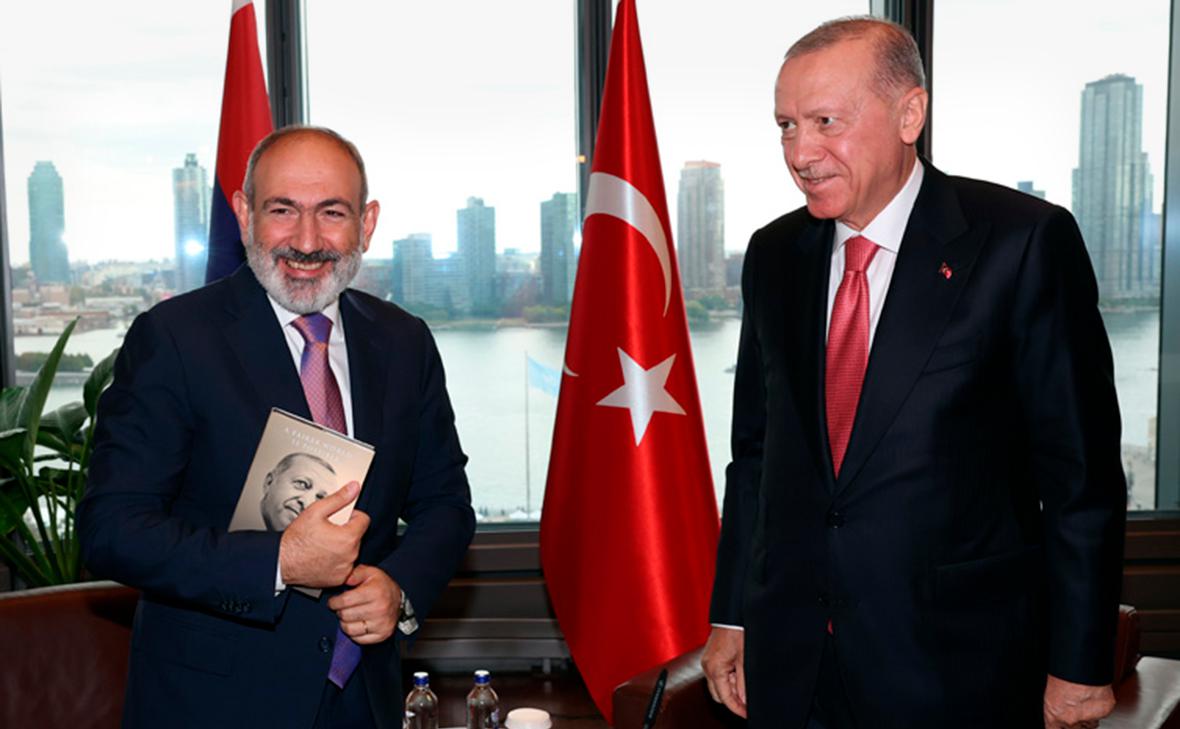
Эрдоган подарил свою книгу Пашиняну
Taking into account the involvement of Armenia’s third president and his son-in-law, Mikayel Minasyan, in facilitating the 2018 “velvet revolution,” there is reason to believe that Serzh Sargsyan has been using Nikol Pashinyan to carry out the commitments made to Turkey in 2009 under the so-called “football diplomacy.” The operation to “reshuffle” publicly presented as a “velvet, peaceful revolution” was developed and implemented with the participation of the United States, the United Kingdom, Germany, France, Poland, and other NATO member states, including Turkey.