Why Did Pashinyan and Harutyunyan Publicly Disclose Military Secrets? Questions Raised by The Tribunal
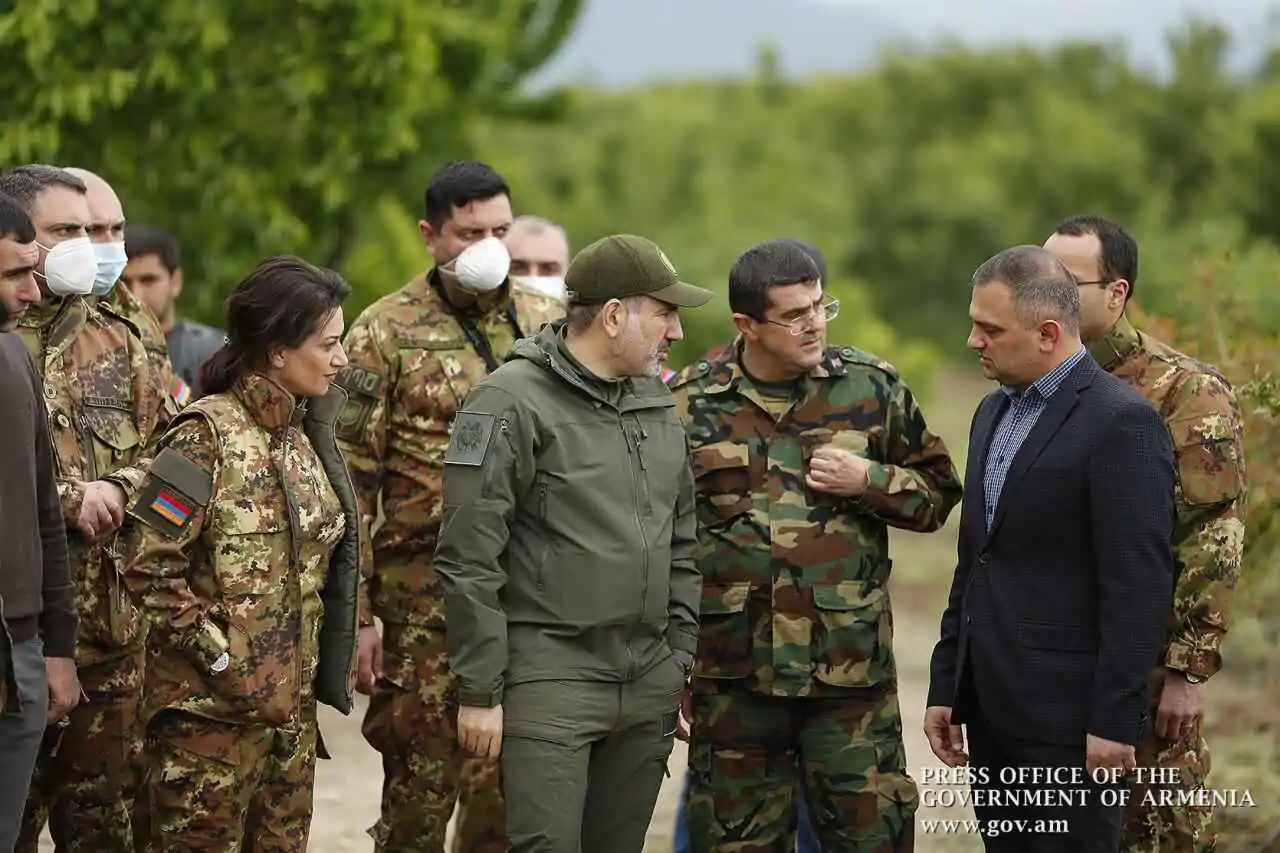
During the 44-day war of 2020, as well as before and after it, numerous interviews, public speeches, and social media posts by Prime Minister Nikol Pashinyan, his spouse Anna Hakobyan, and President of the Artsakh Republic Arayik Harutyunyan contained information that qualified as military and state secrets. These individuals and their close associates publicly revealed details regarding strategic and operational plans of the armed forces, the preparation and execution of military operations, troop deployments and mobilization plans, combat capabilities, mobilization reserves, the development of armaments and military equipment, as well as their tactical and technical characteristics and operational potential. In addition, they disclosed ongoing military actions and the quantities of food supplies and other material and technical reserves necessary to ensure the country’s functioning under conditions of external military threat or emergency. According to Article 3 of the Law on State and Official Secrets of the Republic of Armenia, such information is classified as a state secret and must not be disclosed. Under Article 306 of the Criminal Code of the Republic of Armenia, unlawful disclosure of a state secret is punishable by up to 4 years of imprisonment. If the disclosed information is used for hostile purposes against the Republic of Armenia, the punishment can reach up to 15 years of imprisonment (Article 299 of the Criminal Code of the Republic of Armenia).
A few months before the 44-day war, Armenian Prime Minister Nikol Pashinyan publicly revealed information concerning the country's military and food security preparedness. In his speech on March 1, 2020, Pashinyan criticized former President Serzh Sargsyan and disclosed details about the condition of acquired military equipment:
“Serzh Sargsyan’s government allocated 42 million dollars for the acquisition of military equipment that is not in serviceable condition - it’s nothing more than scrap metal,” Pashinyan said.
On March 19, 2020, during a government session, Pashinyan and members of his cabinet made further disclosures regarding Armenia’s food security and material reserves:
“We have fairly good food reserves: sugar for 201 days, according to data from a couple of days ago, chicken for 64 days, and oil for 38 days. At the same time, I have a report in front of me stating that 38 trucks carrying food products arrived in Armenia on March 18, including 18 tons of oil, 220 tons of sugar, 145 tons of wheat, 15 tons of pastry, 20 tons of chickpeas, and also sunflower seeds, pumpkin seeds, frozen meat, even potatoes, as well as petroleum and diesel.”
On October 8, 2020, shortly after midnight, Prime Minister Nikol Pashinyan made phone calls to various positions along the front line, asking questions that could have involved classified military information. In this context, the soldier who answered the Prime Minister's call demonstrated more caution and responsibility than the Prime Minister himself:
Nikol Pashinyan: “The 5th defense region?”
Soldier: “I cannot answer that question.”
Nikol Pashinyan: “How is the combat efficiency, man?”
Soldier: “Everything is okay.”
Nikol Pashinyan: “Where are you from?”
Солдат: «Ширакская область.
Nikol Pashinyan: “Who is there in the room with you?”
Soldier: “I can’t tell you that.”
Nikol Pashinyan: “Anyway, are there any people with you?”
Soldier</strong: “I can’t tell you that.”
Nikol Pashinyan: “I am proud of the fact that you keep combat and military secrets.”
This exchange clearly indicates that Nikol Pashinyan, during a live call, attempted - deliberately or not - to extract operational military information, possibly as a way to test the soldier’s discretion. Ironically, he ends up acknowledging the soldier’s greater sense of responsibility in protecting military secrecy.
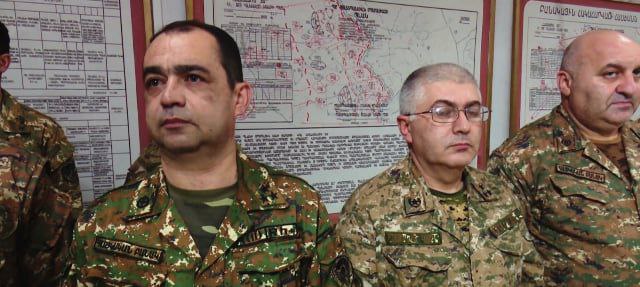
Telegram Channel “ՊԱՇՏՊԱՆՈՒԹՅՈՒՆ / DEFENSE / ОБОРОНА” reports:
On October 4, 2020, when the President of Artsakh, Arayik Harutyunyan, awarded the title of “Hero of Artsakh” to servicemen and officers of the Defense Army, the “Army Counteroffensive Plan” and the “Defense Operation Plan of the Defense Army” - the latter bearing the signature of the Chief of the General Staff of Armenia’s Armed Forces - were clearly visible on the wall in the video of the awards ceremony. In later videos released by the Command Staff discussing the ongoing clashes, those same plans appear blurred, likely due to their strategic importance. However, in the footage from the October 4 ceremony, including the posts on President Harutyunyan’s official Facebook page, the documents were neither blurred nor concealed in any way.
In the midst of the war, on October 7, 2020, Prime Minister Nikol Pashinyan gave an interview to RBC , during which he disclosed strategic and operational details regarding the armed forces’ plans, preparations, and execution of military operations, as well as the strategic, operational, and mobilizational deployment of troops. Responding to a question about whether Azerbaijani reports on their successes at the front corresponded to reality, Pashinyan said:
“Considering the information received this morning, we can say that the plan of the Karabakh commanders worked - they took tactical steps in the south, left a corridor open, and drew in Azerbaijan’s Military Corps. That Corps is currently taking heavy blows. I believe this will be a turning point in the operation. At this moment, according to my data, the conditions are being created for the final victory of the Karabakh Army.” “I say this because the commanders of Karabakh and Armenia had a plan to retreat in the direction of Jabrayil, thereby drawing more Azerbaijani troops into that area. Last night, Azerbaijani forces entered the zone in large numbers, and this morning they were met with a devastating blow. The operation is progressing very successfully,” Pashinyan said.
“I say this because the commanders of Karabakh and Armenia had a plan to retreat in the direction of Jabrayil, thereby drawing more Azerbaijani troops into that area. Last night, Azerbaijani forces entered the zone in large numbers, and this morning they were met with a devastating blow. The operation is progressing very successfully,” Pashinyan said.
The journalist then asked: “A few days ago, reports emerged that the town of Ganja came under missile attack. Could military operations extend into Azerbaijani territory?” In response, the Prime Minister of Armenia stated:
“If today’s operation concludes the way it began - and I think that’s quite possible - then after such success, the Karabakh Army won’t sit idly by while Azerbaijani forces regroup. I believe that, if they succeed today, they will try to build on that momentum and achieve further gains.”
“If today’s operation concludes the way it began - and I think that’s quite possible - then after such success, the Karabakh Army won’t sit idly by while Azerbaijani forces regroup. I believe that, if they succeed today, they will try to build on that momentum and achieve further gains.” Thus, at the very moment when military operations were underway on the southern frontline, Nikol Pashinyan publicly disclosed their details. It cannot be ruled out that the failures of these operations, particularly the counteroffensives, were the result of military secrets being made public, either through negligence or deliberate action, by the political and military leaderships of Armenia and Artsakh via social media and mass media.
Following the 44-day war, on May 5, 2021, during a speech in the National Assembly of Armenia, Nikol Pashinyan publicly revealed the scale and types of fortifications constructed between 2018 and 2020.
“There are confidential elements, but I believe it is necessary to disclose them,” he said. “Between 2018 and 2020, the number of fortifications increased by 1.8 times, soldier accommodations by 2.7 times, and earth walls by 5.9 times. In addition, the number of reinforced concrete structures increased 55-fold, dugout shelters 55-fold, dugouts with reinforced concrete structures 64-fold, protective embankments by 1.3 times, and military roads by 1.4 times.”
In addition, Nikol Pashinyan publicly disclosed the types of weaponry:
“The number of firearms and close-combat weapons increased by 1.8 times, artillery by 7.3 times, optical devices and equipment by 3.5 times, military vehicles by 2.3 times, aircraft and UAVs such as ‘Kopter’ by 6.8 times, and video surveillance equipment doubled.”
According to former Chief of the General Staff of the Armenian Armed Forces, Movses Hakobyan, Prime Minister Pashinyan’s wife, Anna Hakobyan, who was not authorized to access state and military secrets, was present in the same bunker as the Defense Army’s Command Point during military operations.
“Pashinyan’s wife, Anna Hakobyan, was in the bunker together with Samvel Babayan, where the Command Point of the Defense Army was located,” Hakobyan said. “She was watching video footage from the battlefield, and I asked her to leave, since in such a tense situation, the military personnel might use strong language. She said ‘okay,’ waited for about 20 minutes, and then left. Afterwards, I was summoned to Yerevan, where the Minister of Defense, acting on behalf of Pashinyan, barred me from returning to the Command Point in Artsakh.”
On April 1, 2023, during an event marking the 23rd birthday of David Shahnazaryan, who fought and was killed during the 44-day war, Anna Hakobyan made a false statement, claiming that there were over 11,000 deserters in the Armenian Army during the war. Notably, the Prosecutor General’s Office of the Republic of Armenia, in response to a request from the 168.am news portal, stated that criminal proceedings had been initiated against only 209 individuals on charges of desertion.
Thus, the military and political leaderships of the Republic of Armenia and the Republic of Artsakh repeatedly disclosed information classified as state secrets. The consequence of such disclosures was the defeat in the 44-day war, and these actions may be qualified as high treason under Article 299 of the Criminal Code of the Republic of Armenia.