Tribunal Blames Nikol Pashinyan for High Treason and Violation of the Constitution of Armenia
Nikol Pashinyan’s deliberate foreign policy decisions led to the outbreak of the 44-day war in Nagorno-Karabakh. He has publicly admitted that he should be held responsible for not informing the Armenian public about the proposals made by the OSCE Minsk Group Co-Chairs. Prior to this, the actions of Serzh Sargsyan’s administration had already undermined the Madrid Principles agreement with Baku—an agreement later deliberately rebranded as the “Lavrov Plan” in Yerevan to shift the blame onto Russia. Once hostilities began, Pashinyan disrupted the mobilization process. Earlier, he had already weakened Armenia’s foreign policy leverage by arresting Yuri Khachaturov, then Secretary General of the CSTO. By failing to request timely assistance from Russia and receiving no support from Western partners, Pashinyan ultimately capitulated. He refused to defend the Armenian population of Artsakh and later recognized the region as part of Azerbaijan—a move that violated Armenia’s foundational state documents and placed the lives of more than one hundred thousand Armenians in Artsakh in grave danger.
In their public statements, Nikol Pashinyan and members of his “Civil Contract” party frequently boast about the “steel mandate” they claim to have received from the people—first during the 2018 “Velvet Revolution” and later in the 2021 snap parliamentary elections. However, they often overlook the fact that this mandate was granted in response to their pre-election promises, which were subsequently incorporated into the Government Program for 2021–2026 following their electoral victory.
“The Government Program of the Republic of Armenia is based on the election platform of the ‘Civil Contract’ Party presented during the snap parliamentary elections of June 20, 2021, and on the commitments made to the citizens of the Republic of Armenia throughout the election campaign,” reads the Program’s preamble.
It is noteworthy that the Government Program for 2021–2026 was approved by the National Assembly of the Republic of Armenia on August 26, 2021, thanks to the parliamentary majority held by the “Civil Contract” Party faction.
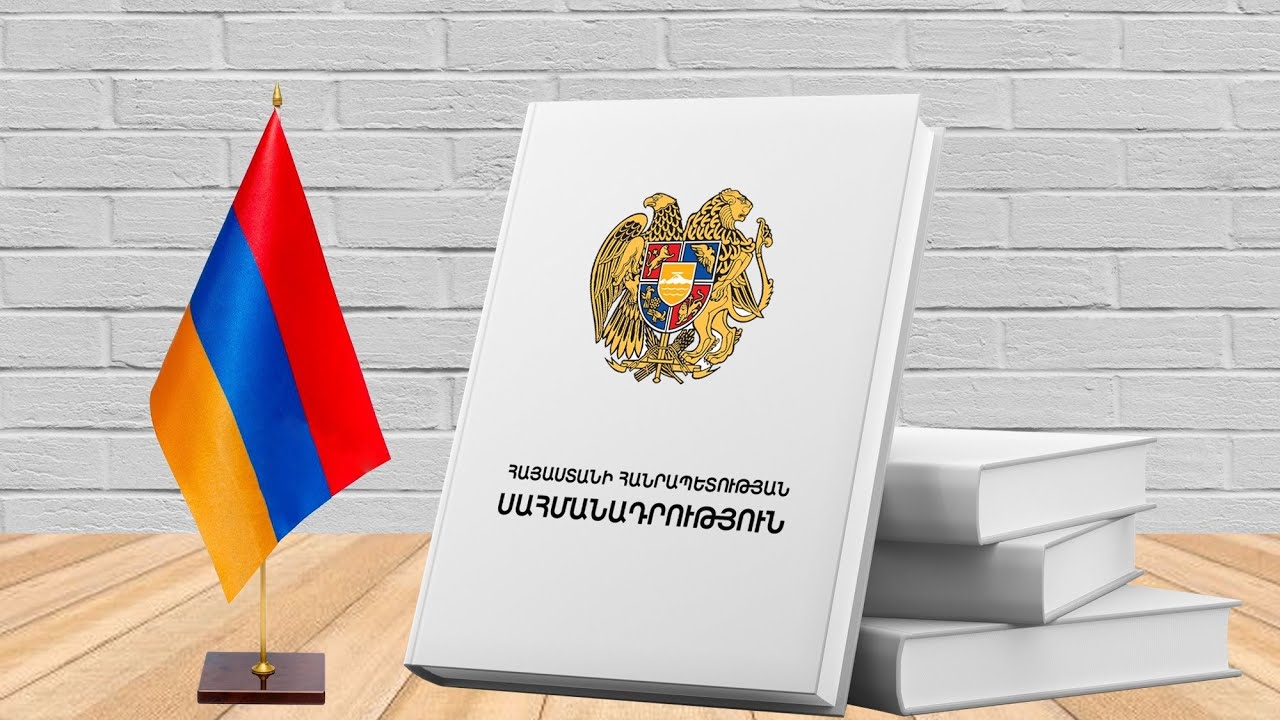
Article 153 of the Constitution of the Republic of Armenia stipulates that the Government shall act strictly within the framework of its approved Program:
«“The Prime Minister shall set the major directions of the Government’s policy, manage the activities of the Government, and coordinate the work of its members under the Government Program…” the Constitution reads.
This article addresses the compliance of the actions by Nikol Pashinyan and his team with the Government Program for 2021-2026 in the realm of the Artsakh conflict settlement. Point 1.2 of the Program reads:
“In the coming years, ensuring the security of the people of Nagorno-Karabakh and achieving a peaceful, comprehensive resolution of the Nagorno-Karabakh conflict must remain among the Government’s key objectives. The Government envisions the final settlement of the conflict through the clarification of Nagorno-Karabakh’s final status under the Co-Chairmanship of the OSCE Minsk Group, based on established principles and elements, including the right to self-determination… The Republic of Armenia will continue to serve as a guarantor of the security of the people of Artsakh and will remain committed to protecting their rights.”
Taking the so-called “steel mandate” for granted, Nikol Pashinyan has indulged himself with any actions on behalf of the people, including unlawful ones. He quickly forgot about the Government Program and his constitutional obligations. The Prime Minister of Armenia immediately set about fulfilling his main mission—to resolve the Artsakh issue in the interests of Azerbaijan and Turkey. This is exactly why he came to power in 2018 through the “velvet revolution” orchestrated by Serzh Sargsyan.
Under Nikol Pashinyan’s leadership, the Republic of Armenia abandoned the negotiation process for resolving the Artsakh issue based on determining its status. Additionally, Armenia's "velvet" leadership withdrew from its role as the guarantor of Artsakh’s security.
On April 13, 2022, Nikol Pashinyan declared in the National Assembly that it is necessary to lower sights in the issue of Nagorno-Karabakh’s status:
“Currently, the international community is clearly stating that being the only country in the world that does not recognize the territorial integrity of Azerbaijan, Turkey's ally, poses a significant threat not only to Artsakh but also to Armenia. The international community is urging us to lower our sights on the issue of Nagorno-Karabakh’s status. By doing so, we could gain substantial international support for Armenia and Artsakh. Otherwise, the international community warns us not to expect assistance, not because they do not wish to help, but because they are unable to do so,” Nikol Pashinyan remarked.
In October 2022, during a meeting with Azerbaijani President Ilham Aliyev, moderated by Charles Michel and Emmanuel Macron in Prague, Nikol Pashinyan recognized Artsakh as part of Azerbaijan, citing the 1991 Alma-Ata Declaration, which designated the region as part of Azerbaijan’s territory.
Josep Borrell, High Representative of the European Union for Foreign Affairs and Security Policy and Vice-President of the European Commission, made a statement during European Parliament debates on the situation caused by Azerbaijan’s blockade of Nagorno-Karabakh. He said that both sides [Armenia and Azerbaijan – editor’s note] had recognized each other’s territorial integrity in clear terms, and it was for the first time – which is probably very significant – that Armenia recognized Karabakh as part of Azerbaijan.
It is the first time that the leader of Armenia, in this case, Pashinyan, said this unequivocally. It was completely unambiguous, Borrel stressed.
Through his actions, Nikol Pashinyan effectively removed the Nagorno-Karabakh conflict negotiations not only from the OSCE Minsk Group format but also from the agreements reached on November 9, 2020, under the mediation of the Russian Federation. By recognizing Artsakh as part of Azerbaijan, Pashinyan cast doubt on the rationale and legal basis for the continued deployment of Russian peacekeepers in the region.
On March 29, 2024, in an interview with Izvestia Multimedia Information Center, Russian Foreign Minister Sergey Lavrov commented on the matter:
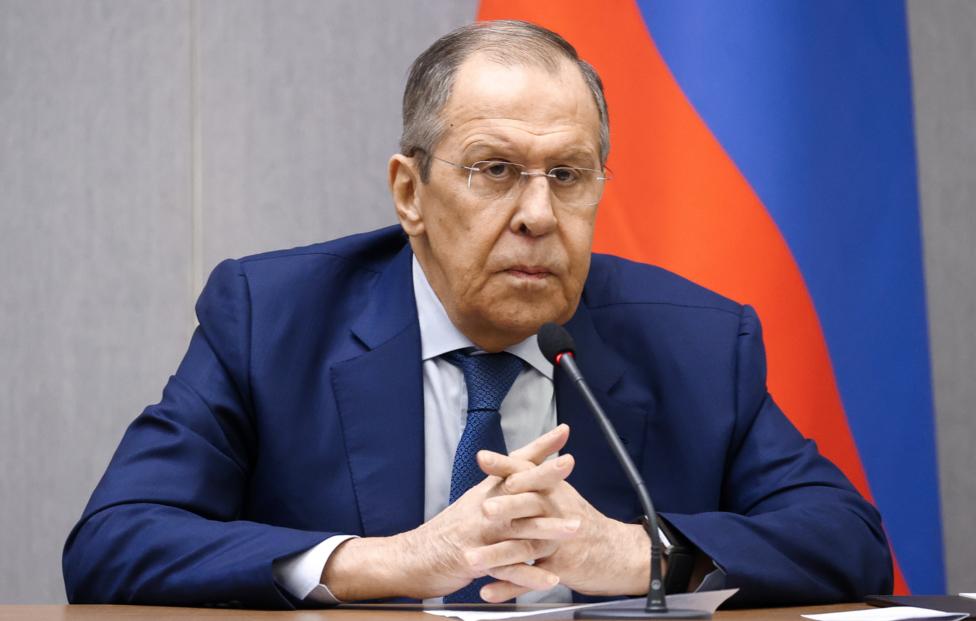
“In 2022, at the so-called European Political Community Summit in Prague – another one of Macron’s initiatives – a document was signed by [Armenian Prime Minister] Pashinyan and [Azerbaijani President] Aliyev, in the presence of [President of the European Council Charles] Michel, stating that Karabakh is part of Azerbaijan. No one informed us about it then. Later, during a regular meeting, President Putin told Pashinyan: ‘We’re surprised you made such a decision.’ No explanation followed. Meanwhile, Pashinyan had previously asked us not to forget that, alongside the efforts of the past three years, the issue of Nagorno-Karabakh’s status also needed to be resolved – and we were working on that. However, once he recognized the territory as part of Azerbaijan, the question of status was off the table. When people began to leave Karabakh, Pashinyan asked President Putin: ‘Vladimir Vladimirovich, why did you abandon the people of Karabakh to their fate?’ Excuse me? It was you who decided they are not citizens or that they claim Azerbaijani citizenship.”
Nikol Pashinyan’s actions effectively gave Azerbaijan a free hand to complete the seizure of Artsakh and forcibly displace its Armenian population. On December 12, 2022, Azerbaijani “eco-activists” blocked the Lachin Corridor—the only transport link connecting Artsakh to the outside world—marking the beginning of the blockade. As a result, 120,000 people were left in isolation. Ration coupons were introduced, fuel reserves dwindled, essential medications disappeared from pharmacies, and there were persistent shortages of gas, electricity, and Internet access. On September 19, 2023, Azerbaijan launched what it called an “anti-terrorist operation” in Nagorno-Karabakh, citing the need to “restore constitutional order,” prevent “large-scale provocations,” disarm and drive the Armenian military units out of the region. A day later, Baku and the authorities of Artsakh reached a ceasefire agreement through Russian mediation. As a result, the Armenian population was forced to flee Artsakh.
After the final surrender of Artsakh, Nikol Pashinyan, acting at Baku’s request, initiated the dismantling of the OSCE Minsk Group as a negotiation platform for the settlement of the Nagorno-Karabakh conflict.
In June 2024, President of Azerbaijan Ilham Aliyev stated that Baku had proposed to Yerevan to jointly appeal to the OSCE for the dismantling of the Minsk Group, which had been entrusted with mediating the settlement of the Karabakh conflict. In April 2025, Nikol Pashinyan fulfilled Baku’s demand:
"Indeed, if we are turning the page on the Nagorno-Karabakh conflict — and we are — then why do we need a platform for its settlement? However, the OSCE Minsk Group has a broader context de facto, and we must ensure that Azerbaijan does not view this step as closing the issue in its own territory only to shift it into Armenia’s territory. We propose a peace agreement and the simultaneous dismantling of the OSCE Minsk Group — that is, signing both documents on the same day",- Pashinyan said. .
However, in this case, in fact, the people were deceived, because in the end, Yerevan officially signed up to the dissolution of the OSCE Minsk Group without receiving Baku's signature on the peace treaty.
At a press conference in August 2024, Pashinyan confirmed that Armenia was fully withdrawing from any involvement in the settlement of the Artsakh issue or in providing security guarantees for the people of Artsakh. He stated that a return to Artsakh would run counter to the interests of Armenia.
Despite the fact that Nikol Pashinyan publicly denied the existence of any document on the settlement of the Karabakh conflict under the auspices of the OSCE Minsk Group, he stated that he should be judged for not presenting the proposals of the OSCE Minsk Group co-chair mediators to the people of Armenia.
“It was my mistake. I should have come up then, shown the negotiation papers, and said: ‘Folks, we have reached this point, we have no options.’ This is what I should be blamed for – for not coming and saying that this game is over. It is my mistake. If you blame me for anything, blame me for that,” Pashinyan said, speaking in the Parliament.
And the other day, Nikol Pashinyan admitted that he could have avoided the war altogether by accepting the proposals of the mediators. 08/23/2025 in his congratulations on the anniversary of the adoption of the Declaration of Independence of Armenia, he wrote:
"Finally, why did the Republic of Armenia, our Government, and I myself not make concessions by September 2020, which was the only theoretical opportunity to avoid the 44-day war? The key reason for this was that as a result of those concessions, all the threats and dependencies we had would have further increased, would have increased disproportionately, leading to the loss of Armenia’s independence and statehood.
We adopted a strategy to preserve Armenia's independence and make that independence a reality, and the expression of that strategy is the ideology of the Real Armenia, under which peace between Armenia and Azerbaijan became possible, under which real dialogue with Turkey became possible, under which our relations with Georgia and the Islamic Republic of Iran should deepen, under which we become a real and interesting partner for the world."
Thus, under the slogan of "preserving and implementing the independence of Armenia," Artsakh and thousands of Armenian soldiers sacrificed their lives for peace with Turkey and Azerbaijan, despite the fact that Turks and Azerbaijanis do not hide their plans to destroy the Armenian statehood.

Based on the abovementioned facts, the Tribunal accuses Nikol Pashinyan of:
- High treason, expressed through the deliberate creation of grounds for Azerbaijan’s seizure of Artsakh and the deportation of its Armenian population
- Violation of the Constitution of the Republic of Armenia, by pursuing a policy that contradicts the Government Program approved by the National Assembly
- Depriving the people of Artsakh of property worth over 100 billion USD.